Private Sector Confidence Remains Low Despite Liquidity and Lower Interest Rates

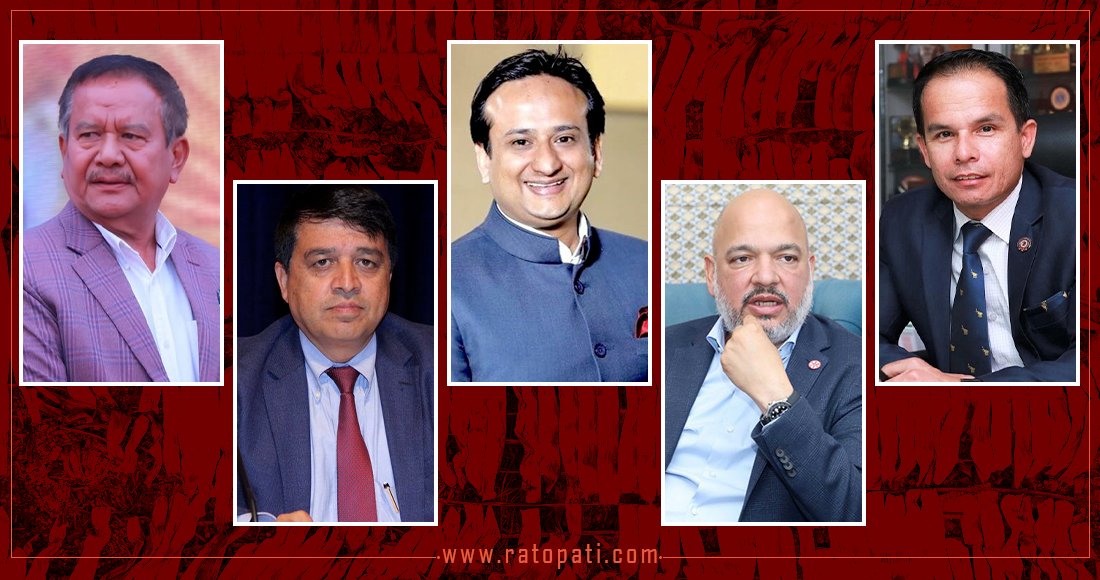
Kathmandu. Despite excessive liquidity in the banking system and declining bank interest rates, credit expansion in the private sector has shrunk. The reason is the inability of the private sector's morale to rise. The private sector, which declined due to the 'Jana Andolan' (People's Movement), has not yet recovered. Now there is a government with nearly a two-thirds majority, and in such a situation, it was expected that the private sector would flourish. However, as the 100-day mark of the government's formation approaches, statistics show that while morale has increased slightly, the private sector is not yet enthusiastic. The government has also made policy reforms to boost the morale of the struggling private sector. The budget for the fiscal year 2083/84 has also been brought in a private sector-friendly manner. Foreign exchange reserves are at an all-time high, but on the other hand, there is no demand in the market, and the private sector is still hesitant to invest. Government capital expenditure is in a dire state. Although the external sector of the economy appears strong, the internal economy has not been able to gain momentum. More than 13 kharba (1.3 trillion) rupees are piled up in banks and financial institutions. The average interest rate on bank loans is 6.9 percent, while the maximum interest rate on deposits is only 5.1 percent. However, the private sector, real estate, and stock market have not been able to benefit from this liquidity and low interest rates. The main reason for this is the weak morale of the private sector, which has also prevented an environment for further investment. As investment capital piles up in the banking system, interest rates have continuously declined. Nepal Rastra Bank is still forced to withdraw money from the market through deposit collection bids and fixed deposit facilities. According to Nepal Rastra Bank, as of Ashad 4 of the current fiscal year, loans worth 59 kharba 13 arba rupees have been disbursed. Similarly, in the first 10 months of the current fiscal year, loans disbursed to the private sector by banks and financial institutions increased by 5.7 percent to 5809 billion 71 crore. In the same period last year, such loans had increased by 7.3 percent. However, deposits in banks and financial institutions have increased by 9.4 percent to 7949 billion 28 crore. In the same period last year, such deposits had increased by 6.2 percent. There is money in the banks, the interest is cheap, but businessmen are not willing to take loans. This is because the demand for goods and services in the market is slow. Shops are closing, and businessmen say that existing industries are not operating at full capacity. Meanwhile, Finance Minister Dr. Swarnim Wagle has also admitted that there has been a recession in Nepal's economic activities since the 'Jana Andolan'. Finance Minister Wagle stated that although the country's politics took a turn after the 'Jana Andolan', the economy has not yet improved. He had said that the new budget would revitalize the sluggish economic activities as the country's economy has not yet fully returned to normal after the COVID pandemic. He had said that the government is committed to boosting economic activities by encouraging private sector investment, which has been very slow in the market. Minister's tenure also did not boost morale: Private Sector Businessmen say that industries and businesses are not operating at full capacity due to the weak morale of the private sector. They state that the slow pace of credit disbursement is mainly due to the long-standing liquidity problem in the market, lack of confidence among investors, and uncertainty regarding investment security. From big industrialists to small businessmen, they are still in a 'wait and see' mode. They say that investors are hesitant to enter new sectors until there is certainty that both investment and returns are secure. They believe that the private sector has not been enthusiastic because the government's new budget and policies have not been effectively implemented and demand has not been generated in the market. Nepal Chamber of Industries Chairman Birendra Raj Pandey says that although the government has brought the budget and made some policy reform efforts, it will take time to see the results. 'The budget has just been passed, and it will take a few months for its rollout and for the impact to be seen in the data. The main problem now is the low 'aggregate demand' (total demand),' he said, adding that the economy has not been able to gain momentum due to the extremely low state of government spending (only 32 percent). He believes that the private sector alone cannot accelerate the economy unless the government spends and demand in the market increases. He emphasized that the government should immediately increase capital expenditure, adopt flexibility in monetary policy, and bring programs to increase people's purchasing power to stimulate the economy. However, he expects policy reforms in the coming months. Similarly, Senior Vice President of the Federation of Nepalese Chambers of Commerce and Industry, Suresh Krishna Vaidya, said that there are no buyers in the market right now. According to him, business is almost stagnant due to the decline in people's purchasing power. 'When people are already struggling to repay their existing loans, no one will take additional loans to invest unless business picks up,' he says, 'Unless the government spends money on large projects and highways and puts money into people's hands, the economy cannot become dynamic.' He also stated that the central bank's working capital loan directive and high interest rates have frightened businessmen. Nepal Chamber of Commerce Chairman Kamlesh Kumar Agarwal also emphasizes the need to create an environment that boosts the morale of industrialists and businessmen. He believes that although the budget for the upcoming fiscal year has given positive signals, cooperation with the private sector is needed for its effective implementation. Chairman Agarwal also said that the existing legal provisions related to money laundering have created unnecessary fear among businessmen. He emphasized the need to improve the stock market, implement a single ISIN system, reform the tax system, increase capital expenditure, and enhance coordination among regulatory bodies. He also stated that effective coordination between fiscal and monetary policies is necessary. Former President of Commerce, Rajendra Mall, pointed out the need to legalize non-narcotic cannabis cultivation. He said that although non-resident Nepalis are encouraged to invest in Nepal, the provision of making a national identity card mandatory is not appropriate. He said that policy reforms are necessary to effectively mobilize the excess liquidity currently in the banking system, and he also had high expectations from the monetary policy. What do the Ministry of Finance and the Central Bank say? Just last Friday, during the discussion on the National Debt Raising Bill, 2083, in the House of Representatives meeting, Finance Minister Dr. Wagle stated that the government is trying to boost the morale of the private sector. He said that due to the government's relentless pursuit of good governance, some investors are in a 'wait and see' mode due to behavioral and intentional issues from the past 10 to 15 years. He said, 'The goal set by the budget for the upcoming fiscal year brought by the government has set a direction. I believe that as the results start coming, the private sector will move forward with great enthusiasm. We are currently in a 'trans deficit' and 'crisis of confidence', hence the regime has changed. It has only been two months since the new government came into power.' He had said that the new government considers those who create opportunities to work, honestly pay taxes to the state, and actively engage in business as the charioteers and co-travelers of the state. He claimed that the budget has been brought to promote such businessmen and that the government is working on long-term policies. Meanwhile, Governor Dr. Bishwanath Poudel told the Finance Committee that entrepreneurs or businessmen cannot be created solely by forcibly disbursing loans. Governor Poudel emphasized the need to provide proper protection to entrepreneurs even when they make mistakes and to create a conducive environment for business operations. Governor Poudel said that the external sector is strong. He said that problems have appeared in the financial system due to the government raising a large amount of domestic debt in the past fiscal years. He also presented an analysis that the market liquidity had contracted and interest rates had increased due to the government mobilizing up to 3 kharba annually in the past. He committed to fully implementing the government's budget and fiscal policy. Governor Poudel said, 'The country's economic goals can be achieved only through proper coordination of monetary and fiscal policies. For this, the constructive cooperation of all parties is necessary.'
This specific news has been automatically translated by AI. As a result, there may be some inaccuracies or language errors.