Former Chief Justice Expresses Concern Over Property Investigation Commission

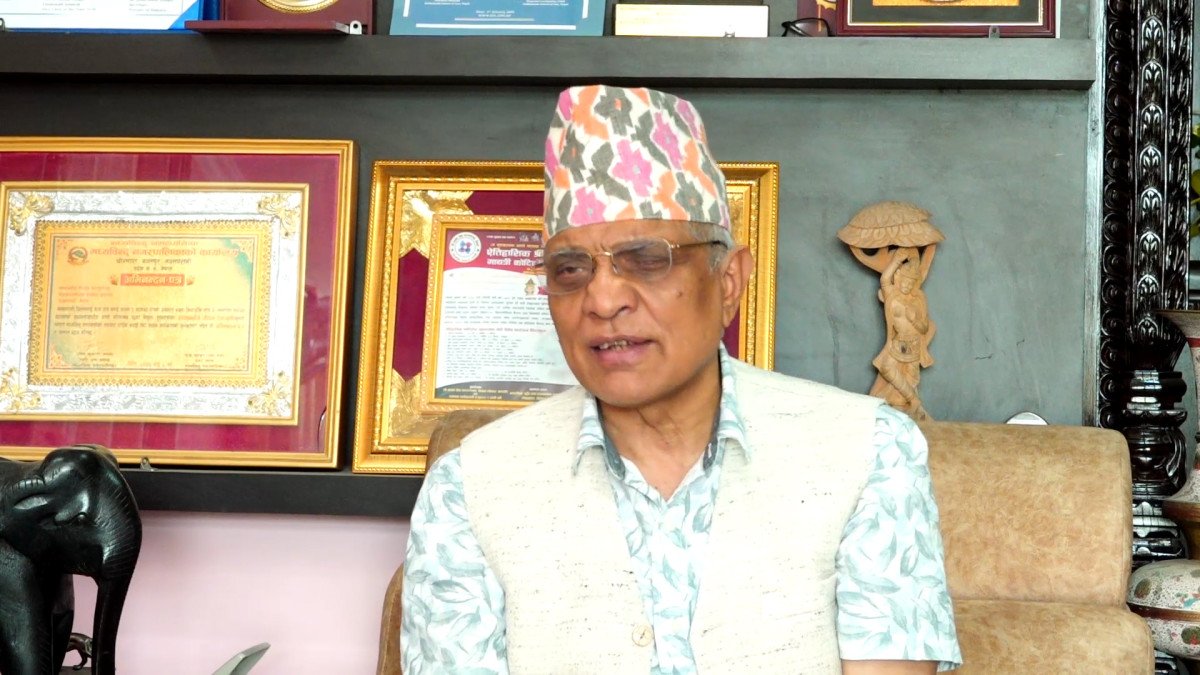
Kathmandu. Former Chief Justice Gopal Prasad Parajuli has expressed serious concern, stating that the property investigation commission formed by the government under the convenorship of a former judge seeks to interfere with the independence of the judiciary. He warned that the government, in the name of good governance, is trying to dismantle an established practice, which could undermine the very shield of democracy.
The government had formed a five-member commission under the convenorship of former Supreme Court Justice Rajendra Kumar Bhandari in the first week of Baishakh to investigate the assets of high-ranking political office bearers and senior officials who held public office from 2062/63 BS to the present (2082/83 BS). After the commission established its office and began its work, the inclusion of incumbent and former Chief Justices and judges has created legal and constitutional ripples. A lawsuit has also been filed in the Supreme Court on this matter.
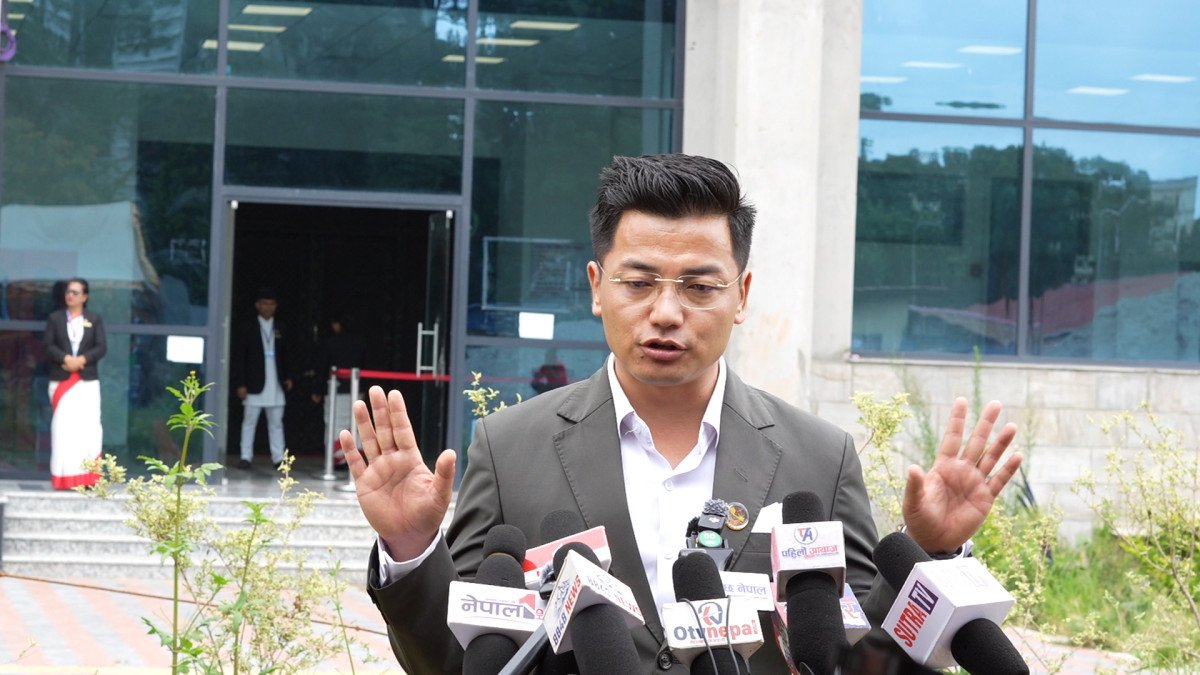
In a conversation with News Agency Nepal, former Chief Justice Parajuli emphasized the need to protect the dignity of the judiciary and prevent executive arbitrariness. He argued that if the judiciary is sought to be controlled with prejudice, it will ultimately endanger the fundamental rights of citizens. While stressing the need to view the position and social responsibility of judges through the lens of modern good governance, he stated that although in the past judges were seen as gods or divine messengers in a feudal tradition, this concept has completely changed in today's democratic era. He said, 'The position of a judge today is considered a symbol of good governance based on accountability, responsibility, and transparency in accordance with the constitution and laws.'
According to him, while politicians are directly accountable to the public, the international practice is that judges are accountable only to the constitution and laws. He cited the Milan Declaration of 1985, which clearly states that the first condition of democracy is an independent judiciary, where irrefutable principles of judicial ethics and security are active.
Recalling the words of former Chief Justice Hari Prasad Pradhan, he likened the state to a kite and the judiciary to a mother bird protecting its chicks, implying that the judiciary is the last shield for the protection of citizens' freedom. He informed that in America, under the federal legal system, judges are required to disclose their assets under the Government Ethics Act, and in Nepal, as per the Judicial Council Act and code of conduct, there is a provision to submit assets every two years. However, he demanded that the state guarantee how the independence of the judiciary can be maintained if the government's intentions and motives are wrong in the name of asset investigation.
International agreements have been made at various times in democratic countries worldwide to preserve the independence of the judiciary. In 1985, a conference held in Milan, Italy, under the leadership of the United Nations, established the independence of the judiciary and the security of judges for democratic countries.
'The principles set by the Milan Declaration guarantee that judges are free from any political prejudice or pressure,' Parajuli said. Similarly, the Bangalore Principles of Judicial Conduct, applied globally, have clarified the scope of judicial ethics and personal impartiality, he added. He stated that such codes of conduct, where judges regulate themselves, pave the way for reform and transparency within the judiciary without external interference.
Various countries around the world have different legal and traditional frameworks for collecting and examining judges' asset details. In the United States, the Government Ethics Act is in force as federal law, compelling judges to submit asset details to the state to make them ethically and financially accountable. Italy, France, and other developed European countries also have similar stringent legal provisions.
Although the United Kingdom does not have written laws, its strong democratic tradition and high ethical values ensure transparency and accountability. In neighboring India, judges secretly submit their asset details to the Chief Justice, and regulation is done through internal codes of conduct. Countries like South Africa, Sri Lanka, and Bangladesh also have their own refined mechanisms for ensuring judicial accountability.
Looking at Nepal's legal history and practice, although there is no separate and specific law for collecting judges' assets, related mechanisms have been in operation. In Nepal, as per the Judicial Council Act and the code of conduct for judges, there is a mandatory legal provision to submit asset details every two years, and all incumbent judges have submitted their asset details, Parajuli claimed.
All judges regularly declare and submit their assets under the supervision of the Commission for the Investigation of Abuse of Authority and the Judicial Council. However, with the government now including judges in the scope of the investigation commission, it is being criticized as a step against legality and the principle of separation of powers. Analysts have pointed out the risk that taking judicial administration under a political or administrative commission could create an environment where judges are unable to make decisions independently in the future.
While submitting asset details and being transparent is a beautiful aspect of good governance in itself, Parajuli analyzes that if political vendetta or interventionist motives are hidden behind this facade, it could push the entire democracy into a crisis. 'To protect the impartiality of the judiciary, the state itself must first be free from prejudice,' he cautioned.
In Nepal too, there is a pressing need for specific legal provisions for judges to submit asset details, maintain records, and ensure confidentiality and sensitivity during investigations. If the state, without proper mechanisms and with malicious intent, seeks to undermine the judiciary, it will further escalate the conflict between the executive and the judiciary. Until the final resolution of this case pending in the Supreme Court and appropriate legal reforms are made, any immature attempt in the name of asset investigation carries a strong risk of weakening the reputation of Nepal's independent judiciary.
This specific news has been automatically translated by AI. As a result, there may be some inaccuracies or language errors.


_iL3K2wYemS.jpg)