Trump Threatens Tariffs on 60 Trading Partners Over Forced Labor


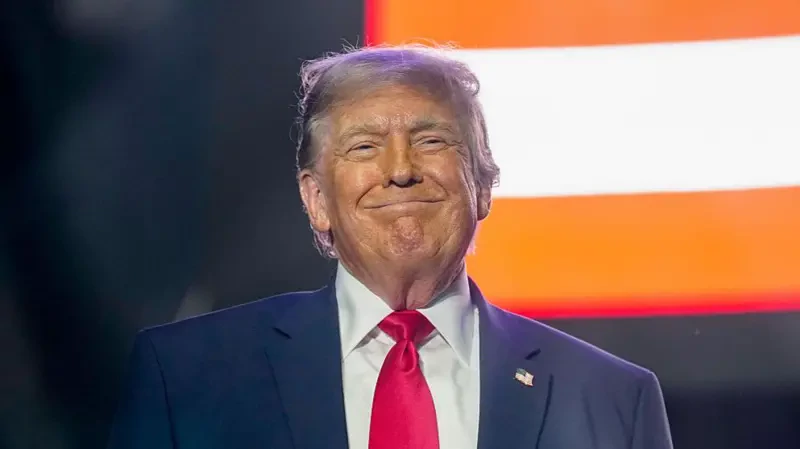
US President Donald Trump has warned of imposing tariffs of 10 percent to 12.5 percent on 60 trading partner countries and regions, including the UK, the European Union (EU), and Australia. He has taken this step as the latest effort to revive his major trade policy, accusing them of failing to stop forced labor. In response, the EU immediately reacted, stating that the US must respect the tariff agreement reached in July. The EU has indirectly argued that additional tariffs would be contrary to the spirit of that agreement. The proposed tariffs on trading partners accused of allowing the import of goods produced through forced labor come after the US Supreme Court declared Trump's so-called 'Liberation Day' tariffs illegal in February. After that, Trump imposed a uniform tariff of 10 percent on all imports. However, last month, the US trade court ruled that this step was also illegal, although these tariffs are still in effect due to the ongoing appeal process. The latest proposal to impose new tariffs based on forced labor will affect major trading partners such as Canada, Japan, Norway, Taiwan, and China. It is also analyzed that this will give Trump an opportunity to circumvent the previous limits imposed by the courts on his protectionist economic agenda. This proposal comes at a time when the US is warning of imposing an additional 25 percent tariff on Brazil. US Trade Representative Jamison Greer said, 'It is unacceptable that our most important trading partners fail to control the import of goods produced using forced labor. This forces American workers to compete unfairly in the global market. We will no longer tolerate such inequality.' The prospect of new tariffs is expected to worry those countries, including the UK, which have made significant efforts to build a relationship of trust with Trump and control trade costs with his unpredictable administration. Experts had predicted that Trump would seek a legal loophole to circumvent the Supreme Court's decision immediately after it came in February. At that time, he had warned of using tariffs 'more powerfully and more aggressively' and said there were at least six other legal options to punish countries he deemed risky for the US economy. The latest tariff proposal is the result of an investigation into the labor laws of 60 trading partners under Section 301 of the Trade Act of 1974. According to the 98-page report related to that investigation, 'All except Canada, Ecuador, the European Union, Indonesia, Mexico, and Pakistan have failed to prevent the import of goods made using forced labor.' However, the White House concluded that Canada has not effectively enforced its own laws. In the EU, since the overall ban on the import of goods made using forced labor will not come into effect until December 2027, both Canada and the EU may face US tariffs. According to the report, a 10 percent tariff is proposed on the EU, Canada, Mexico, Taiwan, and the UK. China, Japan, India, South Korea, Brazil, and Switzerland will face a 12.5 percent tariff. These new tariffs will not take effect immediately. They will only come into force after public comment, review, and further processing. The European Commission stated that while the EU 'fully supports' the US concern about forced labor, it considers tariffs imposed on that basis to be 'unjustified.' The Commission stated that it is committed to the agreement reached in July to impose tariffs on most goods and expects the US to 'fully respect all the terms of that agreement.' The British government has also stated that it has addressed the issue of forced labor through legal provisions, including the 'Modern Slavery Act.' A government spokesperson said, 'We are in regular contact with the US administration during the negotiations and have provided clear information about the steps we have taken.' He added, 'The special access that British businesses receive under the current agreement remains in place, and there has been no change in the tariff rate applicable to the UK.' From The Guardian
This specific news has been automatically translated by AI. As a result, there may be some inaccuracies or language errors.

_iL3K2wYemS.jpg)