Trump Administration Establishes 'Anti-Weaponization Fund' to Shield Allies


Washington DC. US President Donald Trump has agreed to establish an 'Anti-Weaponization Fund' for his allies in collaboration with his own administration. This move is the latest example of his efforts to weaken checks on presidential power in his second term and avoid future investigations against himself.
This agreement highlights the new obstacles Trump is creating, which could make investigations by congressional Democrats, future administrations, and even entities outside the federal government difficult.
In many respects, Trump is weakening the transparency measures implemented after the Watergate scandal. He has attacked Congress's power to control the budget, rewarded loyal supporters accused of crimes for his purposes, and attacked independent bodies and oversight mechanisms of the executive branch.
According to former prosecutors and constitutional law scholars, Trump is doing all this by utilizing and intensifying the expansion of presidential power supported by the Supreme Court. He has also disregarded political norms and traditions that limited previous presidents.
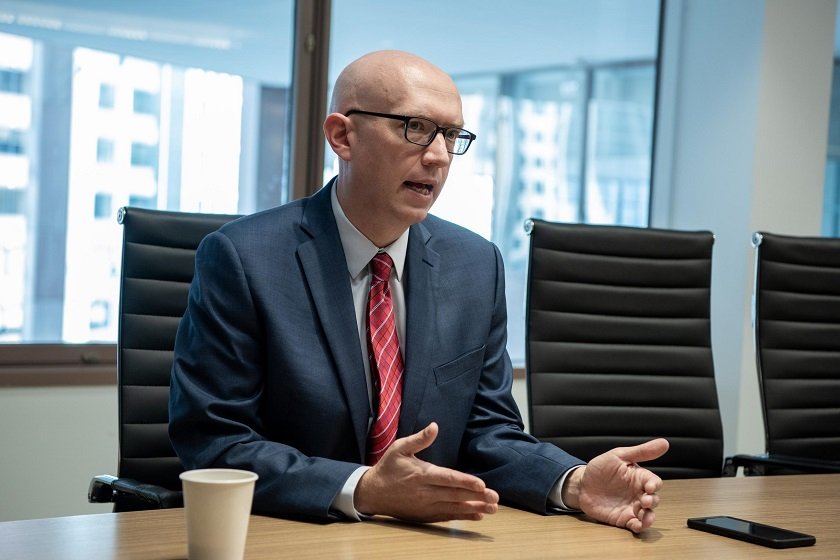
In the 1970s, Congress enacted laws to control presidential power following scandals related to the Richard Nixon administration. Courts at that time supported those laws. 'We are now seeing a dramatic shift of power in favor of the president, where executive power is becoming concentrated in the president and is no longer distributed among various bodies,' said Adam Zimmerman, a professor at the Gould School of Law at the University of Southern California. 'We are also seeing someone who is willing to use that power to its extreme,' he added.
This recent move is a contradictory agreement that came after Trump withdrew a legally controversial lawsuit against the Internal Revenue Service. It offers broader protection than initially disclosed. Its language may protect Trump not only from tax-related investigations but also from other types of investigations.
He has attacked Congress's power to control the budget, rewarded loyal supporters accused of crimes for his purposes, and attacked independent bodies and oversight mechanisms of the executive branch.
Furthermore, concerns have been raised that the extremely broad criteria for individuals who can benefit from this fund, estimated at approximately $1.8 billion, may discourage people from cooperating with congressional investigations related to Trump.
'The announcement of this fund clarifies many of the trends we have seen this term – that the president has misused government power to punish his enemies and reward his friends. This includes those who break the law for the president,' said Greg Nunziata, executive director of the Society for the Rule of Law.
According to a Justice Department spokesperson, this fund was created to hear and resolve grievances of Americans who were unjustly targeted due to their beliefs. 'Those who are dissatisfied with the Anti-Weaponization Fund should remember that we have reached this situation because the president's tax returns were illegally leaked and previous administrations used law enforcement agencies to harass their political opponents,' he added.
Protection Extending Beyond Tax Investigations
The new agreement, which provides tax immunity to Trump, his businesses, and family, was revealed through a quietly released addendum. Justice Department officials, defending the fund, stated that the IRS abandoned past tax investigations in exchange for Trump withdrawing his $10 billion lawsuit against the federal government over the leak of his tax returns.
Acting Attorney General Todd Blanche told CNN, 'In every agreement, both sides give something up.' The language of this agreement appears to apply not only to claims brought by the IRS or the Treasury Department but also to claims brought by any government agency. However, the Justice Department clarified to CNN that its primary focus is on civil matters rather than criminal ones. The ministry also emphasized that the agreement only covers claims related to Trump's activities prior to May 19.
However, the language used in the agreement appears to attempt to block any government claims that could fall under 'lawfare' or 'weaponization,' not just tax-related investigations. These terms do not have a clear legal definition. But they are interpreted very broadly in the agreement, suggesting an effort to block various federal actions that could be taken against Trump, his family, or his businesses.
Discouraging Participation in Investigations
Trump and his Justice Department have already taken action against individuals who cooperated with investigations into the president's conduct, and charges against his supporters have been dropped. 'He is sending an increasingly clear message every day: if you commit crimes for him, there is nothing to fear. Instead, you will be honored, perhaps even financially rewarded,' Nunziata said.
Prosecutors involved in the January 6 investigation and Justice Department employees who worked with Special Counsel Jack Smith were removed. The contempt of Congress case against Trump's former advisor Steve Bannon was also dismissed.
However, former FBI Director James Comey and New York Attorney General Letitia James, who led prominent investigations into Trump, were targeted with criminal charges. Trump pardoned all those involved in the Capitol attack. The possibility that those convicted of attacking law enforcement could receive financial assistance from the new fund has not been denied by senior administration officials.
Zimmerman said, 'This administration is using a lot of sticks and carrots.' He described the president's power to pardon as a 'huge reward' and the new fund as a 'carrot cake.' Recalling his work on the compensation fund established for victims of the 9/11 terrorist attacks, he expressed concern about Trump's influence.
The board members of this fund can be removed by the president, and those members will be appointed by the Attorney General. 'It is a completely valid concern that this could discourage people from participating in future government investigations or congressional hearings if Democrats win control of the House or Senate,' he said.
New Obstacles to Future Investigations
If Trump returns to the White House in January 2025, he will have the legal basis of broad presidential immunity granted by the Supreme Court in 2023, which he did not have during his first term. That case addressed whether criminal charges could be brought for conduct related to a president's official duties. The Justice Department is now opposing civil lawsuits against Trump related to the January 6 attack.
Meanwhile, the Justice Department is developing rules to limit disciplinary investigations by state bar associations against department lawyers. When lawyers involved in Trump's 2020 election overturning scheme faced such actions, new details emerged about how those plans were carried out.
External groups filing complaints with the bar have stated that such actions would discourage lawyers from breaking ethical rules to assist the president. However, the administration, its supporters, and even some Trump critics have argued that these disciplinary processes are being misused.
Weakening Internal Oversight Mechanisms
As the administration seeks to weaken investigations that could reach the president, it is also weakening oversight mechanisms within the executive branch established by post-Watergate reforms. Immediately upon starting his second term, Trump removed various Inspectors General who were supposed to investigate corruption, abuse, and waste within his agencies. These offices conducted various investigations into Trump's first administration, which later led to congressional investigations and the 2019 impeachment proceedings.
Earlier this year, a legal counsel office within the Justice Department stated that the president is no longer obligated to comply with the 'Presidential Records Act.' Under this law, White House documents must be preserved and eventually handed over to the National Archives. The Justice Department's argument is that Congress cannot enact any law that interferes with the president's executive authority. A federal judge has already rejected this argument.
Supreme Court Supports Presidential Power
The administration's efforts to challenge laws controlling the president align with the growing 'unitary executive' theory within the Supreme Court. A conservative majority, including three judges appointed by Trump, has allowed him to remove heads of so-called independent agencies without cause, undermining congressional limits. The Supreme Court is currently considering another case that could define the scope of the president's power to remove employees.
Last year, the conservative majority of the Supreme Court allowed the Trump administration to withhold $4 billion in foreign aid, which is considered to have weakened another congressional check on the president. Zachary Price, a constitutional law professor at the University of California San Francisco Law School, said, 'This new Anti-Weaponization Fund appears to be part of an effort to spend money without congressional approval and increase the president's control over federal spending.'
Ironically, during Trump's first term, the administration, in opposing investigations by the Democrat-led House, argued that it was not necessary for courts to order compliance with congressional subpoenas because lawmakers could use their budget authority to compel cooperation. However, if Democrats regain control of the House after the midterm elections, their power to control Trump may be weaker than in 2019.
Doug Letter, a former Justice Department official and former legal counsel for the U.S. House of Representatives, said, 'Our government requires a certain level of honorable conduct to function.' He added, 'Trump's behavior has gone far beyond what anyone imagined when the Constitution and our system of governance were created. I am not sure what real checks there can be besides impeachment.'
This specific news has been automatically translated by AI. As a result, there may be some inaccuracies or language errors.