Pakistan Rejects Abraham Accord Invitation

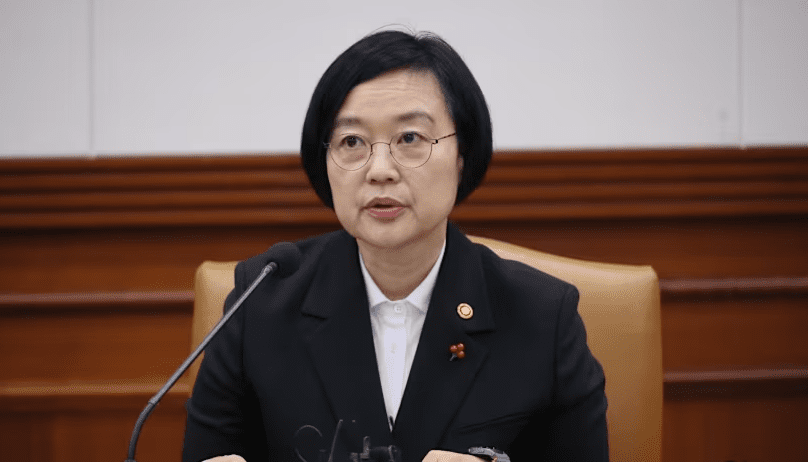
Pakistan. A few hours after US President Donald Trump invited Pakistan, along with Muslim and Arab countries, to join the Abraham Accord by linking it to a potential deal with Iran, Pakistan rejected such a proposal, stating it does not align with its 'fundamental ideology'. Pakistan's Defense Minister Khawaja Muhammad Asif clarified that Islamabad would not support any agreement that conflicts with its basic national outlook.
In an interview with Pakistani media outlet Samaa TV, he was asked about the possibility of Pakistan signing the Abraham Accord following US pressure and diplomatic signals. In response, Asif, clarifying his personal and political stance, stated that Pakistan should not participate in any arrangement that conflicts with its ideological basis.
Questioning the credibility of expanding relations with Israel, he argued that it would be difficult to build a long-term foundation of trust with those parties. He even posed the question, 'How is cooperation possible with a party whose word cannot be trusted even for a single day?'
Reiterating Pakistan's long-term policy, Asif made it clear that the concept of normalizing relations with Israel is not acceptable to his country. He indicated that Pakistan's official and historical stance on this issue has not changed.
Defense Minister Asif also used Pakistan's passport policy as a basis for his argument. According to him, Pakistan's passport itself reflects the national policy of not recognizing Israel. He mentioned that Israel's name is not even mentioned on Pakistan's passport, stating that this clearly reflects Islamabad's institutional policy and long-term vision.
Earlier on Monday, US President Trump, according to local time, urged many Muslim and Arab nations to join the Abraham Accord, linking a potential agreement with Tehran to a broader political restructuring of the Middle East. He mentioned that talks with Iran were 'moving forward well' and signaled the creation of a new diplomatic framework at the regional level.
In a long message released on his social media platform Truth Social, Trump claimed that the proposed arrangement could be a 'historic event' for the Middle East. He had called on countries including Saudi Arabia, Qatar, Pakistan, Turkey, Egypt, Jordan, and Bahrain to collectively sign the Abraham Accord.
He claimed that the dialogue with Iran was progressing positively and warned that there would be an opportunity to reach a broad agreement encompassing all parties, but if no agreement was reached, there would be no deal at all. According to Trump, if diplomatic efforts failed, the region could risk returning to war and military confrontation, and that situation could be even broader and more powerful than before.
Trump expressed the view that Saudi Arabia and Qatar should immediately join the Abraham Accord after the agreement with Iran is finalized. He expressed the expectation that other countries would follow suit thereafter. Moving further, he indicated the possibility that Iran itself could become part of this framework in the future if talks with the US were successful.
According to Trump, the Abraham Accord has provided economic, financial, and social benefits to its member states. He cited the United Arab Emirates, Bahrain, Morocco, Sudan, and Kazakhstan as examples.
In his message, Trump also mentioned discussions with various regional leaders. According to him, discussions were held on this matter with Saudi Crown Prince Mohammed bin Salman, UAE President Mohammed bin Zayed Al Nahyan, Qatar's Emir Sheikh Tamim bin Hamad Al Thani, Pakistani Army Chief Asim Munir, Turkish President Recep Tayyip Erdogan, Egyptian President Abdel Fattah el-Sisi, Jordan's King Abdullah II, and Bahrain's King Hamad bin Isa Al Khalifa.
Describing this initiative as potentially the 'most significant agreement' in the history of the Middle East, Trump also informed that he had already instructed his representatives to begin the process of expanding the Abraham Accord to more nations.
The Abraham Accord, advanced with US mediation in 2020, is an initiative aimed at normalizing diplomatic, economic, and security relations between Israel and some Arab nations. However, with Pakistan publicly expressing disagreement following Trump's latest appeal, the US effort to expand this initiative to the broader Muslim world appears to face new political challenges.
This specific news has been automatically translated by AI. As a result, there may be some inaccuracies or language errors.