GANDAKI PROVINCE GOVERNMENT PREPARES BUDGET FOR FY 2083/4 AMIDST CONCERNS OVER FISCAL DISCIPLINE AND REVENUE SHORTFALL

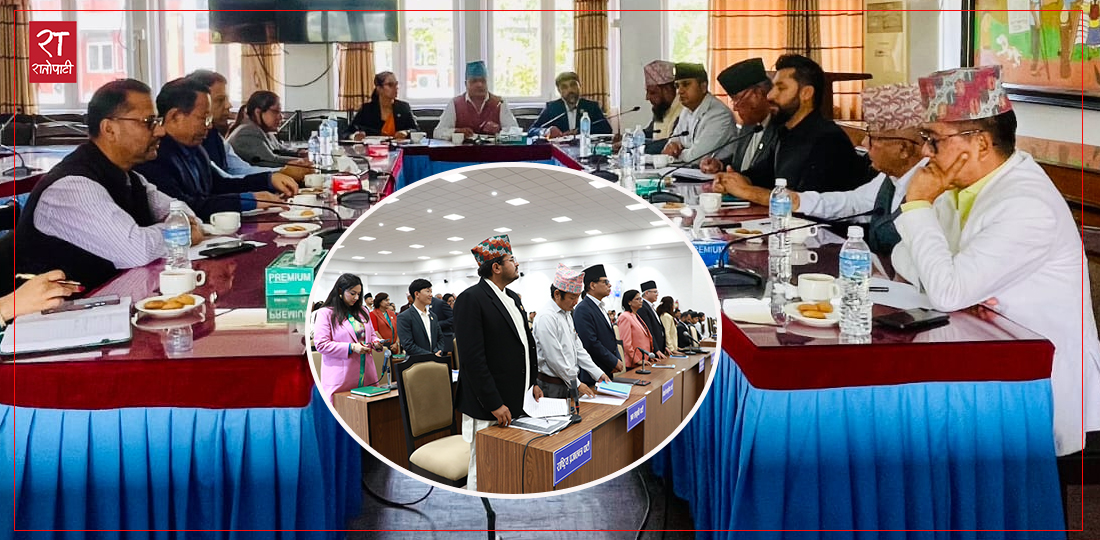
Pokhara. The Gandaki Province government is busy preparing the budget for the upcoming fiscal year 2083/4. The Policy and Planning Commission and the province's Ministry of Finance are collecting suggestions on budget preparation from experts and lawmakers.
The Ministry of Economic Affairs has set a budget ceiling of Rs 28.7056 billion for the upcoming year. The size of the provincial government's budget has been continuously shrinking in recent times. The budget, which was around Rs 33 billion in fiscal year 2080/81, is estimated to drop to Rs 28 billion next year.
Lawmakers participating in the discussion have suggested making the budget realistic. They argue that unrealistic budgets in previous years have also caused problems in project implementation.
Questions about the budget size and implementation were also raised in the meeting of the Public Accounts Committee. Sudhir Kumar Poudel, chairman of the Accounts Committee, states that the province's actual budget capacity is only around Rs 22 to 23 billion, and any budget exceeding this is brought solely to increase the budget size.
'Our annual budget is brought at around Rs 32/33 billion. But in reality, it's not even 22 billion,' he said, 'The trend of increasing the budget size by unrealistically including domestic debt should now stop.'
The government has not been able to raise domestic debt every year despite including it in the budget. Lawmakers have suggested removing it from the budget as the province does not have the law to borrow.
Former minister and lawmaker Bed Bahadur Gurung also said that the budget should be prepared based on realistic grounds. 'If we raise hopes everywhere but don't complete the work, criticism will only increase. That is what is happening in the province now,' he said, 'If we invest only in multi-year and prestigious projects, the province will prosper with this much budget.'
The decline in Gandaki's budget is due to the contraction of grants from the federal government. On the other hand, the limit of internal revenue that the province itself can collect has also decreased.
Ministers themselves admit that although the actual budget is only Rs 22 to 24 billion, unnecessary size is being added. The Policy and Planning Commission has stated that to maintain fiscal discipline in budget preparation, investment should be made in old and carried-over projects.
Vice-chairman of the Commission, Dr. Krishnachandra Devkota, said that there are many outstanding liabilities in the infrastructure sector and the budget should address them. 'Under the Ministry of Energy and Water Supply alone, there is a liability of Rs 4.70 billion for 810 drinking water projects,' he said, 'Adding new projects before clearing the liabilities of old, uncompleted projects increases financial pressure. Allocating sufficient budget to incomplete projects is the first priority.'
The Commission's working procedure has made it mandatory not to implement any plan outside the project bank system. Vice-chairman Devkota said that ministries will have to prepare medium-term expenditure structures, subject-specific ministries must enter data into PLMBIS before demanding a budget, and no budget will be allocated to small, fragmented projects of less than Rs 5 million.
Lawmakers have also presented suggestions to increase the province's internal revenue. In the discussion held on Monday, Accounts Committee Chairman Poudel said that not only the external economic recession but also legal and managerial weaknesses are responsible for the shrinking revenue. He mentioned that the province's income has sharply decreased after the provision of keeping the amount of house and land registration fees in the divisible fund was removed after the amendment of the Local Government Operation Act.
Another lawmaker, Gurung, said that the province is not receiving the 60 percent share it should receive when local levels tender for natural resources like stones, gravel, and sand, and suggested that the province should have the courage to tender itself. To stop leakage in transport and entertainment taxes, Gurung demanded that the government immediately implement digital governance.
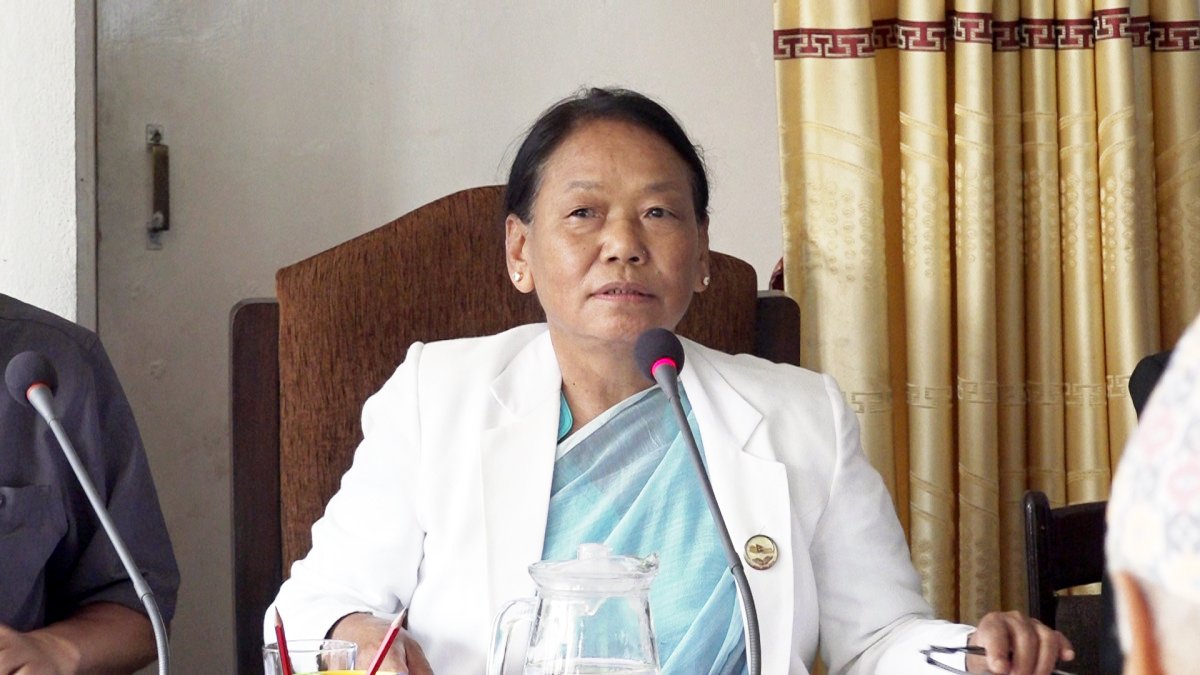
Lawmaker Bindu Poudel has suggested that the budget should be allocated based on revenue. 'It is a matter of great concern that the place that pays the most tax to the province receives the least budget,' she said, 'The tendency to allocate budget only to the areas of ministers and influential people should end.' She also drew the government's attention to the fact that tenders for projects have been left incomplete due to the increase in the price of construction materials caused by inflation.
Secretary of the Ministry of Economic Affairs, Tokaraj Pandey, said that the international economic situation has affected customs and revenue due to price increases in construction materials and a decrease in imports.
However, he claimed that there is still Rs 8.73 billion secured in the province's consolidated fund, and there will be no payment problems in June. He said that they are striving to make the upcoming budget realistic.
This specific news has been automatically translated by AI. As a result, there may be some inaccuracies or language errors.