President and Prime Minister's Relationship Formalized, Lacking Coordination

Kathmandu. As per the prevailing practice and tradition, the relationship between the President and the Prime Minister should be complementary. Because a complementary relationship enhances trust and creates a conducive environment for state governance.
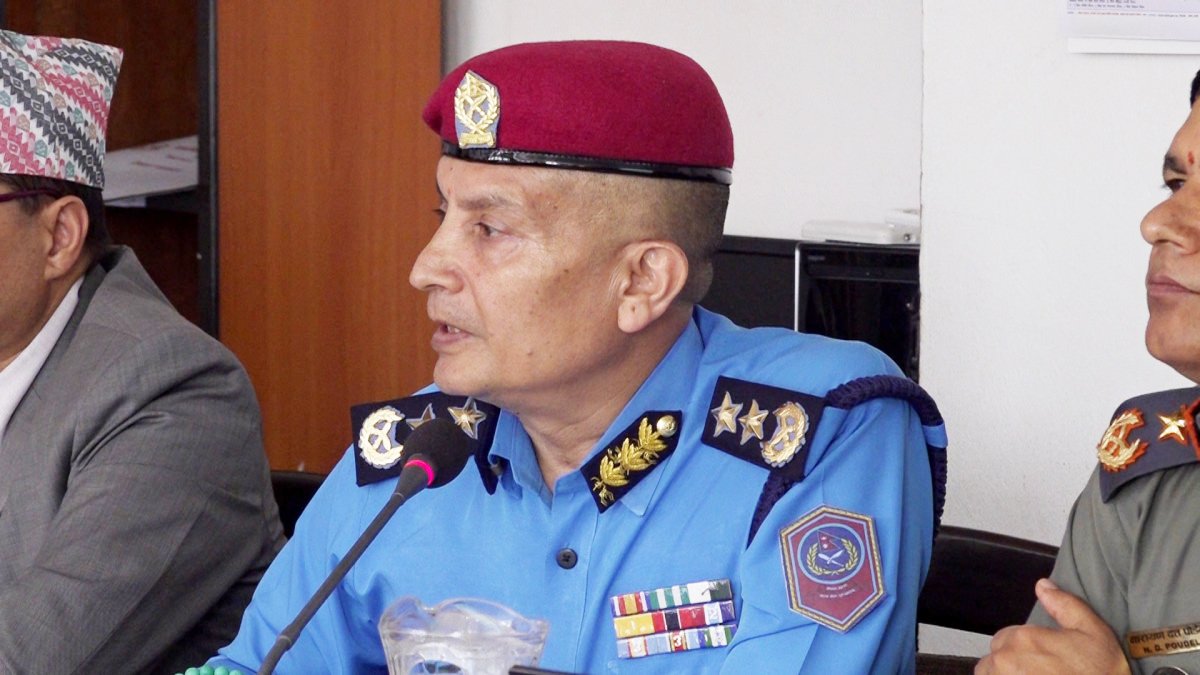
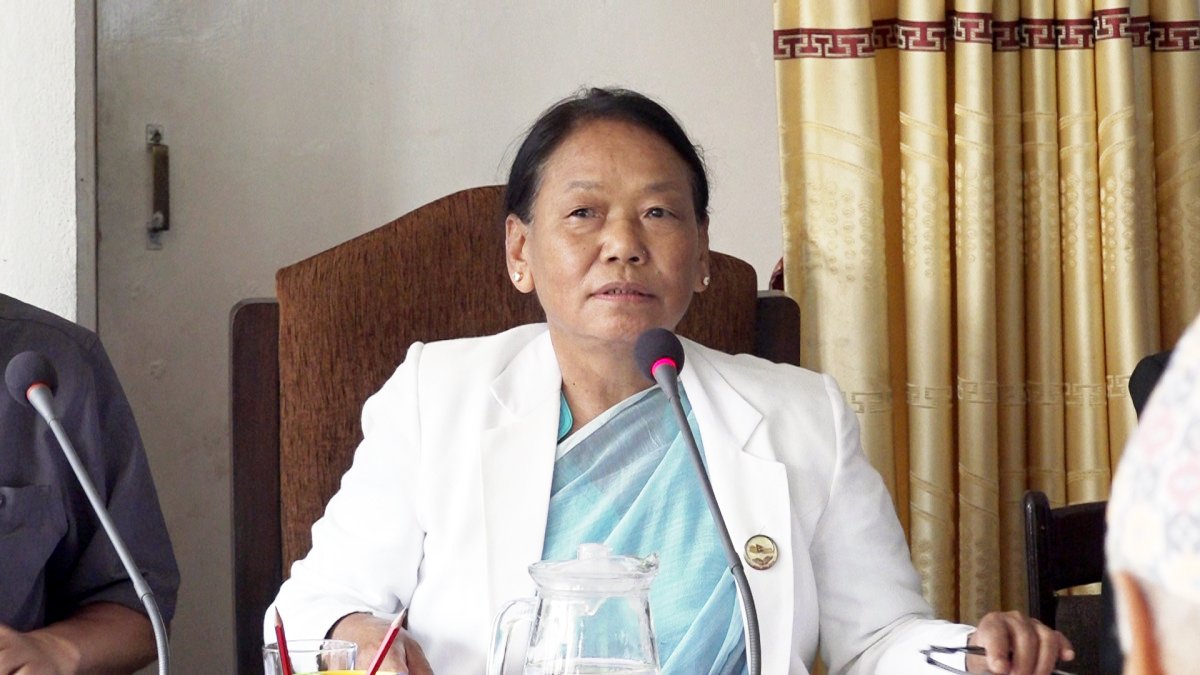
In contrast, the relationship between President Ram Chandra Paudel and Prime Minister Balen Shah is limited to formality. Complaints have begun to surface publicly about a lack of coordination in informal meetings, courtesy calls, and briefings by the head of government to the head of state on special issues and occasions.
A series of events, including the withdrawal of the ordinance related to the Constitutional Council, indicate a chilled relationship and growing distance between the President and the Prime Minister.
Generally, there is a tradition for the Prime Minister to consult with the President regarding cabinet decisions and ordinances or bills being moved for lawmaking. There is also a constitutional provision for the Prime Minister to inform the President about the country's current situation and foreign relations.
However, sources indicate that since Balen Shah was appointed Prime Minister, there has been no consultation or general discussion between the Prime Minister and the President on these matters. Shah was appointed Prime Minister on Chaitra 13, 2082. As the leader of the Rastriya Swatantra Party, Shah has reportedly not visited the President's Office, Shital Niwas, except for his oath of office and other formal events since then.
'In the past, the Prime Minister used to consult with the President when making any important decision, but recently, that tradition seems to have been broken,' a source said, 'Except for formal and invited events, I am not aware of the Prime Minister consulting with the President.'
No one is aware of the Prime Minister consulting with the President regarding the government's policy and programs or controversial ordinances. On Baishakh 28, the policy and program brought by the government led by Shah were presented by President Ram Chandra Paudel at a joint meeting of the Federal Parliament. However, Prime Minister Shah left in the middle while the President was reading out the policy and program in the parliament. Sources say that incident reinforced the suspicions about the relationship between the Prime Minister and the President. Shah's action was criticized from the parliament to the streets.
Moreover, on the day the policy and program were presented, the opposition raised questions in the parliament regarding the Prime Minister Shah's attire.
In fact, those who worked in the President's Secretariat in the past have experience of previous Prime Ministers meeting and consulting the President to inform them when making important decisions or when the government convenes and adjourns sessions of the Federal Parliament.
However, Prime Minister Shah did not meet the President for consultation when the first session of the Federal Parliament formed after the House of Representatives election held on Falgun 21 was convened and adjourned, and when the second session was convened.
Meanwhile, the government issued 8 ordinances on important matters. The Constitutional Council (Work, Duties, Rights, and Procedures) (First Amendment) Ordinance, 2083, was once sent back by President Paudel. After the cabinet decided on the ordinance sent back by the President, the government re-issued it and sent it to the President. Even then, the Prime Minister did not want to meet the President.
According to sources from President Paudel's secretariat, Prime Minister Balen has not visited the President's Office except for formal and invited events where his presence was mandatory.
So far, Prime Minister Shah has visited the President's Office, Shital Niwas, for the oath of office and secrecy after the formation of his cabinet, the oath of office and secrecy for Speaker Dol Prasad Aryal, Deputy Speaker Ruby Kumari Thakur, and National Assembly Vice-Chairperson Lila Kumari Bhandari. Most recently, he visited Shital Niwas on Chaitra 27 to attend the oath-taking ceremony of Deputy Speaker Ruby Kumari Thakur.
'I know he came for formal events that he couldn't miss,' a staff member from the President's Secretariat told Ratopati, 'He hasn't come for anything else. Other Prime Ministers used to come to discuss important decisions.'
According to sources, President Paudel had expected direct consultation from the Prime Minister on matters such as the government's policy and programs and ordinances.
Furthermore, his secretariat states that Prime Minister Shah does not have a style of frequent meetings. 'Prime Minister Shah has a style of working rather than spending time on unnecessary meetings,' Shah's secretariat said, 'He does not engage in meetings except for the most urgent ones.'
Due to this working style of Prime Minister Shah, there was no consultation with the President when the government issued ordinances or when bulldozers were used in slum areas. To such an extent, Prime Minister Shah seems to have broken the tradition of paying a courtesy call to the head of state after being elected.
Article 81 of the Constitution of Nepal 2072 mentions that the Prime Minister shall inform the President about the decisions of the Council of Ministers, bills to be presented in the Federal Parliament, and other necessary details that the President may seek information about.
Although the constitution does not specify a time, there was a tradition of the Prime Minister meeting the President once a week (usually Thursday evening). According to knowledgeable individuals, during such meetings, the Prime Minister would brief the President about the important issues and government decisions of the week, the country's security situation, and political developments.
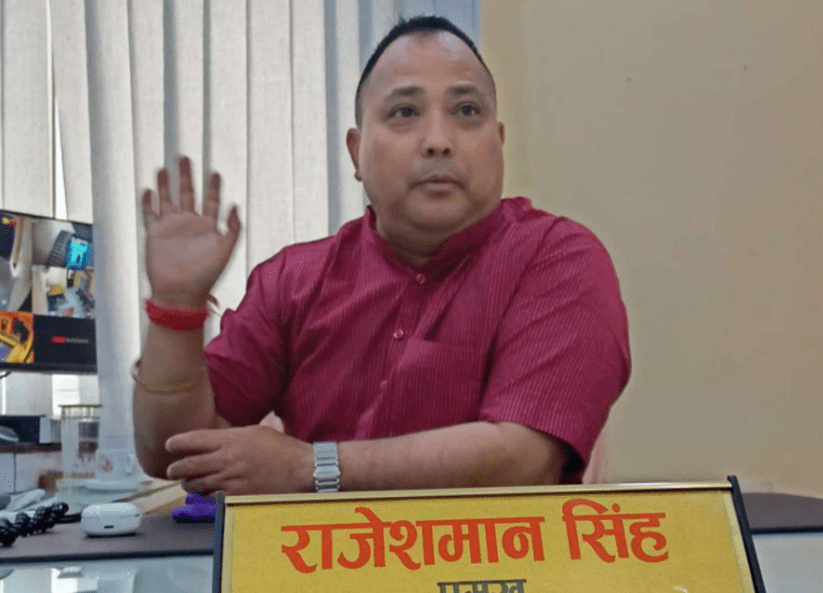
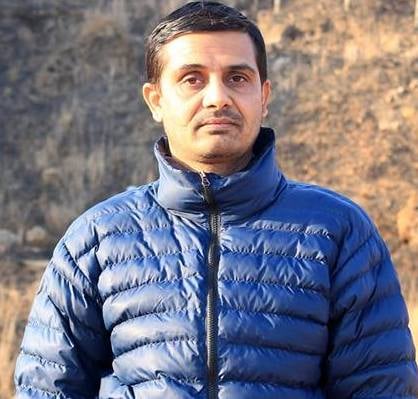
Rajendra Dahal, who served as an advisor to the first President Dr. Ram Baran Yadav, states that meetings and consultations are 'confidence-building measures.' 'To maintain goodwill and good relations, meetings are usually held once a week or, depending on the workload, even every two weeks,' Dahal said, 'If the Prime Minister is extremely busy and there is no pressing issue, important matters can be informed to the President by phone.'
Besides, Dahal suggests that one can send an envoy or a senior minister to say, 'The Prime Minister is busy, so I have come to brief you on his behalf.' 'It's not that the Prime Minister has to be bound 365 days a year, but this is a courtesy, and this courtesy must be maintained,' Dahal said, 'To the extent that even a phone call from the airport while on an out-of-town trip can provide information. It's all about mutual relations and respect.'
According to sources, President Paudel expects Prime Minister Shah to at least have regular meetings and brief him on the government's performance, but this is not happening in practice.
Another example of a lack of coordination between the President and the Prime Minister is the Buddha Jayanti ceremony held in Lumbini, where the President had expressed interest in participating. However, after the Prime Minister announced his intention to attend, the President did not go. In the end, the Prime Minister also did not attend the event.
Why is the Prime Minister distancing himself from the President's Office? Officials from the Prime Minister's Office are unwilling to speak openly about this. However, sources claim that the Prime Minister's Office has complaints, such as ordinances sent for issuance being leaked from the President's Office.
000
Prime Minister and President are not opposition, rivals, or competitors: Rajendra Dahal
Under what circumstances did consultation, meetings, and briefings between the Prime Minister and the President take place?
The main responsibility for running the government and the state lies with two individuals—the President and the Prime Minister. While the President acts as the 'constitutional guardian,' the Prime Minister is designated as the 'executive head' by the constitution, handling day-to-day affairs. However, the executive head does not possess all constitutional powers simultaneously. In many instances, the Prime Minister needs the President's assistance to exercise constitutional powers.
Under what circumstances has there been a precedent for the Prime Minister seeking the President's assistance?
For example, consultation occurs in lawmaking. The Prime Minister has a majority in parliament, the cabinet introduces a bill, and it is passed by parliament. However, even after being passed by parliament, it does not become law until the President approves (sanctions) it. Regarding policy and programs or the budget, the government does all the work, and it is passed by a majority, but before implementation, the President must sign it. In other words, 90 to 99 percent of the work falls within the Prime Minister's jurisdiction, but the final 1 to 5 percent authority to complete it rests with the President. Therefore, they are like members of the same family. They (Prime Minister and President) are not opposition, rivals, or competitors. Regardless of their party or ideology, once they reach office, they are like navigators or charioteers in the same boat.
Was there a practice of consulting with the President when the government needed to bring an important ordinance or make a decision regarding it?
The authority to bring an ordinance lies with the Prime Minister, not the President, but the authority to issue an ordinance rests solely with the President. In such a situation, their roles are complementary. An ordinance cannot be issued solely by the President's will, nor can it be issued by the Prime Minister's will alone. Therefore, they are not competitors but individuals who must work towards the same goal for the benefit of the country and its people.
All these matters are not codified in laws; some depend on prevailing practices and traditions. For important ordinances, the cabinet usually passes them and sends them to the President, who in 99 percent of cases can stamp them without question. However, if the matter is controversial or special, a political, legal, and personal 'atmosphere' must be created. The Prime Minister's meeting and briefing are precisely for creating that atmosphere.
By explaining the background, saying, 'We are proceeding this way, and the government needs to do this,' the President's trust also increases. The President also has a constitutional responsibility and does not work with blind faith. Therefore, the Prime Minister must brief to win the President's heart and mind. Frequent meetings prevent misunderstandings, and when a matter suddenly arises, it does not lead to a situation of 'What is this?'
In normal circumstances, at what intervals would the Prime Minister visit the President to brief on cabinet decisions?
Meetings and consultations are 'confidence-building measures.' To maintain goodwill and good relations, meetings are usually held once a week or, depending on the workload, even every two weeks. If the Prime Minister is extremely busy and there is no pressing issue, one can say over the phone, 'Mr. President, I am proceeding in this manner.' Alternatively, an envoy or a senior minister can be sent to say, 'The Prime Minister is busy, so I have come to brief you on his behalf.' It's not that the Prime Minister has to be bound 365 days a year, but this is a courtesy. This courtesy must be maintained in any case. To the extent that even a phone call from the airport while on an out-of-town trip can provide information. It's all about mutual relations and respect.
This specific news has been automatically translated by AI. As a result, there may be some inaccuracies or language errors.