Government Receives Study Report to Resolve Legal Disputes Hindering Development Projects


Kathmandu. A study report with special suggestions has been submitted to the government to solve the problem of projects being stalled and costs increasing due to court cases related to infrastructure construction and development projects.
The study committee formed by the Ministry of Law, Justice and Parliamentary Affairs submitted the 'Study Report on Reforms Needed for Speedy Resolution of Court Cases Related to Infrastructure Construction and Development Projects 2083' to the minister.
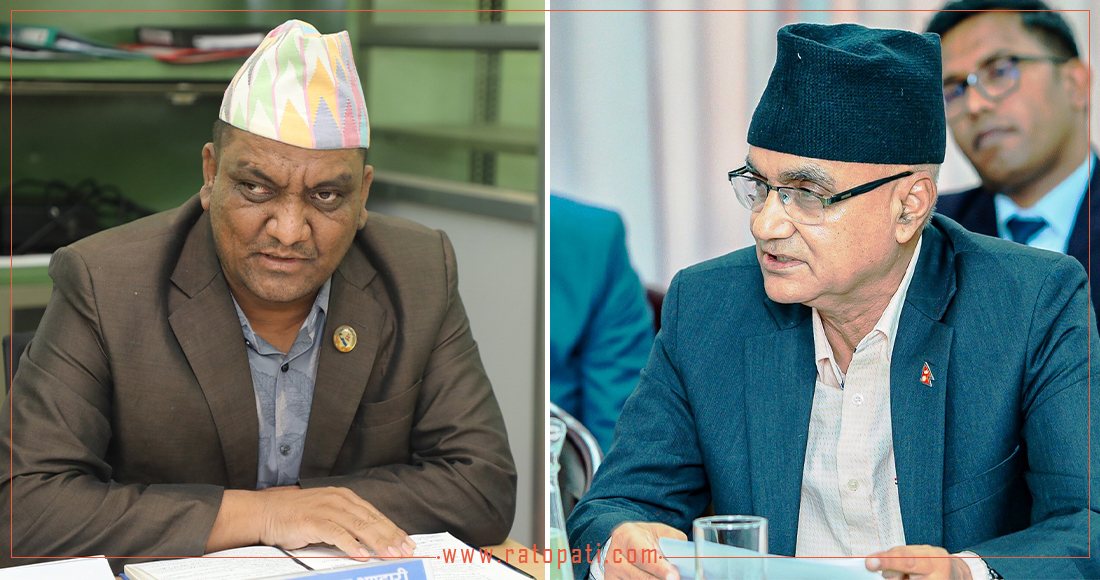
This committee, chaired by Law Ministry Secretary Parashwar Dhungana, included Supreme Court Joint Registrar Arjun Prasad Koirala, Joint Secretaries of the Ministry of Physical Infrastructure, Urban Development, Energy and Irrigation Sushilbabu Dhakal, Prakash Aryal, Sushil Acharya, Achyutmani Neupane, Sunita Nepal, Ram Prasad Acharya and Dal Bahadur Adhikari as Member Secretary. Member of Parliament Engineer Shriram Neupane was included in the committee as a subject expert.
This report has provided clear direction to end the practice of construction work being halted for decades due to small disputes in land acquisition, compensation determination, and contract processes entering the court even before the project starts, and interim orders issued by the court.
According to the report, 'judicial delay' is a major reason for the failure of development projects in Nepal. The time and cost of projects increase significantly due to full stays issued by the court in compensation and contract-related disputes. When a project involving billions of investments is stalled for years due to a small dispute, the state has to bear huge financial losses.
The report presented facts citing examples of the Sikta Irrigation Project, Sun Koshi Bridge, and various transmission lines, where projects were extended for 10 years and costs doubled or tripled due to legal disputes. The committee concluded that judicial proceedings have not been effective due to the backlog of cases in the courts and the lack of technical knowledge related to infrastructure.
Major Proposal: Establishment of 'Infrastructure Tribunal'
The committee has recommended the establishment of a powerful and specialized 'Infrastructure Tribunal' to exclusively handle disputes related to infrastructure construction. This tribunal will include legal members as well as experts in infrastructure, engineering, and economics. Such a structure will facilitate decision-making by considering not only the legal aspects of disputes but also their technical complexities. The report states that laws should be enacted in a way that the decisions made by the tribunal do not obstruct the pace of development.
'Fast Track' Bench to Resolve Cases within 60 Days
Until the tribunal is formed, the report suggests designating 'Dedicated Fast Track Infrastructure Benches' in the Supreme Court, High Courts, and District Courts. A timeline of 60 days from the date of case registration for mandatory judgment or final resolution has been proposed for such benches. Currently, the cost of projects increases by billions due to the same case running for years. Furthermore, it has been suggested to make arrangements for the full text of the judgment to be prepared within 21 days of the decision.
This report, keeping in mind international practices, advocates for adopting the principle of 'no work stoppage'. If the dispute is regarding compensation or payment, it is proposed to deposit the amount in an 'Escrow Account' and continue the construction work. The report emphasizes that the current practice of going to court over low compensation and halting construction work should be discouraged by law.
Projects are most affected by temporary and interim orders issued by the courts. The report suggests making arrangements for interim orders to be finalized within two months of issuance, and if a final decision cannot be reached, such orders should automatically become invalid. The report emphasizes that courts should issue interim orders only after considering the sensitivity and public interest of development projects.
The committee has also included practices from India, Singapore, Australia, and the UK in its report. Examples such as India's 'National Green Tribunal' and Singapore's 'Situations of Payment Act' laws, which reduce legal obstacles in infrastructure development, have been cited. The report mentions that Nepal also needs to recognize the need for such specialized laws and tribunals.
Proposal for Amendment of Acts and Regulations
The report has submitted a list of dozens of acts and regulations related to development projects that need immediate amendment.
These include the Public Procurement Act, 2063: to clarify provisions related to disputes in the tendering process and compensation; the Land Acquisition Act, 2034: to determine a scientific basis for compensation determination and to proceed with land acquisition and work even in case of disputes; Court Regulations: to set separate procedures and timelines for infrastructure cases; and the Arbitration Act, 2055: to make the arbitration process for resolving technical disputes faster and more transparent.
The report recommends mandatory training and orientation for judges on technical aspects of infrastructure construction, terms of procurement contracts, and international construction laws. It suggests developing such expertise through the Judicial Academy. Additionally, it proposes the formation of special mechanisms led by the Chief Justice and Chief Judges to monitor cases.
This specific news has been automatically translated by AI. As a result, there may be some inaccuracies or language errors.