BYD Asia Pacific General Manager Liu Xueliang Discusses Market Strategy and Future Plans
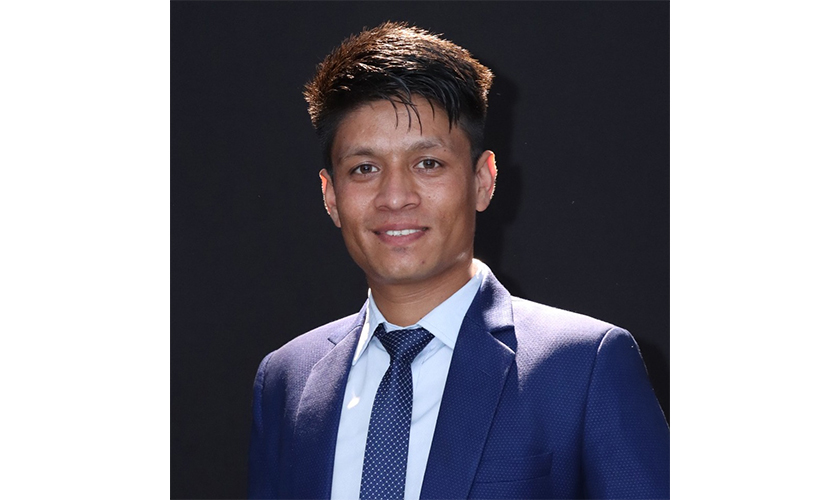

Kathmandu. The demand for electric vehicles has started to increase in the Nepali market recently, with BYD showing dominance. The Chinese company BYD, which is making waves in the global market, has captured the market in Nepal in an unbelievable way in a short time. Ratopati's Anish Mijar had a special conversation with BYD's Asia Pacific General Manager Liu Xueliang at BYD's Guangdong headquarters in China about the impact BYD has made in the Nepali market, the company's future strategy, technology, price, and after-sales service.
- 10 years ago, Nepal was a very small market for electric cars. How was the decision made to invest in a market with no infrastructure?
– I think. The evaluation of any market should not be based solely on its size (small or large). What we need to look at is the direction of future development of that country. Around 2010, China started electrifying public transport, the main objective of which was to reduce dependence on fossil fuels and reduce carbon emissions. These problems are not just China's but are common worldwide. The use of EVs has a significant impact on the economic and environmental development of any country. BYD is a multinational company. Around 2013/2014, even though there was a lack of infrastructure in Nepal, we saw great potential for green development there. Therefore, we decided to bring the concept of electrifying public transport to Nepal.
We welcome all companies that come to join this green revolution. The arrival of many companies benefits the entire EV industry.
- Currently, old and established companies that manufacture traditional fuel vehicles are also attracted to electric vehicle production. Does BYD feel any challenge, or what are the additional challenges it presents?
– Electric vehicles are a completely new industry. No large industry can develop based on just one company or one market. When we started advocating for electric cars, it was a completely new green economic chain. Now, traditional car manufacturers are also entering this field. This also proves that the path and decision chosen by BYD were completely correct. We see this as an opportunity rather than a challenge. We welcome all companies that come to join this green revolution. The arrival of many companies benefits the entire EV industry.
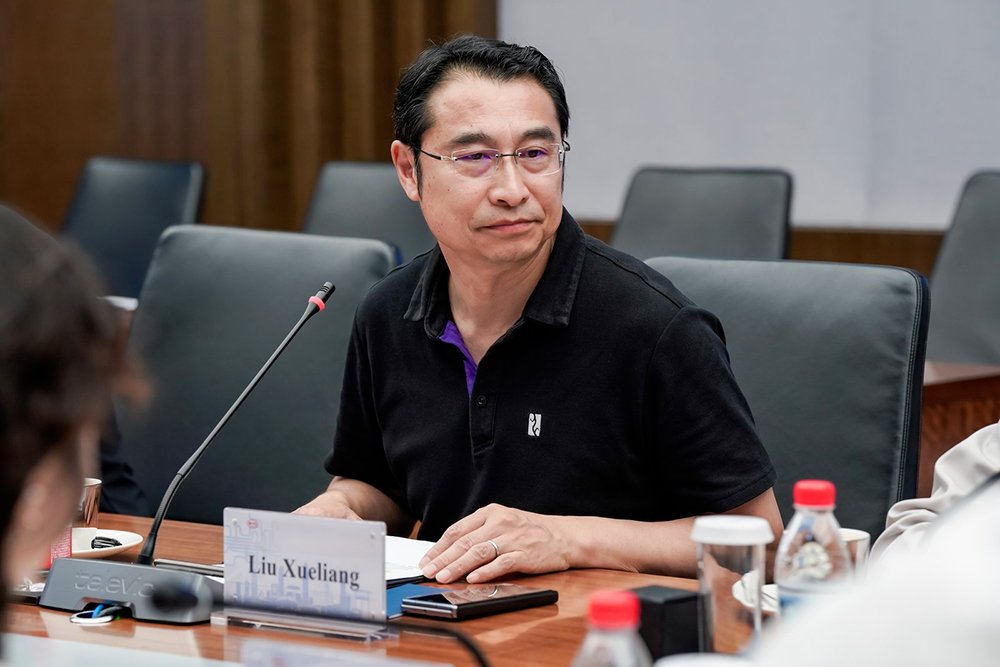
- We also visited BYD's technical headquarters. What is BYD's next step? Do you see it as possible to always stay at the top, or will it be difficult due to new technologies?
– This is a very important question. Sustainable development is not possible without continuous technological innovation. We can only prove ourselves to be the best by continuously developing new technologies. In China, we divide the development of electric vehicles into two phases. The first phase is electrification, which includes basics like batteries, motors, and electronic controls. This has solved the consumer's range and charging concerns. Now we have entered the second phase, which is intellectual development. This involves how to make intelligent driving and the overall consumer experience smarter. BYD has over 120,000 engineers, which is the largest team compared to any automobile brand in the world. Our engineers are working day and night to improve technology. Also, our scale (large-scale production) and vertical integration (control over our own supply chain) capabilities make us fully confident that we will win in a highly competitive market.
We have taken this complaint from Nepali consumers very seriously. We will discuss this with Nepal dealers, we don't just look at the price.
- Recently, the attraction towards BYD cars has been increasing, and they are also popular in Nepal. However, there are complaints that the price is higher compared to competing brands?
– Pricing is a matter that depends on the market conditions of the respective country and our dealer partners there. But I want to clarify that the price set by BYD is always responsible. We do not believe only in price wars. We believe in valuable products and services provided to consumers. In Thailand, some companies recently sold cars at a significantly reduced price, but we did not do that. We do not compromise on our technology, quality, and after-sales service. We have taken this complaint from Nepali consumers very seriously. We will discuss this with Nepal dealers, we don't just look at the price. We look at the overall lifecycle value of the car.
- There is a fear among Nepali consumers that replacing the battery after the warranty expires will be as expensive as the car itself. What is BYD's plan regarding battery replacement?
– I know that EVs now account for about 80 percent of new car sales in Nepal. In such a situation, battery replacement and vehicle maintenance are becoming a major concern for consumers. We thought about this 10 years ago. BYD generally provides up to 8 years of warranty on batteries to reassure consumers. BYD's blade batteries do not contain any harmful heavy metals. This battery has a very long lifespan, even if the price of the battery seems a bit expensive now. However, as technology develops and production volume increases, the cost of repairing batteries or replacing modules will become much cheaper in the future, so consumers do not need to worry about this.
- You have been continuously expanding BYD's assembly plants in various provinces of China and other countries. Are there any plans to open a BYD assembly plant in Nepal in the future?
– We have not yet considered establishing an assembly plant in Nepal immediately. The penetration rate of EVs in Nepal has reached 80 percent. However, looking at the size of the overall automobile market, it has not yet reached the level where an assembly plant needs to be established. Therefore, for now, we will continue the strategy of exporting cars directly from China. The company is closely monitoring the Nepali market. If the situation becomes favorable in the future, we will consider it. Depending on the need, we may also think differently regarding public transport or commercial vehicles.
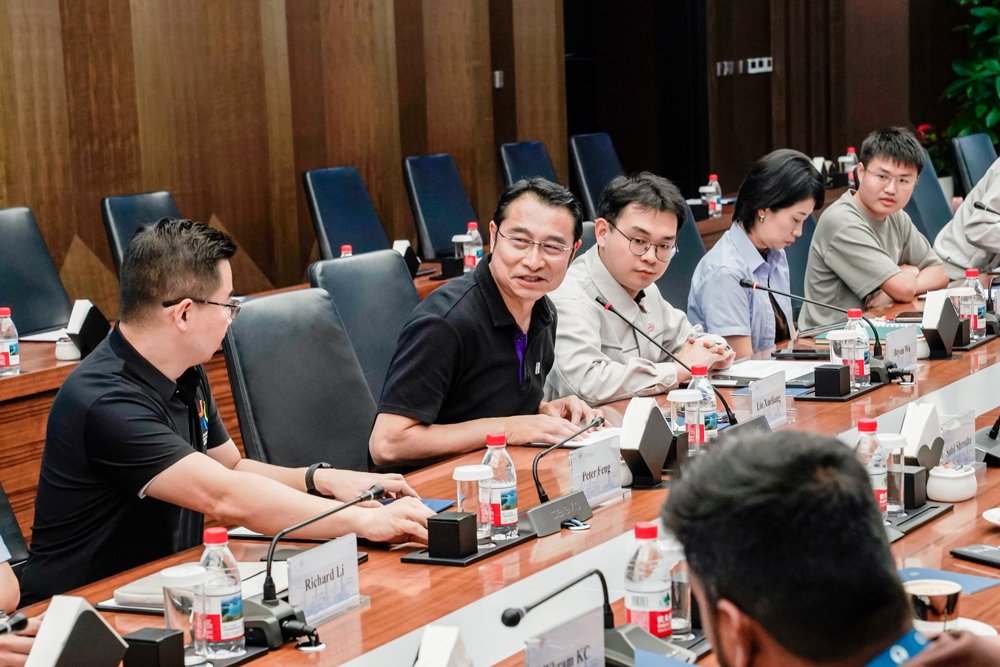
- Nepal's geographical condition is very challenging. There are many uphill and downhill slopes, unpaved and difficult roads. Has the company considered the performance of BYD vehicles in such difficult geographical conditions?
– Of course, it has. BYD started producing cars in 2003. We have spent nearly 20 years of long research and hard work to realize the dream of electric vehicles. BYD vehicles are tested not only in Nepal but also in extremely difficult geographical and climatic conditions worldwide. We have designed the battery stability, vehicle ground clearance, and overall engineering in such a way that it can perform excellently even in hilly and difficult terrains like Nepal. Therefore, we are fully confident in the technical capability and performance of our vehicles.
- What is the proper management of batteries used in electric vehicles after their lifespan ends? Will this not cause environmental risks in the future?
– You have asked a very important environmental question. We have a clear strategy for managing batteries after their lifecycle ends. We adopt a tiered recycling policy. Even when a battery is no longer usable in a car, it still retains a lot of energy. We initially use it as an energy storage system. As I mentioned earlier, our LFP batteries do not contain harmful metals, so they are safe. When the battery is no longer suitable for storage, it is scientifically dismantled, and its metals are recycled. In the next 10 years, battery recycling will develop as a separate and large industry in Nepal as well. As an original manufacturer, BYD is fully responsible for its proper management.
- What is the plan to expand BYD's fast-charging technology in the global market?
– We plan to gradually expand fast-charging technology in foreign markets. However, our main focus and priority this year will be on the domestic market in China. We will gradually take it to other markets as well.
- BYD is making such rapid progress in technology. People are starting to joke that BYD will soon launch flying cars. In the context of Nepal, what is BYD's main and ultimate goal?
– Flying cars or ships might be a distant topic. But speaking in the context of Nepal, our main goal is clear – we will maintain our number one position in Nepal's electric vehicle market. BYD wants as many Nepali consumers as possible to experience electric vehicles and be free from dependence on petrol/diesel. For this, we will introduce various new models of cars suitable for the Nepali market in the coming days. Furthermore, BYD openly welcomes all suggestions and advice from Nepali consumers. Based on those suggestions, BYD will continue to improve after-sales service and technology.
This specific news has been automatically translated by AI. As a result, there may be some inaccuracies or language errors.