Opposition Parties Disrupt Parliament Session Demanding Prime Minister Balen Shah's Presence

Kathmandu. The House of Representatives meeting on Wednesday was affected as opposition parties, including the main opposition Nepali Congress, insisted that the discussion on the government's policy and program would not proceed without the presence of Prime Minister Balen Shah in the parliament.
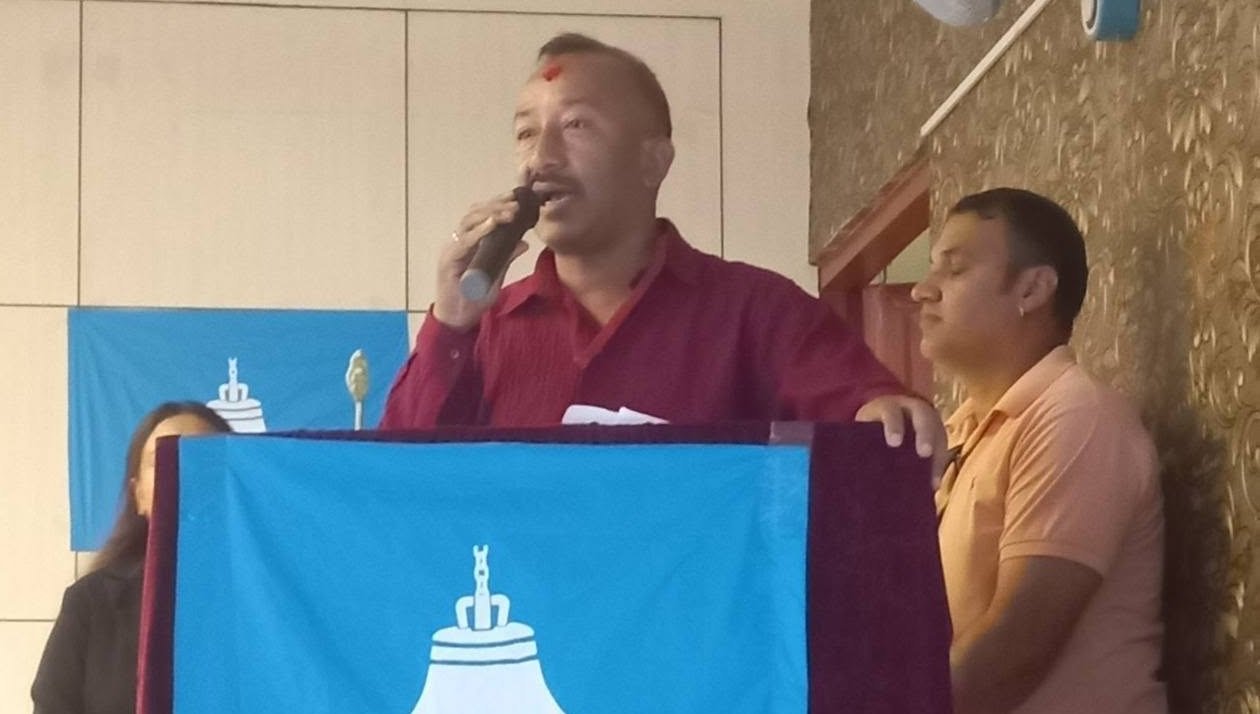
Harkaraj Rai (Sampang), a member of the House of Representatives and chairman of the Labor Culture Party, even boycotted the meeting.
The meeting was adjourned three times on Wednesday due to continuous obstruction by the opposition and the Speaker's lack of courage to issue a ruling against the Prime Minister. The next meeting will reconvene on Thursday.
Although the opposition parties allowed Finance Minister Dr. Swarnim Wagle to table the government's policy and program in the parliament, they urged Speaker DP Aryal to issue a ruling compelling the Prime Minister to be present to answer questions.

However, Speaker DP Aryal responded to the opposition's demands by stating that the work of the parliament would proceed and that consultations could be held for Thursday's meeting after consulting with the Prime Minister. The opposition did not believe his response. Instead, opposition MPs demanded a 'guarantee' of the Prime Minister's presence in the parliament.
The meeting was obstructed amidst a question-and-answer session between the ruling and opposition parties regarding the Prime Minister's presence. Although the opposition obstructed the meeting in the first session with this demand, the policy and program were allowed to be tabled by Minister Wagle after a 15-minute adjournment and consultation between the Speaker and the chief whips of the parties.
However, the opposition did not back down from their demand for the Prime Minister's guaranteed participation in the discussion and response to the policy and program. With the opposition's stance remaining firm, the Speaker adjourned the meeting for another 15 minutes for the second time, and for the third time, the meeting was adjourned until the next day.
Opposition Sought Prime Minister in Parliament
In Wednesday's meeting, Bhishma Raj Angdembe, leader of the main opposition Nepali Congress parliamentary party, repeatedly drew Speaker Aryal's attention, demanding a ruling from the Speaker to summon the Prime Minister to the parliament.

“We want the continuity of this parliament, let there be a way out,” Angdembe said. “The Prime Minister's presence is mandatory in parliamentary discussions. You should issue a ruling that he will come, which is also a respect for the Prime Minister. Otherwise, we don't know how to argue much, we will just stand,” Angdembe insisted. Amidst the opposition's firm stance, Speaker Aryal informed that Prime Minister Shah had sent Finance Minister Swarnim Wagle to speak on his behalf.


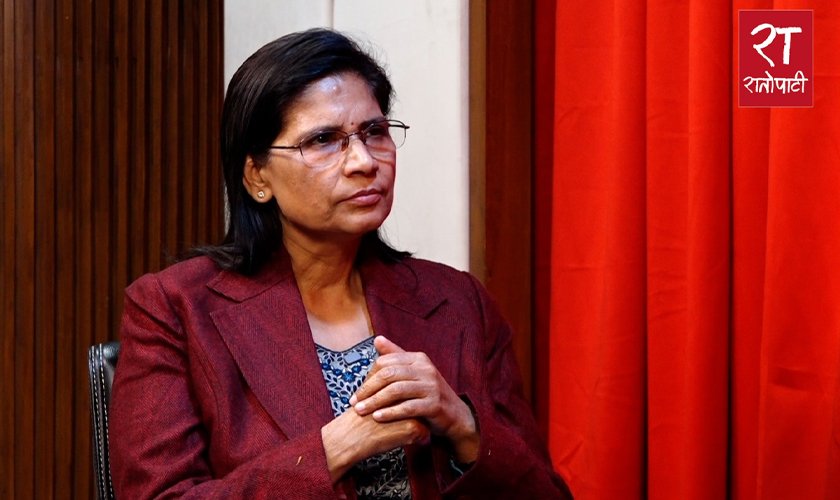
Padma Aryal, an MP from the opposition party CPN-UML, also stated that since the Prime Minister is the chief responsible person for the policy and program, he should participate in the meeting and provide answers.
Yuvraj Dulal, the chief whip of the CPN, said that the constitution's provision that the Prime Minister should be accountable to the parliament was being ridiculed.
“The public wants to hear the Prime Minister's voice,” Dulal said. Gyanendra Shahi, leader of the RPP parliamentary party, recalled that the ruling Rastriya Swatantra Party had protested in the previous parliament when the Prime Minister did not attend, and now questions are being raised about the existence of RJP MPs when the Prime Minister is not present.

“The Prime Minister is sitting in Singh Durbar, wearing dark glasses,” Shahi said in the parliament. “We are seeking answers in the parliament, or he should say that he is not a Prime Minister elected by the parliament.”
Shahi stated that the policy and program is a document of the direction of state operation, priorities, and commitments made to the public, and therefore the Prime Minister must come to answer the questions raised about it. “If this is the government of the people, accountability to the people is sought from the parliament, not from Ratnapark,” Shahi said. Shahi added that there can be no more important program for the Prime Minister than the government's policy and program, and that the policy and program are presented, heard, and answered by the head of government.
Prime Minister's Presence Not Mandatory
There is no provision for the mandatory presence of the Prime Minister in the discussion and response to the policy and program. Based on this provision, ruling party MPs questioned the opposition MPs about the basis on which they were demanding the Prime Minister's presence in the parliamentary meeting. Similarly, Speaker Aryal also argued about which provision of the regulations required the Prime Minister to be present.

Khagendra Sunar, an MP from the ruling party RJP, stated that the parliamentary regulations clearly state that if the Prime Minister cannot attend the parliament for any reason, a representative appointed by the Prime Minister can provide the answer.
“The opposition raised their voice. They have the right to raise it. But it is not that whatever they say must happen without listening to the Speaker,” Sunar said, adding that the House of Representatives should run according to laws and rules.
As Sunar mentioned, subsection (1) of section 38 of the House of Representatives Regulations deals with the procedure related to the policy and program. It states: “After the motion of thanks for the address by the President is passed, the Speaker shall consult with the Prime Minister or any minister designated by him/her in his/her absence to determine the date and time for discussion on the government's policy and program mentioned in the address by the President, and on the determined date, discussions shall be held on the issues mentioned in the address based on party representation.”
However, stakeholders say that even with this provision, the ruling Rastriya Swatantra Party (RSP) and Prime Minister Balen Shah should not ignore the parliamentary values, norms, and dignity, as the Prime Minister is accountable to the parliament according to Nepal's parliamentary system and practice.
Then Why is the Prime Minister Needed?

If the Prime Minister's presence is not mandatory according to the regulations, why are the opposition demanding the Prime Minister? In response to this question, Mahesh Bartoula, a leader and former chief whip of the opposition CPN-UML, states that although the regulations do not mandate the Prime Minister's presence, the Prime Minister should be prepared to answer based on past practices, precedents, and to maintain the dignity of the parliament.
“When the government itself has prepared the document presented by the President, the Prime Minister must take ownership of that document,” Bartoula told Ratopati. “The Prime Minister saying that I will not come to the parliament and do not have to answer is an disregard for the parliamentary system.”
Padma Aryal, deputy leader of the CPN-UML parliamentary party, said that it is not appropriate to ignore the Prime Minister when he is within the country and even within a hundred meters, stating, “He is within the country. He is on duty. That is why he is being sought in the parliament.”
This specific news has been automatically translated by AI. As a result, there may be some inaccuracies or language errors.