Government to Tighten Power Purchase Agreements and Environmental Studies


Kathmandu. The government is preparing to tighten electricity purchase agreements (PPAs) and environmental studies. The Ministry of Energy, Water Resources and Irrigation is going to tighten the environmental studies conducted before granting licenses for hydropower projects. With the tightening of environmental studies, PPAs will also be tightened.
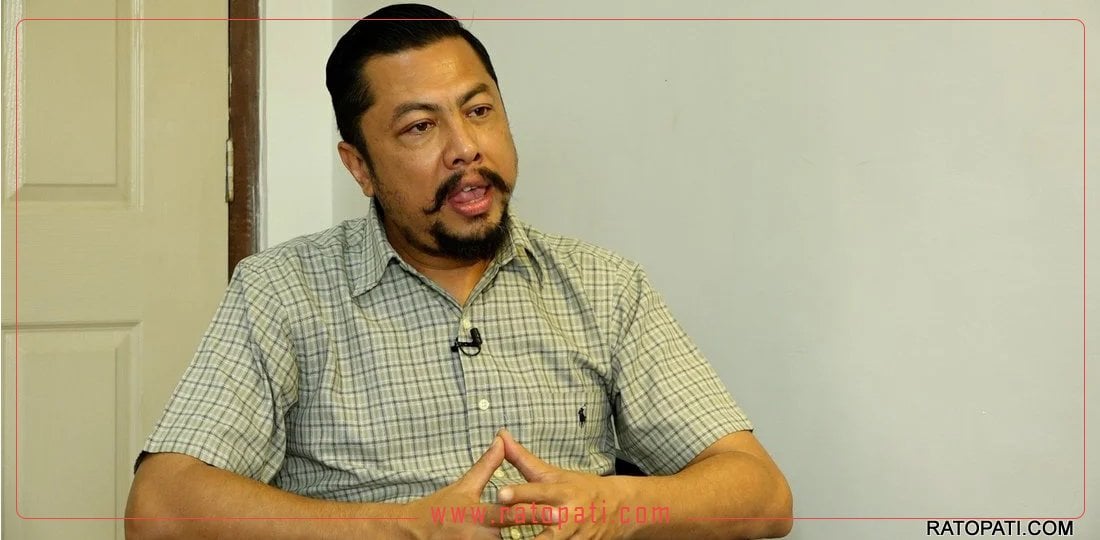
Minister of Energy, Water Resources and Irrigation, Biraj Shrestha, said that the government will now look at the construction of hydropower projects and PPAs critically. Stating that complaints about the violation of local rights during the construction of hydropower projects have increased, he informed that the implementation of environmental studies will be significantly tightened.
Giving an example of a poignant incident, he said, 'There are complaints that there is no water even to burn a body at the ghat after building a hydropower. The rights of locals to water, land, and forest must be ensured. The government will take that into consideration, tighten environmental studies, and arrange for PPAs accordingly.'
Minister Shrestha said that the work of evaluation will be carried out to confirm whether the environmental studies (EIAs) conducted in the past were actually followed or not. He said that the ministry is working by forming a study task force to make the entire PPA system transparent and practical.
'The investment of innocent citizens has been trapped and sunk in the current PPA system. We all have to make decisions responsibly based on common sense,' he said.
Minister Shrestha said that new technologies like hydrogen energy should not be rushed into, but should be advanced only after realistic study of their financial feasibility and construction costs.
Stating that large projects like Budhigandaki will be financially feasible only if they are taken up in a multipurpose model rather than just hydropower, he informed that discussions are underway to change the structure accordingly. He emphasized the need to make the entire PPA system transparent and practical.
The government is preparing to resolve the policy ambiguity in the 'Take or Pay' and 'Take and Pay' policies in the electricity purchase agreement (PPA), which is a major concern for hydropower developers, through the upcoming budget. Energy Minister Shrestha informed that this issue will be clarified by amending the budget for the upcoming financial year.
Minister Shrestha said that a major policy complication was created when the then Finance Minister spoke about this issue in the budget speech, creating a significant policy complication. He said, 'This has caused uncertainty among investors for a year. This time, we will resolve it through the budget in a relative and practical manner.'
Minister Shrestha has formed two high-level committees to make the ministry's performance result-oriented, transparent, and accountable. He said that a study committee has been formed to study the long-pending PPA issues and make decisions accordingly.

A five-member committee headed by Joint Secretary Mohan Shakya has been formed to review the current status of permits issued by the Department of Electricity Development. The committee has been tasked with analyzing the status and progress of permits issued so far. The committee will identify policy, technical, economic, and legal weaknesses within the permit issuance process.
A six-member committee headed by Joint Secretary Dr. Rajan Bhattarai of the ministry has been formed to analyze the existing status of electricity purchase agreements (PPAs). This committee will identify policy, technical, economic, and legal obstacles in the PPA process of the Nepal Electricity Authority within 120 days.
In the current fiscal year's budget, the government had made a provision that agreements would be made only in the 'Take and Pay' model after market assurance. Following the opposition from the private sector after the introduction of this provision, the budget was passed with a commitment to change it in the parliament.
Although the then Finance Minister Bishnu Prasad Paudel had committed to removing the 'Take and Pay' provision in the budget speech, it was not removed from the red book. Since it was not removed policy-wise, the Nepal Electricity Authority took the stance of not signing PPAs in the electricity export market only on the 'Take or Pay' basis, otherwise only on the 'Take and Pay' model.
The current fiscal year's budget states that electricity from run-of-the-river hydropower projects will be purchased only on the basis of 'Take and Pay'. Budget item number 227 states, 'A policy will be adopted to sign electricity purchase agreements in a way that balances electricity production and consumption. Electricity purchase agreements will be signed in accordance with the 'Take and Pay' concept for run-of-the-river projects.'
Since the above provision is still mentioned in the budget, the authority has maintained its stance that PPAs cannot be made outside of this provision. The PPA process has not moved forward due to the authority's insistence on adhering to the policy provision in the budget. However, Energy Minister Shrestha pledged to remove the uncertainty through the budget.
Large Projects in New Modalities
The ministry has stated that discussions are underway to change the structure of large projects like Budhigandaki to make them financially feasible by adopting a multipurpose model rather than just hydropower.
Minister Shrestha said that the practice of ending the lack of coordination between past policies, programs, and budgets and allocating budget to small and scattered projects like Kanika Chha will be discouraged.
'Earlier, the concept of energy was only about lighting up, but now we have moved to the concept of energy security as a basic need and growth indicator,' he said. He also urged stakeholders to provide constructive suggestions for the upcoming budget and policy program on May 15.
The authority has been signing PPAs primarily under the 'Take or Pay' (payment must be made whether electricity is taken or not) provision. However, the authority did not want to sign PPAs on a 'Take or Pay' model, citing limited domestic consumption and limited capacity of the existing cross-border transmission line for export to India.

According to the authority, a total of 15,200 megawatts of PPAs have already been signed, including those currently in operation, under construction with PPAs, and those preparing for construction. Projects totaling 15,126 megawatts, including 6,699 megawatts awaiting PPAs after connection agreements and 8,426 megawatts that have applied for PPAs, are in the PPA pipeline.
Energy producers, however, accuse the authority of trying to discourage the private sector by adopting such policies. A long-term agreement has been signed between the governments of Nepal and India to export 10,000 megawatts of electricity in 10 years.
Projects Under Construction and with PPAs
According to the Electricity Authority, about 190 projects with a capacity of approximately 5,700 megawatts are currently in various stages of construction, led by the private sector. Upon completion, these projects will more than double Nepal's energy production capacity.
There are an additional 90 projects whose electricity purchase agreements with the Electricity Authority have been completed but are awaiting financial management. The total capacity of these projects with PPAs is 2,266 megawatts.
So far, 17 projects promoted by the authority are in operation. The total production capacity of these projects is 565.55 megawatts. An investment of approximately 101.72 billion rupees (101.72 billion) has been made in these projects.
This specific news has been automatically translated by AI. As a result, there may be some inaccuracies or language errors.