Nepal's First Modern Tunnelway 'Nagdhunga-Sisnekhola Tunnelway' Nears Completion


Kathmandu. The construction work of Nepal's first modern tunnelway 'Nagdhunga-Sisnekhola Tunnelway' has reached its final stage. With 99 percent physical progress completed so far, preparations are underway to start trials from next Jestha and open it to the general public from Shrawan.< /p>
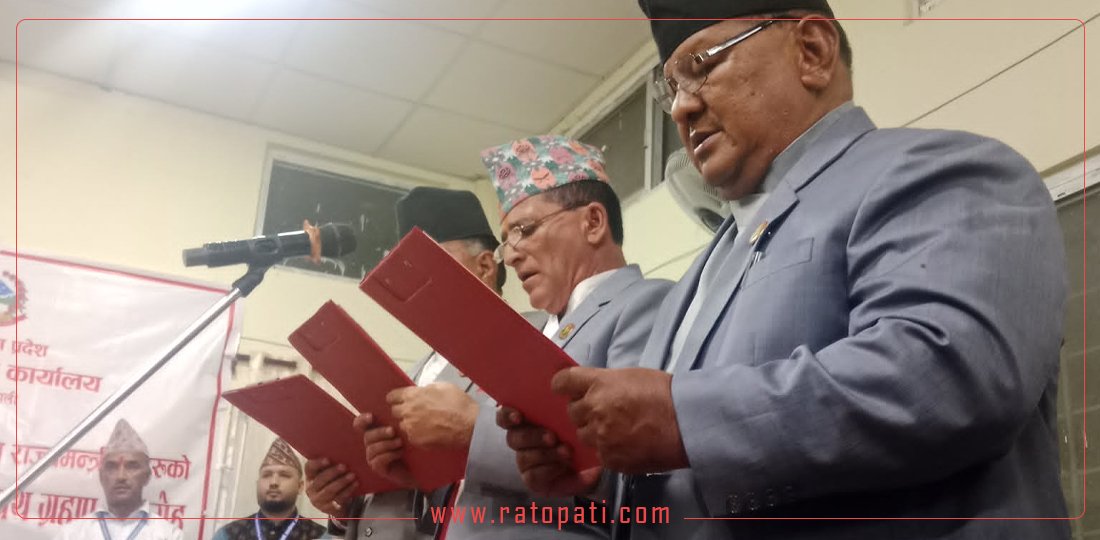
A team led by Ashish Gajurel, chairman of the Infrastructure Development Committee under the House of Representatives, inspected the tunnelway site on Monday. During the inspection, project officials provided detailed information about cost escalation, construction delays, and security arrangements.< /p>
Project Director Saujanya Nepal informed that the physical progress of the Nagdhunga Tunnelway has reached 99 percent. According to Nepal, only 1 percent of the work remains. The financial progress has also reached 96 percent.< /p>
The process of selecting a service provider for the operation and management of this tunnel has been completed. It is now in the stage of coming into operation.< /p>
Construction of this tunnel, which started on November 4, 2019, was scheduled to be completed by April 25, 2024. However, citing the COVID-19 pandemic, the deadline was extended for the first time until August 4, 2024. As it could not be completed within that period, the deadline was extended again due to local disputes and other reasons, pushing it to April 25, 2025. Construction was not completed within this extended deadline either. Subsequently, the deadline was extended for the third time to November 8, 2025.< /p>
Tunnel construction was completed during this period. However, citing the landslide on the Dhading side and other pending technical work, the deadline was extended for the fourth time to May 24, 2026. Work could not be completed within this deadline either. The project stated that landslide work is still ongoing. Due to repeated deadline extensions, the project cost has increased.< /p>
_GXEJaCQSvP.png)
- 30 Percent Increase in Cost
The initial estimated cost of the project was 22 billion rupees, but it is expected to reach around 29 billion. Project Director Nepal stated that the construction cost has increased by approximately 15 percent. Explaining the reasons for the cost increase, Chief Consultant of the project Ramesh Prasad Koirala said, 'The cost has increased by a total of 30 percent due to some changes in physical structures by 12 percent and an 18 percent increase in the value of the US dollar.' Additionally, more land had to be acquired for landslide prevention on the west portal. The project has stated that it has already spent 6 billion rupees on land acquisition alone.< /p>
- Why the Delay in Operation?
Previously, the project had informed that the tunnel would be operational from January 1, 2025, i.e., December 31, 2024. However, it could not be operated within that period, and instead, the deadline for tunnel construction was extended.< /p>
'Why was there a delay in tunnel construction? When will it be operational?' Committee Chairman Gajurel had asked the Project Director. In response to the question, Director Nepal said it would be operational by the second week of Shrawan.< /p>
Director Nepal attributed the delay primarily to the heavy rainfall in the second week of Shrawan of 2082 BS and the resulting landslide on the west portal (Sisnekhola) side. Nepal stated that the landslide caused significant damage to the toll plaza construction, pushing the work back by some time.< /p>
Similarly, legal processes also caused delays in operation, informed Consultant Koirala. He said, 'A new document for 'Non-Consulting Services' had to be prepared for the operation of the tunnel. Initially, the Department of Roads itself was to operate it, but later a decision was made to select a service provider through competition. Since this was a new modality, it took time to get the decision approved up to the Council of Ministers.'< /p>
_PVsmQSXHeh.png)
The project aims to start trial operations in the tunnel from next Jestha. Full operation, however, will have to wait until Shrawan. Director Nepal informed that the tunnel will be opened to the general public only from Shrawan because employees will need about two months of training to operate the new equipment and understand the complex systems inside the tunnel.< /p>
- Why Use the Tunnel?
The project stated that once the tunnel is operational, the journey from Sisnekhola to Balambu will be completed in just 7 minutes. This will save up to 15 minutes for small vehicles and 35 minutes for large vehicles on inclines, claimed Consultant Koirala. Vehicles will be able to travel easily through the tunnel instead of the current 10 to 13 percent steep incline on the existing road.< /p>
The project claims that the toll fee for using this tunnel will be 30 percent of the savings in terms of fuel and time compared to the current road. Similarly, only 36 percent of the profit from exiting will be charged as toll tax.< /p>
For example, a toll of 65 rupees has been proposed for small cars (Class 1) entering Kathmandu. The project stated that this toll was scientifically calculated as only 30 percent of the approximate 209 rupees saved in fuel and time for vehicles.< /p>
Similarly, for medium-sized vehicles (Class 2), the toll for entering Kathmandu has been set at 115 rupees. The project stated that this toll was scientifically calculated as only 30 percent of the approximate 377 rupees saved in fuel and time for vehicles.< /p>
Large vehicles are estimated to save 877 rupees. 30 percent of this, i.e., 260 rupees, has been set. Similarly, for large and heavy vehicles, the toll tax is set at only 30 percent of the profit from entering Kathmandu.< /p>
- Estimated Revenue of 350 Million if 60 Percent of Vehicles Use the Tunnel
The project has signed a 5-year contract worth 1.10 billion rupees with a service provider for the operation and safety of the tunnel. If even 60 percent of the total vehicles use the tunnel, an estimated revenue of 350 million rupees per year is expected. This amount will be directly deposited into the account of the Road Board Nepal and will be used to cover the maintenance and operational costs of the tunnel.< /p>
For high security inside the tunnel, 150 dedicated personnel will be deployed. This includes a special 'Safety Management' team of 64 people, who will provide immediate rescue in case of accidents or fires inside the tunnel. The tunnel is equipped with an RFID-based automatic toll collection system, an advanced ventilation system, and 24-hour CCTV surveillance cameras.< /p>
_B8v6AhzG7U.png)
- Safety Concerns
This 2.7-kilometer-long tunnel, built at a cost of over 28 billion rupees, has adopted world-class safety standards and technologies. Consultant Koirala clarified the structural integrity of the tunnel, stating that the route is much safer than the road outside from an earthquake perspective.< /p>
According to him, underground structures are naturally safe, and high earthquake-resistant standards have been adopted in its design. Furthermore, the height and exit levels have been adjusted to prevent flooding inside the tunnel, and special 'waterproofing' and 12-inch thick concrete lining have been applied to prevent water leakage.< /p>
- Separate Tunnel for Rescue
Considering emergency situations, another 'Rescue Tunnel' has been constructed parallel to the main tunnel. Seven doors are placed at every 375-meter interval to connect the main tunnel and the rescue tunnel. If there is an accident or fire inside the main tunnel, passengers can escape through these doors to the other tunnel.< /p>
Fifteen CCTV cameras have been installed to monitor every activity inside the tunnel, which will be monitored 24 hours a day from the control room. For the convenience of passengers, Nepal Telecom's mobile network and FM radio listening facilities are also available. In case of any problem, telephone booths are placed at every 50-meter interval to contact the control room directly.< /p>
Additionally, fifteen state-of-the-art 'jet fans' have been installed to remove smoke emitted by vehicles inside the tunnel. These fans will operate automatically based on pollution levels. For fire control, 'fire hydrants' are placed every 50 meters, which passengers can also use themselves.< /p>
Furthermore, a special security and firefighting team of 64 people will be on duty 24 hours a day in 8-hour shifts for accidents or emergencies. The project has signed agreements with the Armed Police Force Hospital for treatment and with the Kathmandu Metropolitan City for fire services. Two ambulances will be on standby at both ends of the tunnel.< /p>
_xZgXPkh3jN.png)
RFID technology has been installed for collecting fees for using the tunnel. The amount paid by the driver will be directly deposited into the bank. A manual payment option will also be available for those without this technology.< /p>
The project also plans to conduct a 'mock drill' in the presence of security agencies and stakeholders before the tunnel becomes operational, which is expected to strengthen preparedness for future accidents.< /p>
Finally, Committee Chairman Gajurel instructed the project to complete it within the new deadline and to make its operation transparent and effective.< /p>
This specific news has been automatically translated by AI. As a result, there may be some inaccuracies or language errors.