President Returns Constitutional Council Ordinance for Reconsideration


Kathmandu. The Constitutional Council related ordinance sent by the government for approval was returned by the President's Office on Sunday.
President Ram Chandra Paudel has sent back the 'Constitutional Council (Work, Duties, Rights and Procedures) (First Amendment) Ordinance, 2083' recommended by the government to the government for reconsideration.
While previous presidents have been rapidly issuing ordinances brought by the government, the question of what will happen now that President Paudel has sent it back has arisen.
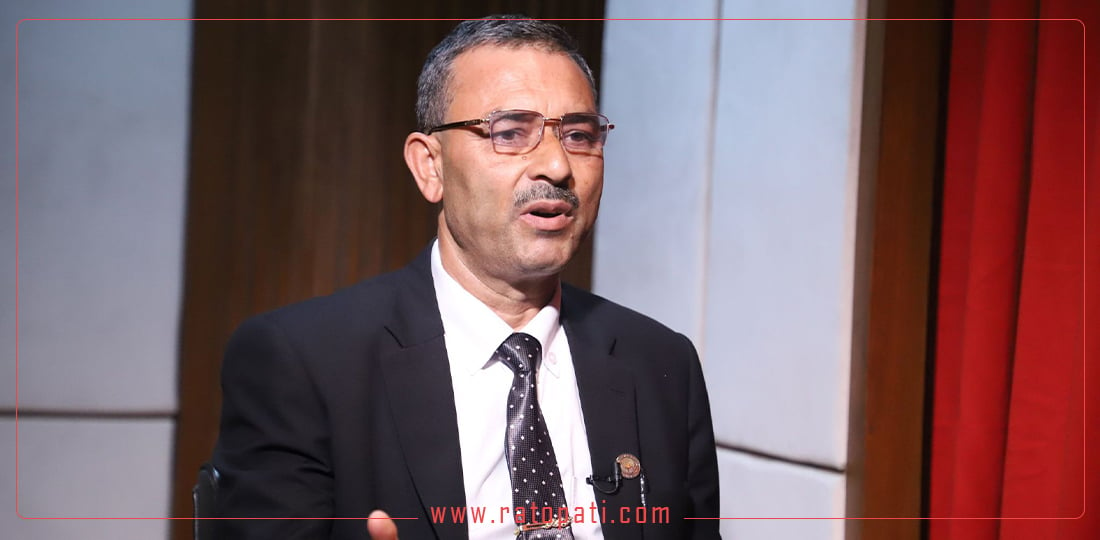
Regarding this matter, constitutional expert and senior advocate Dr. Chandrakant Gyawali had argued that the President, being a constitutional head of state and not an executive, cannot hold back an ordinance.
In a conversation with Ratopati, he stated that since the Constitution of Nepal recognizes the President as a 'constitutional' head of state and not an 'executive', and as the protector of the constitution, the President cannot refuse to issue an ordinance sent by the government.
According to him, it is one thing to look at the content of the ordinance, but the President, being a constitutional institution, cannot engage in politics regarding it.
'No constitutional institution engages in politics,' he said, 'The institution of the President validates whatever comes on the recommendation of the government.'
He stated that the President cannot test the constitutionality of an ordinance that must be mandatorily sent to the parliament.
'Since the issued ordinance must be sent to the parliament by the government, the government becomes accountable,' he said, 'The President is not in a position to be accountable in parliament regarding the ordinance.'
Gyawali argues that if that ordinance is passed by the parliament and its constitutionality is questioned, the Supreme Court will look into it.
He clarified that the Supreme Court has a constitutional bench to examine issues where laws conflict with the constitution, and on the other hand, the public will test the laws made by the government and their implementation through votes politically.
'The constitution does not give the President the power to test the constitutionality of an ordinance,' he said.
In the past, former President Bidya Devi Bhandari's appointment of officials to 52 constitutional commissions by bringing an ordinance related to the Constitutional Council during the tenure of then-Prime Minister KP Sharma Oli had caused controversy.
The ordinance was brought with the intention of appointing 52 constitutional officials during the situation of parliament dissolution.
When the then Oli government tried to bring the ordinance related to the Constitutional Council for the third time, it included a provision that even two people could make a decision without reaching a quorum of six people. At first glance, this violated the constitution's principle of majority rule and minority rights, and since the constitution itself could be violated in such a situation, President Ram Chandra Paudel had stopped it.
Before that, ordinances brought twice by KP Sharma Oli were also withdrawn.
Despite the parliament being dissolved twice, appointments of 52 officials to the Constitutional Council were made by passing the ordinance as it was.
There are examples where 52 constitutional officials were appointed even after the parliament was dissolved twice, and the Supreme Court has also validated them.
During that time, the government had issued an ordinance related to the Constitutional Council by misleading the President in the situation of parliament dissolution.
Even now, since the government has issued an ordinance related to the Constitutional Council and stated that it will 'present it in parliament', constitutional expert Gyawali argues that the President does not have the right to stop it.
Dr. Gyawali clarifies that although the President's role in the process of issuing an ordinance is that of a 'guardian', the final decision-making authority rests with the executive.
According to him, there is a constitutional loophole that allows the President to advise the cabinet or send it back for reconsideration if they see a serious violation of the constitution in the ordinance, which President Paudel used on Sunday.
According to the provisions in the constitution, the government recommends the ordinance.
The President also has the power to make laws in emergencies, but the President can only exercise that power on the recommendation of the government, i.e., the Council of Ministers.
According to Gyawali, in many countries, there is a constitutional provision for the President to issue an ordinance without any conditions if something needs to be done immediately and the President is satisfied.
This system exists in countries like India, Bangladesh, and Pakistan.
In countries with parliamentary practice and an ornamental head of state, this kind of system exists.
Ornamental presidents who issue ordinances are not required to be responsible or accountable anywhere.
'The President is the protector and guardian of the constitution. If something does not please them, they can say, 'Bring this back after adjusting it like this',' said Dr. Gyawali.
'However, if the government sends the same ordinance back to the President exactly as it is, the constitutional president will be compelled to approve it.
The President does not have the final authority to decide whether an ordinance conflicts with the constitution or not.'
According to Dr. Gyawali, if the ordinance or bill brought by the government is a gross violation of the constitution at first sight, the President can immediately stop it and consult.
However, if the ordinance comes according to the constitution, the President cannot hold it.
'As the protector of the constitution, if there is a violation of the constitution at first sight, they can call the Prime Minister for discussion and resolve the constitutional deadlock,' Gyawali said.
'This is the President's activism, but this activism should not be personal but only to protect the constitutional dignity.'
According to Dr. Gyawali, the President of Nepal does not have the power of 'pocket veto' (to indefinitely delay an ordinance or bill).
While countries with an executive presidential system like the United States have such power, he argues that the 'ceremonial' president of Nepal cannot delay the government's recommendation for a long time.
'As a guardian, if there is doubt, they have the right to send it back with a message or consult, but the constitution does not give the President the right to hold it and render it inactive,' he said.
Dr. Gyawali interpreted the President's action of stopping the ordinance brought by the then KP Sharma Oli-led government, which allowed 'decisions to be made by just two people' in the Constitutional Council's decision-making process, as a positive activism.
'Only if the rule of majority and the rights of the minority are about to die and the constitution itself is about to be disrespected can the President hold it,' he said.

Article 114 of the Constitution of Nepal deals with ordinances.
If something needs to be done immediately when both houses of parliament are not in session, or if there is a legal vacuum, the government can issue an ordinance, but this is subject to one condition – that the government must submit it to the parliament within 60 days of its commencement.
Meanwhile, when asked about this, Kiran Pokharel, the President's press advisor, said, 'He has sent it back for reconsideration to protect the spirit and essence of the constitution and democracy and to keep the majoritarian system alive.'
Repeated Changes in the Constitutional Council Act
Ordinances related to the Constitutional Council, issued during the formation of the Interim Constitution in 2063 BS, have been changed repeatedly at the whim of the Prime Minister.
There are examples where the government has issued ordinances related to the Constitutional Council to appoint officials to commissions favorable to them.
From the government led by Khilraj Regmi, formed 13 years ago, to the current government led by the Rastriya Swatantra Party with a two-thirds majority, ordinances have been brought to manage the Constitutional Council according to their will.
The Constitutional Council recommends officials for various constitutional bodies, from the Commission for the Investigation of Abuse of Authority as a separate constitutional body for investigating corruption cases to the National Human Rights Commission for monitoring human rights violations.
The Constitutional Council consists of the Prime Minister, the Speaker of the House of Representatives, the Deputy Speaker, the Chairman of the National Assembly, and the leader of the main opposition party in parliament.
Although officials of constitutional commissions can be appointed based on consensus, the practice of taking the help of ordinances to get decisions made in their favor by the Constitutional Council, chaired by the Prime Minister, is common.
Even now, the government had sent an ordinance for the appointment of officials to constitutional commissions through the Constitutional Council with the strength of its majority, but the President sent it back.
The then government led by KP Sharma Oli had issued an ordinance related to the Constitutional Council on April 8, 2077 BS.
That ordinance reduced the quorum of the Constitutional Council from 5 to 4.
It was withdrawn after three days due to protests.
Subsequently, on June 14, 2077 BS, some ordinances were repealed, and the old provision in the law related to the Constitutional Council was revived.
Just four months later, on November 30, 2077 BS, the Oli government issued another ordinance related to the Constitutional Council.
After the ordinance became inactive in two months, Oli re-issued the same ordinance related to the Constitutional Council on April 21, 2078 BS.
After that, following the Janji movement on August 23 and 24, the Sushila Karki government, formed to conduct elections, also tried to appoint the Chief Election Commissioner and some other officials, but positions like Speaker and Leader of the Opposition in the Constitutional Council were vacant.
On November 2, 2082 BS, an ordinance related to the Constitutional Council was also submitted to the President's Office, but President Paudel did not issue the ordinance.
Also Read

This specific news has been automatically translated by AI. As a result, there may be some inaccuracies or language errors.


_beJFbtmC3W.jpg)