Government's New MRP Rule Disrupts Imports, Raises Concerns of Shortages and Price Hikes


Kathmandu. The government's new rule making Maximum Retail Price (MRP) mandatory at the customs point has disrupted imports. Following Prime Minister Balendra (Balen) Shah's directive and the agenda for administrative reform, strictness on goods without MRP mentioned, effective from Jestha 15, has led to cargo containers being held at customs.
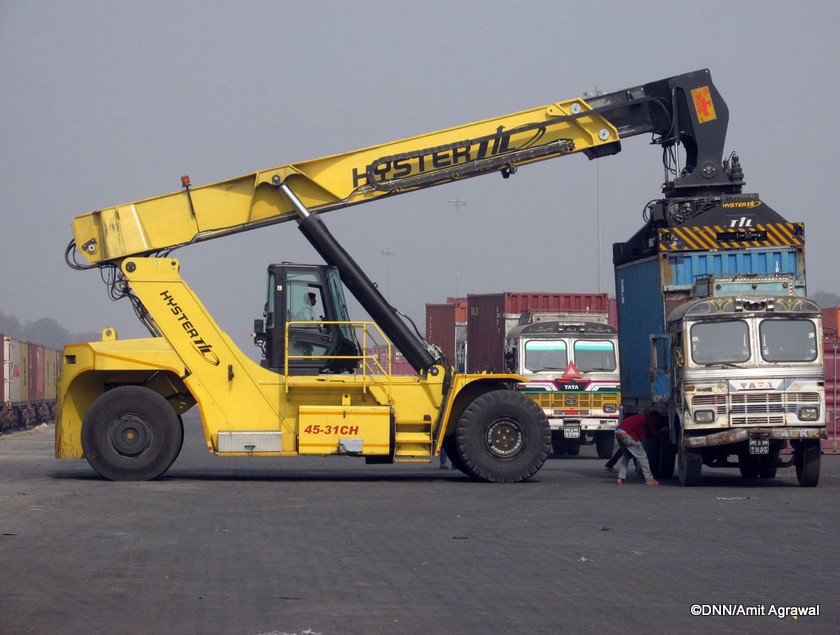
Imports through Nepal's major trade points like Birgunj, Bhairahawa, and Rasuwagadhi, among others, have decreased, creating a risk of shortages of essential goods in the market and increased prices.
Although imports of goods entering Nepal through various points have slightly decreased, the customs office has stated that imports of industrial raw materials and perishable goods have not stopped. Despite various obstacles created recently, the customs office has prioritized the clearance of essential goods.
According to Harihar Poudel, Chief Customs Officer at Bhairahawa Customs Office, imports of industrial raw materials, machinery, and fruits and vegetables are currently underway. He stated that the customs administration is focusing on maintaining the smooth transportation of raw materials needed by industries and food items that might be scarce in the market.
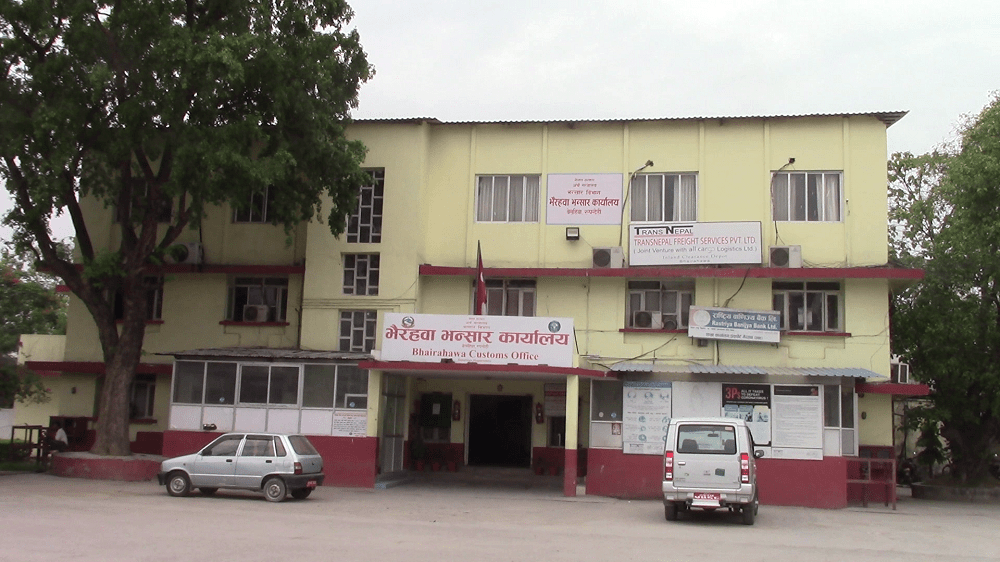
"The flow of goods has decreased somewhat, but industrial raw materials and perishable goods have not stopped," said Customs Chief Poudel. "We have kept the import of raw materials and fruits smooth to prevent industries from shutting down."
Imports of goods brought without MRP mentioned have been affected. However, he informed that goods with MRP are also being passed.
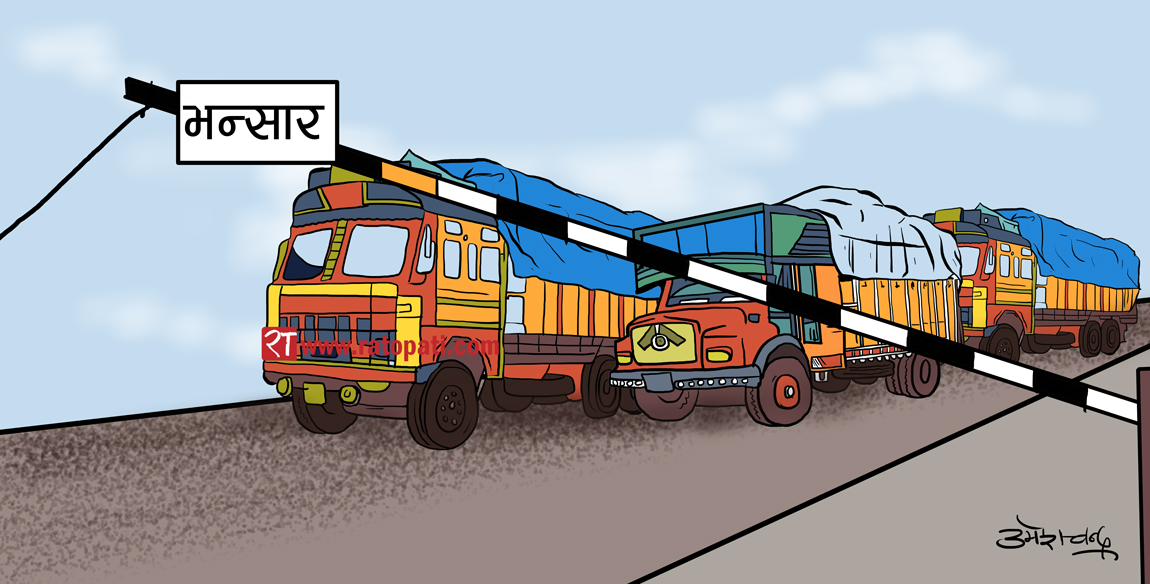
According to him, there is no significant pressure of vehicles in the Nepali customs yard. According to the customs office, only about 20 to 25 trucks are currently held within the Nepali customs area. Most cargo vehicles are stuck in traffic jams on the Indian side (Sunauli), which has affected imports into Nepal.
The government insists on making the market transparent and organized by making MRP mandatory at the customs point, while businesses have been calling it "impractical." This dispute is not only affecting businesses but also creating a potential shortage of essential goods in the market.
Although the ministry appears to agree with this proposal, the ministry has continued with it after Prime Minister Balen disagreed and insisted on not backing down from the decision to set MRP at the customs point.
The government had mentioned making MRP mandatory in point number 83 of the one-hundred-point agenda published for its administrative reform. Accordingly, the Department of Commerce, Supply and Consumer Protection under the Ministry of Industry, Commerce and Supply issued a notice on Chaitra 30, directing that all goods imported from Jestha 15 must compulsorily mention MRP at the customs point.
Previously, businesses used to import goods, paste MRP stickers at their own warehouses, and then send them to the market. However, the department stated that the government adopted the policy of declaring the price at customs due to the ongoing revenue evasion through under-invoicing and consumer fraud.
Traders protested as soon as the government made MRP mandatory. To resolve the ensuing deadlock, businesses proposed a 'self-declaration' of selling goods with MRP set, and clarifying the remaining issues through the upcoming financial act, which the customs sent to the ministry. Although the ministry appeared to agree with this proposal, the ministry has continued with it after Prime Minister Balen disagreed and insisted on not backing down from the decision to set MRP at the customs point.
- What do traders say?
Traders have stated that implementing this system is technically impossible.
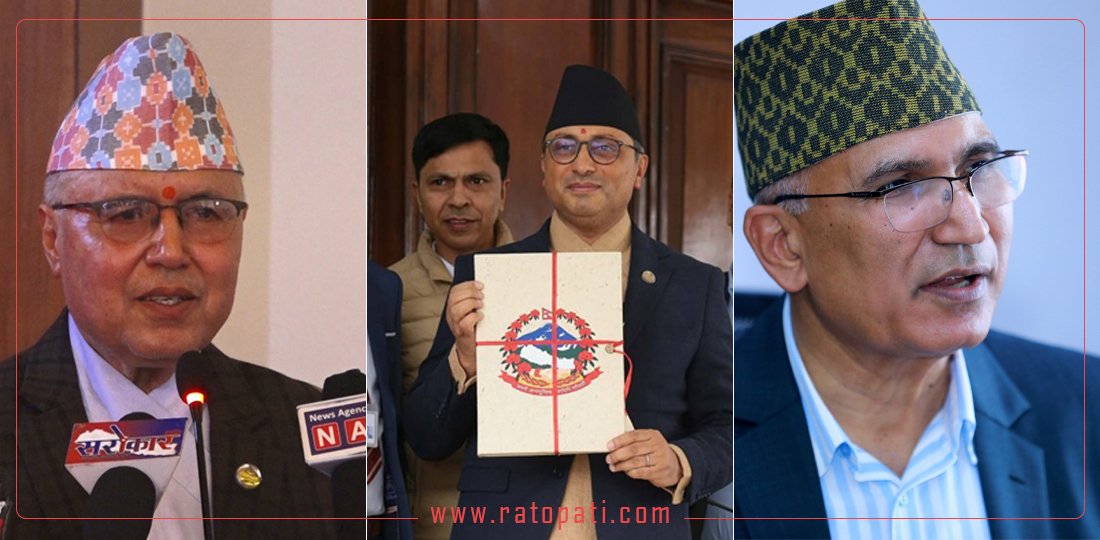
Kamlesh Agarwal, President of the Nepal Chamber of Commerce, also publicly stated that it is not possible to apply MRP to all imported goods. He argued that foreign exporters would not send goods with separate labeling for Nepal's small market, making it impossible to unload all goods at customs, apply stickers, and reload them.
Similarly, Manoj Shrestha, President of the Federation of Nepalese Chambers of Commerce and Industry, accused the government of imposing this rule suddenly without consulting stakeholders. According to him, while there is no problem with finished goods like shoes, slippers, and biscuits, it is extremely difficult to label items like open-source goods, small machinery parts, roll cloth, and tires.
Although there is a strict legal provision to fine those who do not comply with this rule up to 300,000 rupees, its implementation has always been weak.
The issue of MRP is not new in Nepal. Before 2075 BS, under the Black Market Act, goods were sold with a 20% profit margin. To modernize the market, the 'Consumer Protection Act 2075' was introduced. Section 6(3) of this act mandates that producers or importers must compulsorily disclose MRP, quantity, production date, and expiry date.
Although there is a strict legal provision to fine those who do not comply with this rule up to 300,000 rupees, its implementation has always been weak. In 2081 BS, Kumar Prasad Dahal, the then Director General of the department, tried to make it mandatory, but he could not succeed due to strong pressure from the private sector and lobbying at the ministerial level. Eventually, Dahal was removed from the department. Now, with the rise of Balen Shah and the agenda of administrative reform, this issue has resurfaced.
- MRP at Customs is Positive, but Preparation is Lacking, Complaint
Consumer rights activist Bishnu Prasad Timilsina has criticized the government for implementing the provision of declaring the Maximum Retail Price (MRP) at the customs point without adequate preparation. He stated that the government's practice of making hasty decisions and then retracting them creates confusion in the market.
Timilsina, who is also the General Secretary of the Consumer Welfare Protection Forum, said that MRP is an important tool for controlling market prices, but its implementation has been weak.
According to Timilsina, declaring MRP on imported goods is in the interest of consumers. "When the importer declares how much they brought the goods for and how much they will sell them for in advance, the tax system becomes transparent," he said. "However, the government has made it mandatory without sufficient study and infrastructure, leading to many goods being held at customs, causing problems in the business sector."
He stated that a television with an MRP of 50,000 written on the customs bill has to be bought by consumers in the market for 150,000. He clarified that if the billing system in the market is not correct and goods are not available at the MRP price, then setting the price at customs is meaningless.
Former Secretary Kumar Prasad Dahal stated that while the government's decision to make Maximum Retail Price (MRP) mandatory at the customs point is correct, the government agencies lack expertise and preparation in its implementation.
Timilsina expressed suspicion that this might be used for purposes other than consumer interest. "If this system does not provide relief to consumers and only harasses traders by enforcing strictness at customs, it can only be understood as a plan to raise election funds," he said.
He emphasized that the government must strengthen the monitoring, inspection, and regulation system to make the MRP system successful. He said, "The regulatory officials must be honest, and the billing system must be made mandatory. The justification of this system will be proven only if there is a guarantee that consumers are receiving goods at the MRP price."
- Suggestion to Not Back Down from the Decision to Make MRP Mandatory at Customs
Former Secretary Kumar Prasad Dahal stated that while the government's decision to make Maximum Retail Price (MRP) mandatory at the customs point is correct, the government agencies lack expertise and preparation in its implementation. In a conversation with RatoPati, he argued that the government should not hesitate to effectively implement what is clear in the law.
Former Secretary Dahal stated that during the implementation of MRP, a lack of expertise was observed among customs and related government agency employees. He also made serious allegations of collusion between some employees and traders.
"Even now, employees are being bribed on this matter. It has also been reported in the press and other media about this," Dahal said. "The government needs to conduct a thorough study, but implementation problems have arisen due to employee sluggishness and collusion."
Dahal argues that traders are unnecessarily complicating the MRP issue. "It is unfortunate that traders are saying they cannot apply MRP now, and even the president of the Chamber has made such statements," he said. "This clearly shows the unwillingness of traders to make the market transparent."
While it is right to stop the import of goods without MRP, the government should provide a clear 'way out,' he suggested. He emphasized the need to systematize the process of applying MRP stickers, either at the customs point or after bringing them into the country.
Dahal, pointing to the need for strong and clear leadership in the Department of Commerce and the Ministry of Finance, stated that the government should not back down from this decision under any circumstances.
According to Dahal, MRP is just the beginning; the government's ultimate goal should be the 'bill-bijak' (actual invoice) system. "Our final destination is bill-bijak. If there is so much struggle over MRP, there can be an even bigger struggle over bill-bijak, but it is essential to legalize the market," he said.
Dahal mentioned that India has also reacted positively to Nepal's move to make MRP mandatory and control the informal market. "India has supported Nepal's move. India is also no longer listening to the words of border brokers, which is a good opportunity for Nepal," he said.
Dahal, pointing to the need for strong and clear leadership in the Department of Commerce and the Ministry of Finance, stated that the government should not back down from this decision under any circumstances. "This is also my agenda; they call it my issue in the market. The government should not back down; rather, it should move forward by correcting loopholes, building servers, and providing orientation," Dahal said.

- Budget and Working Procedure to be Introduced for MRP Implementation
The government is preparing to make the implementation of Maximum Retail Price (MRP) more effective to prevent arbitrary pricing of goods in the market. A high-ranking official from the Department of Commerce under the Ministry of Industry, Commerce and Supply informed that the department is preparing to bring a new and clear working procedure/directive regarding MRP through the upcoming Jestha 15 budget.
He clarified that the department has concluded that applying the same formula to over one lakh types of goods currently available in the market creates practical problems. Currently, there is a standard of 50% MRP for goods with 0 to 15% customs duty and 40% for goods with more than 50% duty, but since this does not apply to all goods, a separate regulation or directive is being prepared to regulate MRP.
From now on, when goods arrive at the customs point, they will have to mention MRP based on 'self-declaration', or they will have to be sent to the market only after applying the MRP label compulsorily from the warehouse, the official said. Goods without MRP will not be passed through customs and will be stopped from being sent to the market.
Although there were some obstacles from the 'higher levels' in the past regarding MRP implementation, this time the government has a clear directive and support, so the department is determined not to back down from MRP implementation.
Due to the strict enforcement of MRP, revenue collection of 60 to 65 crore rupees daily was affected for three days as traders did not clear their goods at customs. However, the government has prioritized the consumer's right to clearly see the price of goods.
According to high-ranking officials, while domestic fruits and vegetables have some exemption in MRP, packaged goods have it mandatory. Especially for items like shoes, slippers, and ready-made garments, there is a large difference between the MRP and the actual selling price.
The department's experience is that the fine of 2 to 3 lakh rupees imposed on big traders violating MRP has not brought significant improvement. "For those doing business worth lakhs, this fine amount is very small. Therefore, a clear working procedure with further interpretation of the Consumer Protection Act is now needed," the official said.
Although there were some obstacles from the 'higher levels' in the past regarding MRP implementation, this time the government has a clear directive and support, so the department is determined not to back down from MRP implementation.
According to that official, the problem of 'under-invoicing' in the market is still serious. Effective coordination between the Department of Commerce, the Inland Revenue Department, and the Customs Department is needed to control this. Although there are some technical difficulties in coordination due to ministries being separate, joint efforts are being made for consumer protection, he said.
This specific news has been automatically translated by AI. As a result, there may be some inaccuracies or language errors.