Iran's Cyber Warfare Capabilities Questioned Amidst Striker Attack

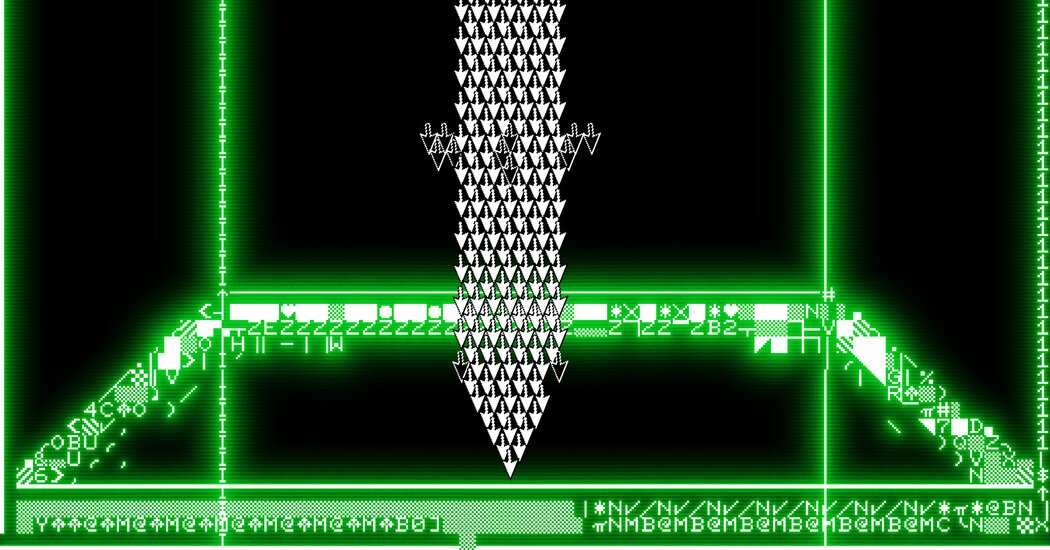
An Iranian hacker group called 'Handala' attacked the network of 'Stryker', a medical technology company located in Michigan, USA, last month. Stryker's data was erased and thousands of devices became non-functional due to Handala's cyber attack. The targets of this attack also included equipment used by workers active in emergency situations under Stryker. Stryker mentioned Handala's attack on its website as the 'beginning of a new era of cyber warfare'.
This new era, considering the recent changes, appears similar to the old one in many aspects. Handala's attack was initially publicized as 'Digital Pearl Harbor' or 'Cyber-9/11'.
The reality of cybersecurity after the attack is yet to be fully revealed. The attack by Iranian hackers was not actually very significant. They carried out minor cyber disruptions along with digital propaganda. Such incidents are now considered normal characteristics of conflict.
There have also been reports of Iran coordinating 'malware' and missile attacks. Despite this, it has not caused serious damage through cyber warfare. Russia's cyber arsenal was also exaggerated before the invasion of Ukraine. However, Iran's cyber attacks have been weak so far.
According to the 'Annual Risk Assessment' report published in the US intelligence community in 2025, 'Iran's growing expertise and desire to conduct aggressive cyber campaigns pose a significant threat to the security of American networks and data.' Several 'hacking' teams under the umbrella of Iran's military and security sectors, including Handala, have been testing American sensitive systems for years.
When war broke out, they were expected to use their capabilities and expertise. They were expected to conduct cyber warfare in favor of the current Iranian regime. However, surprisingly, the situation appears different.
We may not have heard about Iranian cyber attacks. Such attacks may have gone undetected or unpublicized. However, activities that go unnoticed are less likely to be destructive. They are more likely to be espionage in nature.
This is because large-scale attacks are extremely difficult to conceal. There is a high probability that they will be revealed in some form. It is possible that Iranian hackers are preparing to launch a major attack while waiting for a ceasefire. In other words, their major attack may still be pending.
Regardless of whether Iran's cyber warfare capabilities are assessed as high, low, or both, the US and Israel aggressively targeted Iranian cyber units and active 'operatives' during the war. Israel killed the intelligence chief of the 'Islamic Revolutionary Guards Corps'.
However, the cyber attacks observed in the case of Stryker do not appear to have been carried out with caution and skill. They seem sudden and chaotic. According to a statement issued by the US Joint Cybersecurity Advisor, Iranian hacker attacks have caused 'operational disruptions and financial damage' in some places.
However, these attacks were not systematic and effective, but rather focused on identifying and targeting a few vulnerable devices. The disorganized hacking we are seeing reflects the current reality. Although Iran's digital spies may still be working silently, Iran's cyber warfare so far does not indicate formidable capabilities.
Regardless of whether Iran's cyber warfare capabilities are assessed as high or low, the US and Israel aggressively targeted Iranian cyber units and active 'operatives' during the war. Israel killed the intelligence chief of the 'Islamic Revolutionary Guards Corps'.
Furthermore, it claimed to have bombed cyber and electronic headquarters. The US Cyber Command has also been conducting several 'counter-operations'. In this state of disarray due to war, confused or incapable hackers cannot perform excellently in cyber warfare.
Cyber warfare is not cheap, and it is certainly not easy. To succeed in such warfare, they must be connected to weak infrastructure and sophisticated technical institutions. The United States and Israel have years of experience in integrating cyber warfare with military operations.
Israel has reportedly hacked Iranian security cameras to track and target senior Iranian commanders. It is claimed that in the early days of the war, the US Cyber Command disrupted Iran's military, destroying their observation and intelligence gathering capabilities, effectively blinding the Iranian army in terms of communication.
In the field of cyber warfare, Iran is not competing on equal footing with the US and Israel. In the Stryker hacking incident, Handala may have found an open door in the company's network. Exploiting that weakness, they disrupted the public health service system.
Iran is relatively weak in cyber warfare. This will not make a significant difference in the long run. Iran launched missile and drone attacks on countries around the Persian Gulf. It blocked the 'Strait of Hormuz'.
However, 'Programmable Logic Controllers' quickly detected the disruption caused by the Iranian attack. The problem was also resolved immediately. Iran has also hacked Israel's street cameras, 'railway monitors', and the systems of some commercial organizations. It may have also infiltrated Poland's nuclear research center.
While these attacks caused some damage, none of them appear to be part of a coherently executed campaign. These attacks, which have caused damage sporadically, are not effective or systematic.
Iran is relatively weak in cyber warfare. This will not make a significant difference in the long run. Iran launched missile and drone attacks on countries around the Persian Gulf. It blocked the 'Strait of Hormuz'.
All these physical warfare attacks and actions were far more effective than its cyber warfare. As a result, it has come close to victory with relatively favorable terms in the ongoing ceasefire.
If the war resumes, it may be very difficult for Iran to repeat its initial successes while strengthening its defense system and adapting as needed against the US and Israel.
Some sporadic successes in cyber warfare cannot create strategic miracles. Nor can they save governments from political mistakes.
(From The New York Times)
This specific news has been automatically translated by AI. As a result, there may be some inaccuracies or language errors.