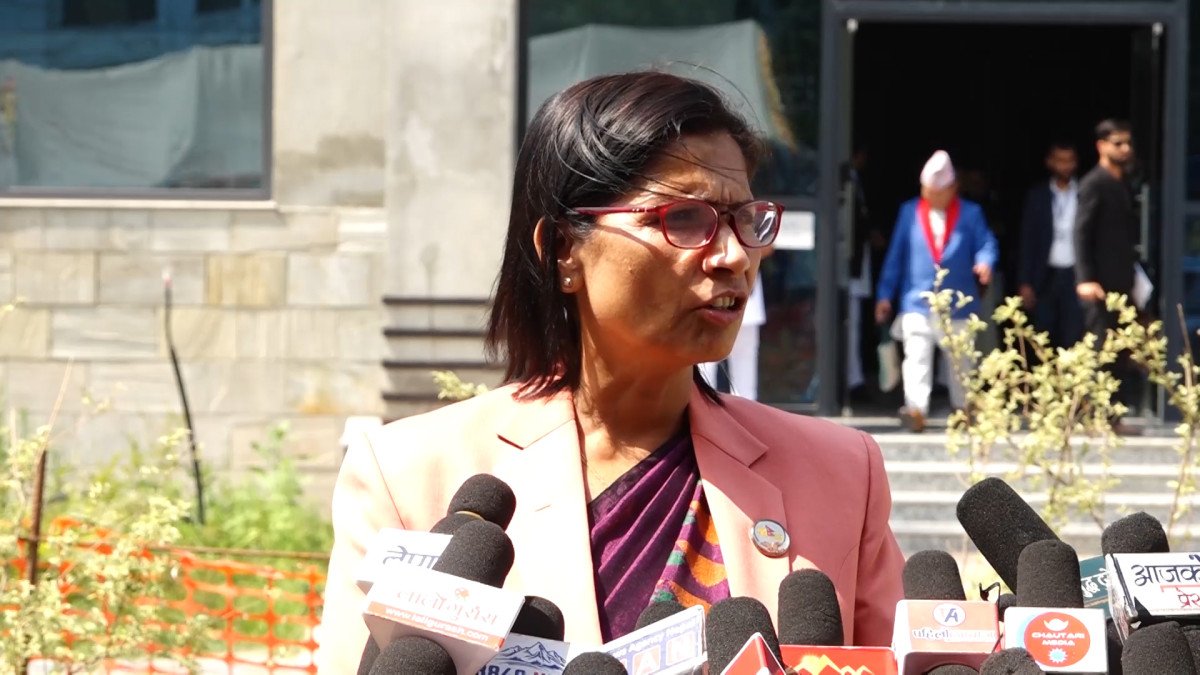
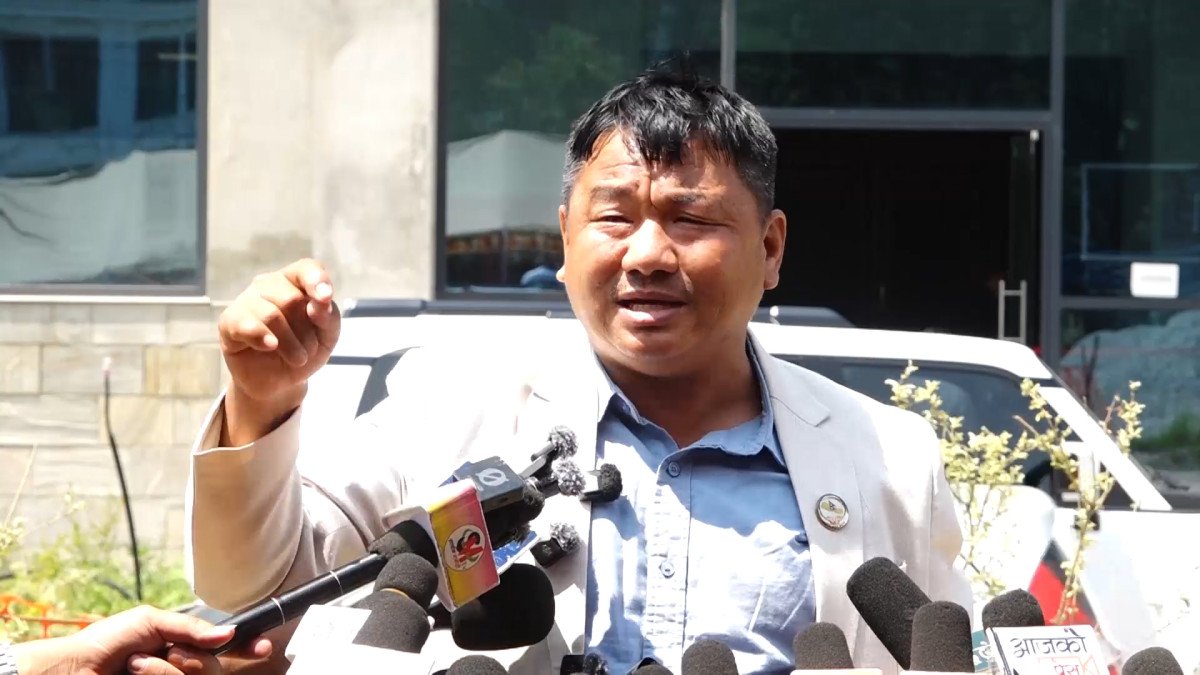
Gagan Thapa Ousts Krishna Sitaula as Nepali Congress National Assembly Leader

Kathmandu. Leader Krishna Prasad Sitaula is considered to have played a significant role in establishing Gagan Thapa in the mainstream politics of the Nepali Congress. In the past, with Sitaula's special support and guidance, Thapa not only became a Member of Parliament and a minister but also succeeded in establishing a strong influence within the party. However, as if to prove the adage that there are no permanent enemies or friends in politics, the relationship between Thapa and Sitaula has now reached a point of extreme animosity. In other words, their relationship has now turned from a 'straight line' to a complex one.
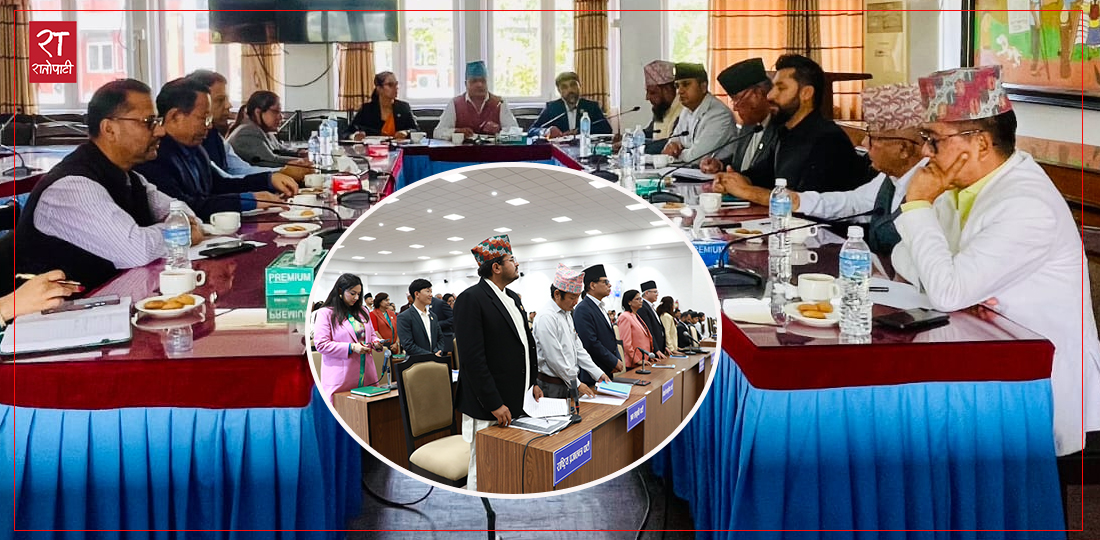
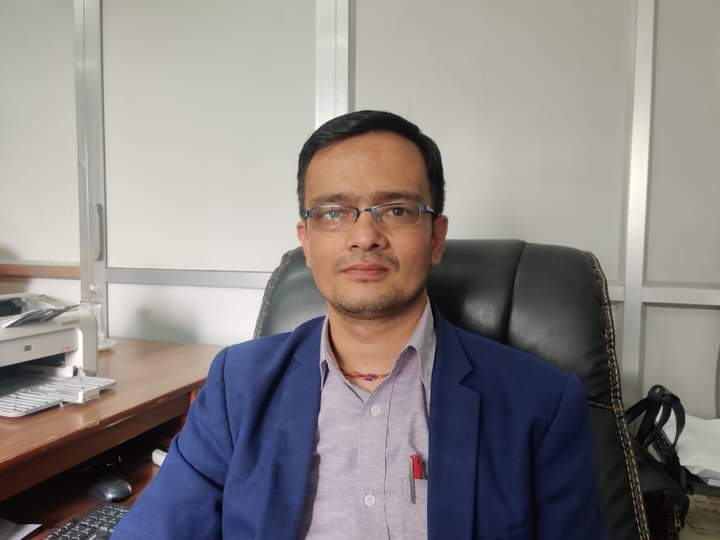
An example of this is the change in the leader of the Nepali Congress National Assembly Parliamentary Party. Sitaula has been removed as the party leader at the behest of Thapa, who was elected chairman in the special general convention. Representative Parliament Party leader Bhishma Raj Angdembe, in accordance with Article 12 (2) of the Nepali Congress Parliamentary Party Act (as amended and revised, 2083), removed Sitaula from the post of National Assembly Parliamentary Party leader and appointed Kamala Devi Panta on Wednesday.
According to sources close to the Congress, Angdembe made this decision in accordance with the commitment he made when he was unanimously elected as the leader of the parliamentary party. Angdembe was unanimously elected as the leader of the House of Representatives Parliamentary Party on Monday. At that time, Angdembe had pledged to Nepali Congress President Gagan Thapa that if he were to be made unanimous, he would appoint the person as per the agreement to the National Assembly party leader post.
Angdembe, who was against the special general convention led by Gagan Thapa and Bishwaprakash Sharma in Poush, despite the disagreement of then-President Sher Bahadur Deuba and the central working committee, was not positive about making him the party leader. Thapa's preference was his father-in-law Arjun Narsingh KC, and if KC could not be made leader, then Mohan Acharya, elected from Rasuwa.
However, Thapa did not have a majority in the 38-member House of Representatives Parliamentary Party, even though he was the president. Moreover, Bishwaprakash Sharma, who became the Vice President after the special general convention, did not support the candidate put forward by Thapa and instead sided with Angdembe. Following this, if an election were held, it was certain that the Sher Bahadur Deuba group would have a majority and Angdembe would become the party leader. Therefore, Thapa agreed to accept the leadership on the condition that Sitaula would be removed as the National Assembly party leader and the chief whip and whip would be appointed to individuals of his choice.
Sitaula was among those who strongly opposed the special general convention led by Thapa. Therefore, Thapa wanted to remove him by any means necessary. After party president Thapa did not make his father-in-law the party leader, he wanted to make Basana Thapa the chief whip on his father-in-law's recommendation. Angdembe fulfilled both these tasks on Wednesday as per the commitment. 'There was an agreement to remove Sitaula as the National Assembly party leader and make Basana the chief whip when Angdembe-ji was made the party leader. Today, he has fulfilled that,' a Congress official told Ratopati.

Congress MP KC had publicly proposed Thapa to be the leader after he himself decided not to take up the post. In a conversation with Ratopati a few days ago, KC had said, 'I had claimed the leadership of the parliamentary party as I am the most senior and experienced MP in the House of Representatives, on the condition of being unanimous. However, that situation did not arise. Based on the current situation, I have proposed making the young, directly elected woman, Basana Thapa, the leader of the party.'
That Relationship Between Sitaula and Thapa
During the People's Movement of 2062/63, Gagan Thapa was involved in student politics and was affiliated with the Nepal Students' Union (NSU), the student wing of the Nepali Congress. Due to Thapa's nature, the then Congress President Girija Prasad Koirala did not favor him much. According to political observers of that time, after the People's Movement was successful, Thapa was included in the proportional representation list of the Congress for the first Constituent Assembly through the efforts of Narahari Acharya and Sitaula.
They were instrumental in him becoming a Member of Parliament through the proportional system. Thapa, who became an MP at the age of 31, became a central member in the 12th General Convention of the Congress in 2067 at the age of 34. He was elected as a Member of Parliament from Kathmandu-4 in 2070, 2074, and 2079.
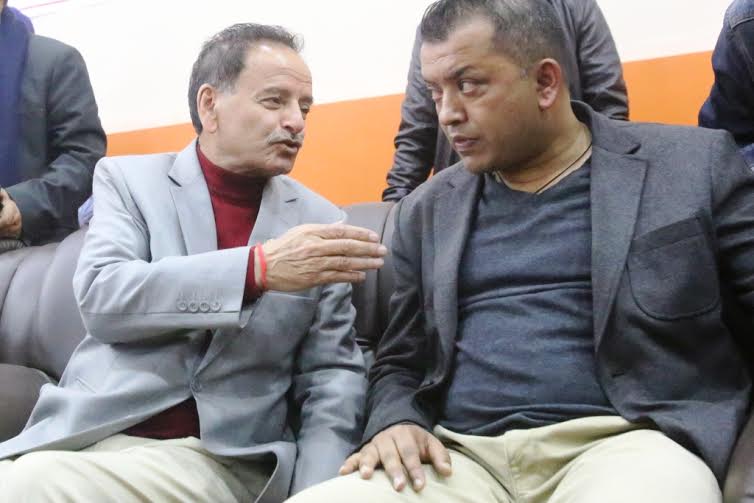
Thapa announced his candidacy for the post of General Secretary at the 13th General Convention, raising the issue of leadership change and generational transition in the party, but no strong faction nominated him. Subsequently, Sitaula, who was a candidate for party president at that time, contested for General Secretary from his panel. However, he did not win.
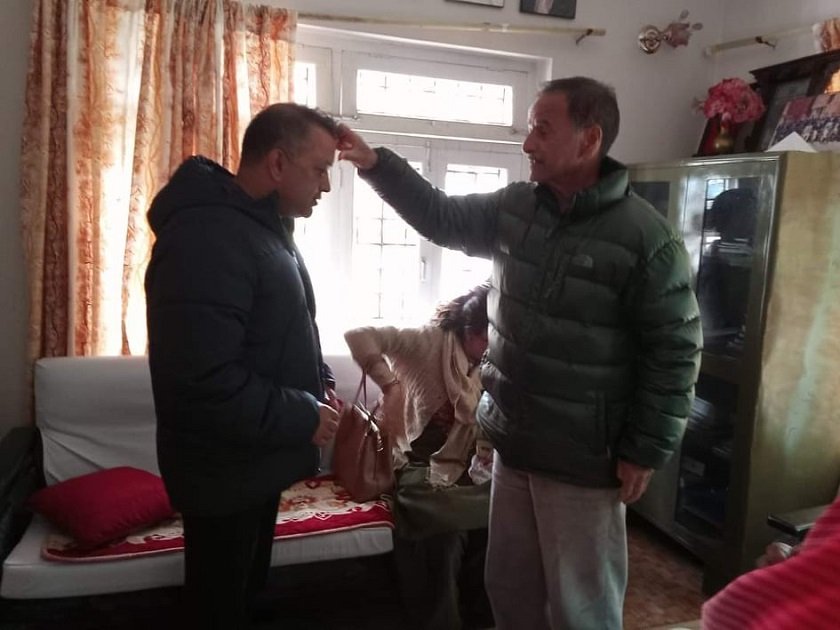
Thapa, who received 585 votes for General Secretary, became the Minister of Health and Population in 2070 based on Sitaula's recommendation after the 2070 elections. At that time, the news of him going to Sitaula for blessings immediately after becoming a minister was widely discussed. Later, he frequently visited Sitaula for blessings.
Thapa, who gained prominence in national politics after Sitaula nominated him for General Secretary, saw his relationship with Sitaula cool down from the 14th General Convention of the Congress held in 2078. At that time, Thapa changed his faction and contested for General Secretary from Dr. Shekhar Koirala's group in the 14th General Convention. After changing factions, Sitaula publicly warned Thapa during the 14th General Convention, saying, 'He who made the leader can also destroy him.' Sitaula was with the Deuba group in that convention.
Even though Thapa became the party president through the special general convention, Sitaula has never been positive about it. Thapa believes that Sitaula played a significant role in conveying negative information to the then-President Deuba about the general convention and complicating party disputes. Thapa has been telling his close associates that the party's internal disputes have not been resolved due to the main role played by Sitaula, along with Purna Bahadur Khadka, Prakashman Singh, and Bimalendra Nidhi.
Sitaula is still advocating for the formation of an organizing committee for the general convention by adjusting the committee elected from the 14th General Convention and the committee formed from the special general convention. At this time, Sitaula believes that Thapa has forgotten the favor Sitaula did for him and is taking revenge by snatching away the position he held.
Meanwhile, the Deuba group protested on Tuesday, stating that there was a plan to remove Sitaula as the National Assembly party leader. Group leader Min Bishwakarma said that removing Sitaula would further escalate the party dispute.
This specific news has been automatically translated by AI. As a result, there may be some inaccuracies or language errors.