Kaviraj Gahatraj: Nepali Choreographer Honored by World Book of Records
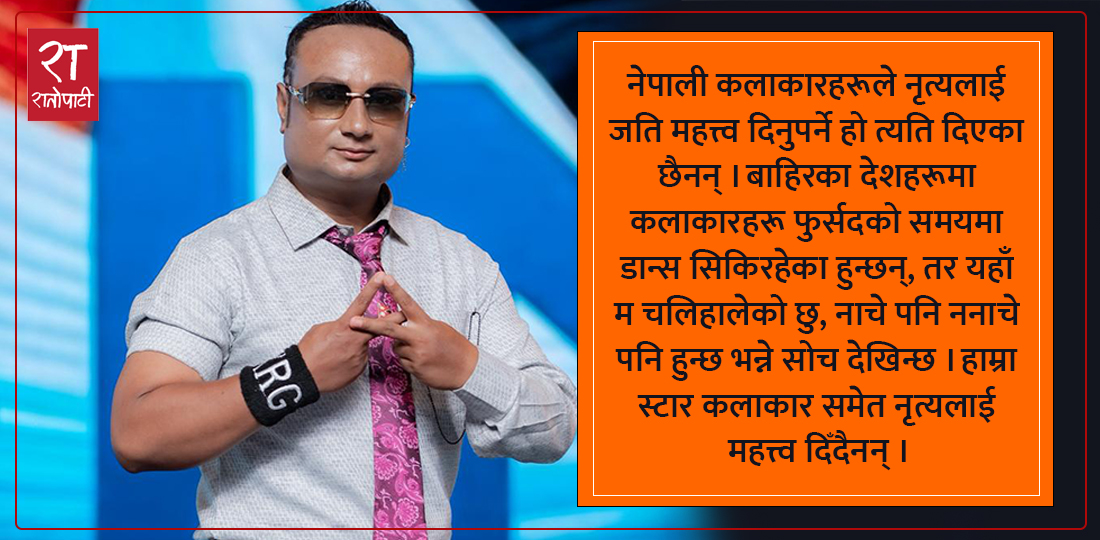
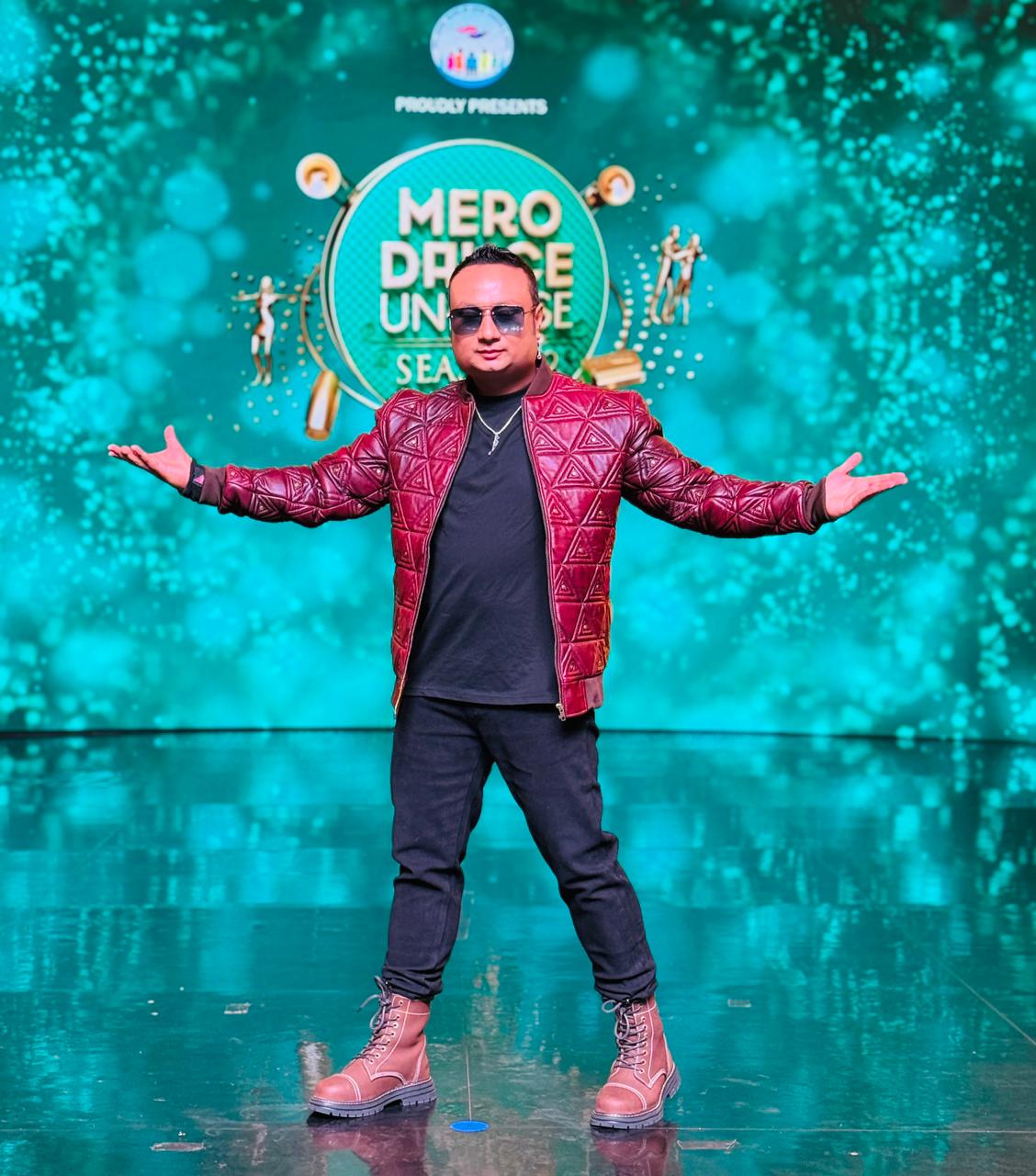
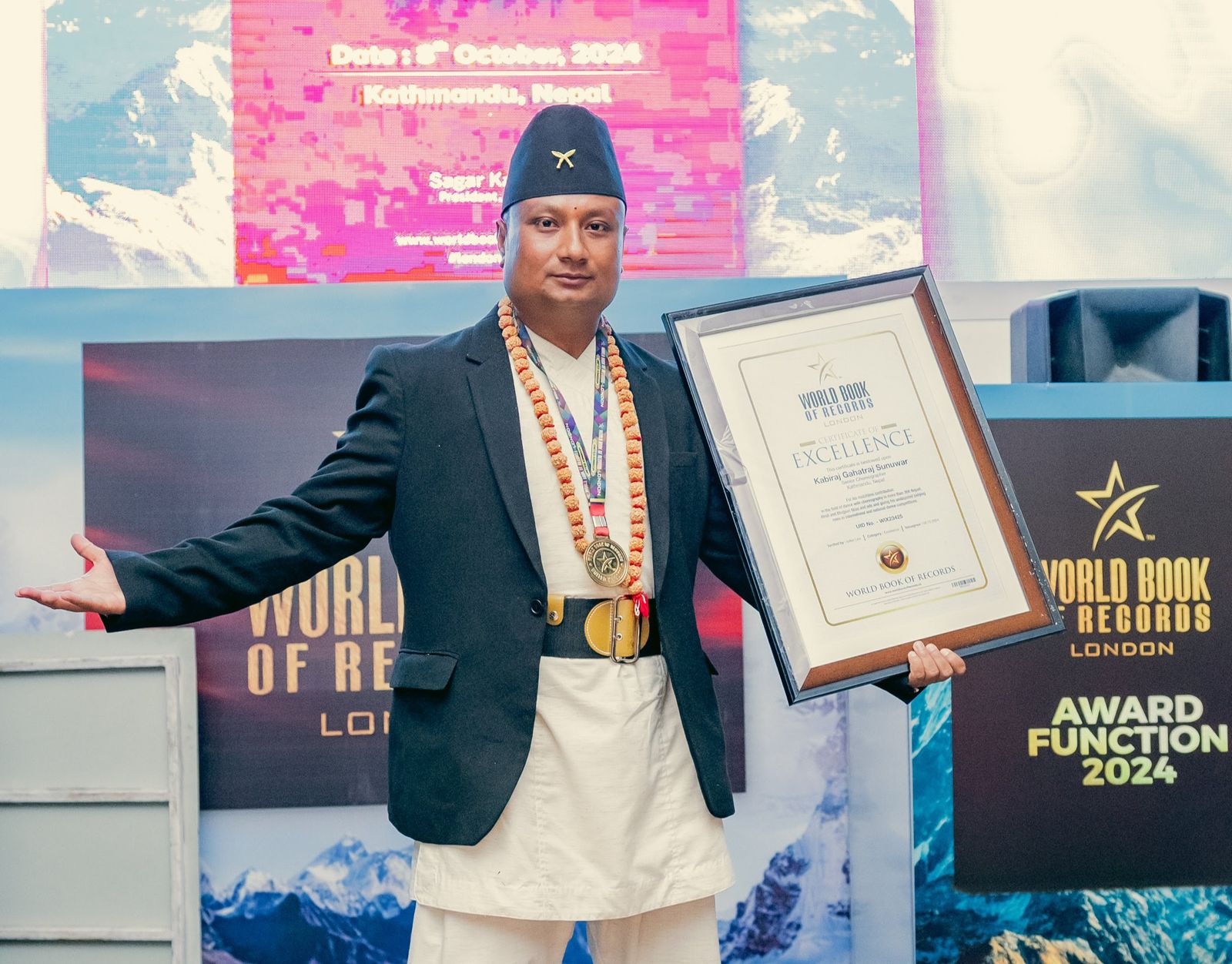
Kabhiraj Gahatraj is a successful and famous choreographer in the Nepali film industry. He has been directing dances for films and individual songs for over two decades, choreographing more than 300 films and hundreds of music videos.
Starting his professional journey with the film 'Itihas', he has elevated Nepali dance to new heights through blockbuster songs like 'Kutuma Kutuma', 'Purba Paschim Rail', 'Simple Simple Kanchi', and 'Rupai Mohani'. Recognized by the 'World Book of Records' London for choreographing over 300 films, he is particularly known for his expertise in fusing Nepali folk and modern dance on screen. This is an edited excerpt from an interview with Kabhiraj Gahatraj on the occasion of International Dance Day.
- What is dance and why is it performed?
Dance is the movement of body parts according to the tunes of music. However, in contemporary times, dance is not limited to music. It is also the expression of one's emotions and feelings through body movements without music. People dance when happy, sad, or for exercise. Essentially, dance is performed to express the emotions of life's ups and downs and struggles.
- When and how did your dance journey begin?
My dance journey began in school. After school, I learned at dance training centers. I was always active in dance, but in the film industry, I started about 22-23 years ago with the film 'Itihas'.
- How many films and music videos have you directed so far?
Excluding films, it's around 500 to 700 songs. But in films, I have directed dance in over 300. Based on this, last year, the 'World Book of Records London' honored me.
- What challenges did you face in the early days of your career in dance?
I preferred 'modern' dance, but at that time, films prioritized cultural dances. Later, I started working in a new style by mixing culture and modern dance, which made things easier for me. The current challenge is how to make the next work even better and more excellent than the previous one.
- What is your favorite dance genre?
My 'special' genre is modern. However, while working in films, I have equally worked on romantic, folk, modern, and sad songs. Commercially, songs like 'Kutuma Kutuma', which are folk-modern fusions, have been very successful. I personally prefer the 'fusion' style that mixes folk and modern.
- How does Nepali society view the field of dance, and is there a future in it?
Society's view of dance is positive, but in terms of the future, there is still uncertainty. Parents are happy to see their children dance, but if they want to make it a profession, there is still pressure to become a doctor or engineer. There is a lack of proper platforms for dance in Nepal, which means one still has to struggle to make it fully professional.
- How much importance do you think film personalities and artists give to dance?
To be honest, I don't think Nepali artists give dance as much importance as they should. In foreign countries, artists are learning dance in their free time, but here, there's a mindset of 'I'm already successful, whether I dance or not doesn't matter.' Some artists don't even show up for rehearsals and look for easy steps on set. This prevents the depth and 'naturalness' that should come into dance from being achieved. Even our star artists do not prioritize dance.
- When you direct choreography, what do you focus on: music, lyrics, or other aspects?
For films, the script and situation are most important. One needs to understand the context in which the song is playing. If it's a dream sequence, we have a lot of freedom, where we can make the dance grand according to our style and location.
- Our traditional dances are not seen prioritized in films. How easy is it to incorporate them?
It is a bit difficult to incorporate traditional dances into films. Our traditional dances are very long, but a film song is only about 4-5 minutes long. Due to time and budget constraints, the traditional essence cannot be fully captured. Nevertheless, many films are now trying to incorporate them.
- How has the recent trend of TikTok and Reels impacted dance?
Platforms like TikTok and Reels that have developed recently have promoted dance. It has become a good platform for hidden talents to emerge. Many have also used it as a business. Reels or TikTok cannot be made without music and dance, so it has had a positive impact on the dance field. This is good.
- Allegations of dance theft or copying also surface from time to time. What is your opinion on this?
In the past, there were no digital platforms like today, so there was a trend of copying some good things from abroad and presenting them here. But if you do that now, everything is open. If you have to copy, it's good to take inspiration with intelligence, which we can adapt to our local context. The phenomenon of being influenced by one another exists worldwide, but how it is presented is important.
- Is any initiative needed from the state level in the field of dance?
Good initiatives from the state are welcome. Some efforts have been made. We have the National Dance Hall for dance. Programs of Nepali cultural dances are held at the National Dance Hall. Programs are held abroad. Through these, cultural exchange programs take place. However, it feels like this is not happening on a large scale. Just as films get more visibility and attention, the state has much more to do, not just in dance but in many areas. We wish for a little more initiative.
_vRfU6gmZPL.jpg)
- What is the financial aspect of dance like?
It is good for those who perform well and establish their position. It is good for choreographers in the music video and film industry. However, for dancers, it feels a bit insufficient. Again, for dancers, it's not bad in music videos; it's reasonably good. But still, it feels insufficient considering the effort.
- What advice would you give to the new generation aspiring to enter dance?
The field of dance is gradually becoming good and professional. If you want to enter this field, do it with all your heart. Come with the intention of building a career in it after learning. The future is bright.
- What message would you like to give on the occasion of Dance Day today?
Please do not consider dance merely as a way to move your body. It is a 'feeling', a medium to tell a story. Dance teaches many things. I want to say, let's respect it and embrace it. Happy Dance Day to everyone!
This specific news has been automatically translated by AI. As a result, there may be some inaccuracies or language errors.
_I0a7yjtDaq.jpg)