Kathmandu Authorities Clear Squatter Settlements Along Bagmati River


Kathmandu. A Saturday dawn. The city of Kathmandu was slowly waking up. However, for the squatter settlements along the banks of the Bagmati River, this morning was far from normal.
A large force of security personnel was deployed early in the morning in front of the shanties that have stood on the Thapathali riverbank for years. Residents were hurriedly removing the corrugated iron sheets from their huts. Upon hearing that bulldozers would arrive shortly, they were trying to dismantle the roofs and bamboo fences themselves to save their belongings.
'The government cut off the electricity last night. We managed to bring our household items out, but we couldn't save the materials used to build the house,' lamented one Thapathali resident. The locals here were not necessarily against leaving the settlement, but their grievance was that the state had deployed bulldozers so suddenly. They say, 'If they had given us a week's time, we would have dismantled it ourselves, and our materials would have been useful!'
_DxKEPFGEis.jpg)
Bulldozers operate, no tension
Then the bulldozer arrived. There was a brief stir as soon as the bulldozer was seen. But after the police removed the locals, the huts began to be demolished one after another. In previous years, attempts to use bulldozers in the Thapathali squatter settlement would lead to clashes resembling a battlefield. But this time, the scene appeared different and 'cooperative.' There was no stone-pelting, nor did a confrontational situation arise. Following the final ultimatum given by the government, most residents had packed their belongings on Friday night. They just hadn't managed to manage the construction materials of the huts.
The bulldozer campaign, which started at dawn in coordination with the Kathmandu Metropolitan City and the Government of Nepal, continued until dusk. Starting from Thapathali, the bulldozer reached Gairigaun and Shantinagar in the afternoon and Sinamangal by evening.
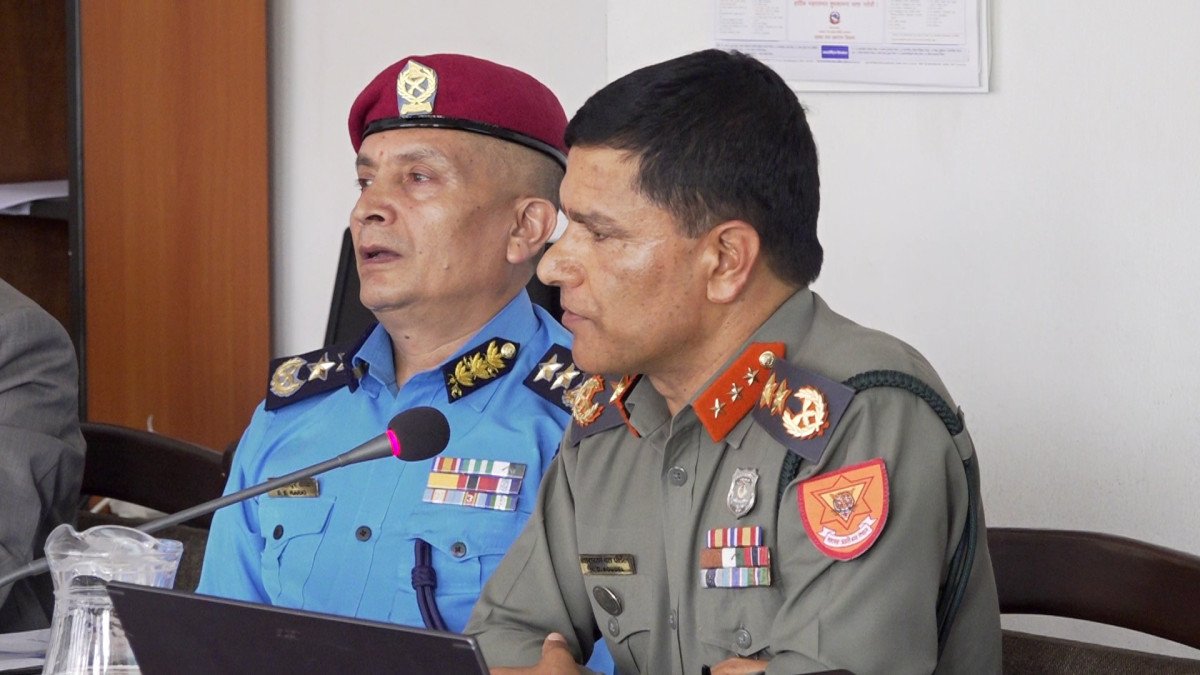
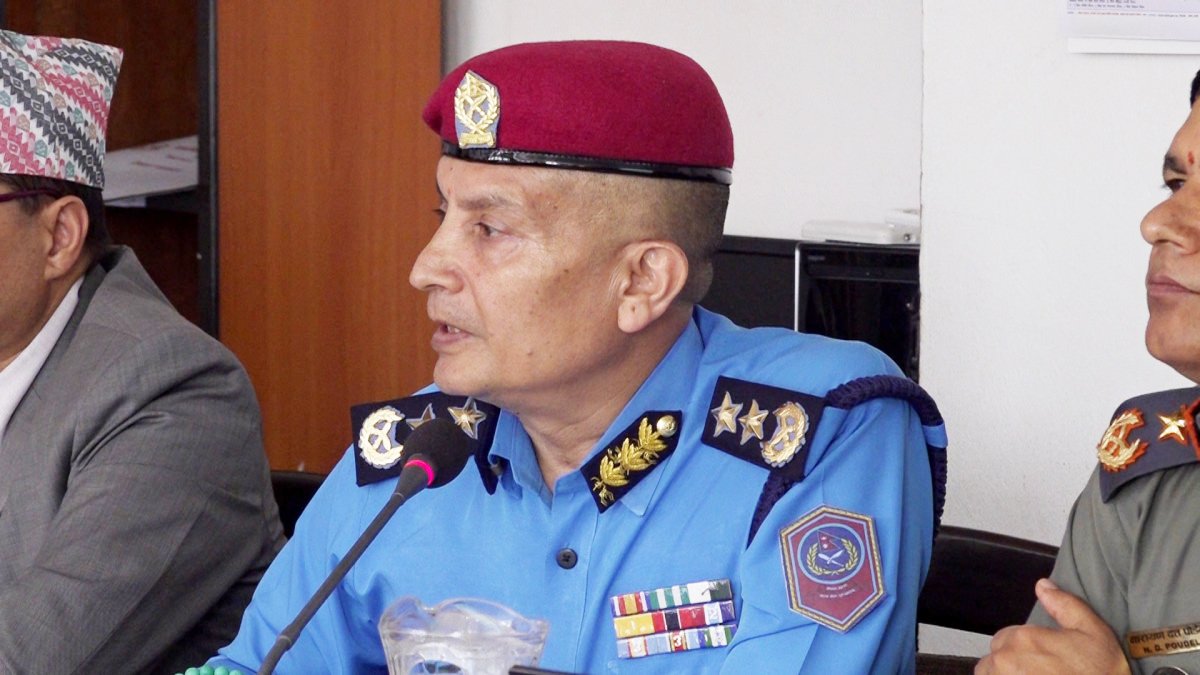
During the demolition, there was a heavy presence of Nepal Police, Armed Police Force, and Municipal Police. SSP Ramesh Thapa of the District Police Range, Kathmandu, was personally deployed in the field. High-ranking police officials, including AIG Ishwar Karki, the chief of Valley Police, were also continuously monitoring the field. The police were careful to ensure that the squatters' belongings were not destroyed or buried. While the bulldozer was knocking down empty huts in one corner, police personnel were moving the mats and clothes of the elderly to a safe place in another corner.
_6CHQv4QZSh.jpg)
'There was no situation to resist'
Locals of the settlement shared their hopes with the government regarding why they did not resist this time, unlike in the past. 'We are sad today, but we also have hope; they have explained that the problem is caused by fake squatters. There isn't much trust, but let's hope now,' says Ram Galan, a local of the settlement.
The scenes were quite emotional as the settlement was being demolished. A woman carrying a child in a corner of Thapathali said, 'I grew up shedding tears my whole life, and I had just put this roof over my head. Today, the state has snatched away our shelter,' she said. One scene on the roadside left many stunned: on one side was the harsh sound of the bulldozer, and on the other, a child was sleeping in a cradle on the road. The child's mother was rocking the cradle while staring blankly at her house being demolished. She said in a faint voice, 'I am not worried about the house being broken, but my heart is burning with the worry of where to keep this child for the night.'
In the meantime, municipal police and Nepal Police were also comforting them. The municipal police were facilitating by distributing water to the displaced. After the work in Thapathali was finished, the line of bulldozers headed towards Gairigaun and Sinamangal. In the scorching afternoon sun, people were loading their belongings onto vehicles. Although there were some concrete structures in Shantinagar and Sinamangal, there was no significant obstruction.
_iFMaU29781.jpg)
Bulldozers to demolish huts
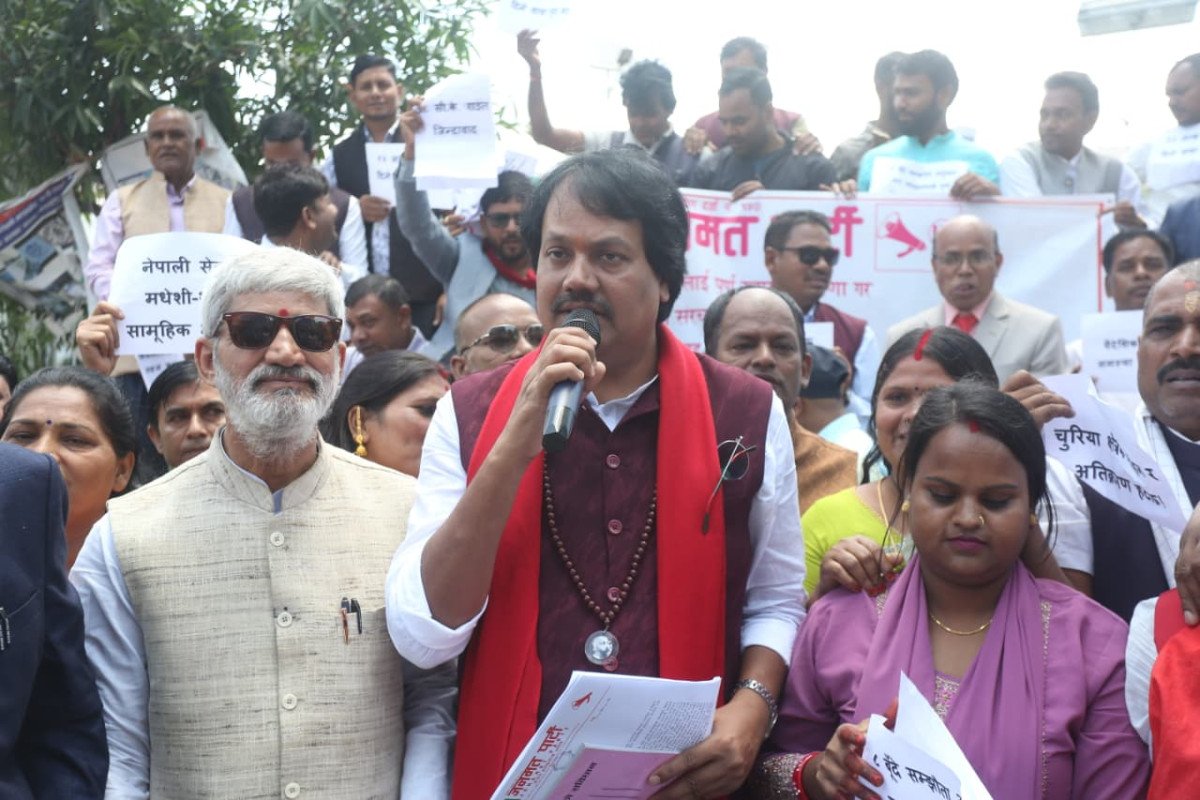
Locals of the squatter settlement, which the government cleared by deploying hundreds of security personnel, were saying, 'If given time, we would have dismantled it without damaging the goods.' 'Why use such a big bulldozer just to live in a bamboo and tin enclosure? If they had given us seven days, we would have dismantled it,' said a local woman. Gen-Z leaders who reached Thapathali also claimed that the government was using unnecessary force. 'What kind of state is it that has to use a bulldozer to demolish a bamboo hut? It is not fair to show force to locals to vacate the house they are living in,' said Gen-Z leader Sriman Thapa.
Residents moved out themselves in Manohara
Meanwhile, in the Manohara area of Bhaktapur, preparations are underway to use bulldozers starting tomorrow, Sunday. According to SP Surya Bahadur Khadka of the District Police Range, Bhaktapur, about 80 percent of the residents along the banks of the Manohara River have already left the settlement with their belongings. The remaining families are also continuing to move their goods. About 1,600 people lived in this settlement, which had 777 huts. Since the residents have moved out themselves, preparations are being made to fully clear the area using bulldozers only from Sunday.
Meanwhile, around 7 PM on Saturday, locals in the area pelted stones at the bulldozer, and squatter residents also attacked the police, claiming they had come to demolish their homes. Some police officers were also injured during the incident.
Government's plan: Contacting families and collecting details
The government has intensified the work of clearing settlements along the riverbanks and risky public lands in the Kathmandu Valley. According to the 2079 report of the High-Powered Bagmati Civilization Integrated Development Committee, there are 3,496 households of unmanaged settlers along the riverbanks of the valley. It is estimated that this number has now reached about 4,000.
So far, 68 families from Thapathali have come into contact with the government. The families who have come into contact are being prepared to be taken to Dasharath Stadium to collect their details and house them in various hotels. The Prime Minister's Office has stated that their household items have been kept safely at Radha Swami Satsang Vyas in Sundarighat, Kirtipur.
According to the office, the identification of whether the families kept in hotels are real squatters or not will begin from Sunday. Those identified as real squatters will be moved to government apartments in Nagarjun Municipality-1 within two weeks. The government has stated that the work of their long-term management will begin after that.
_eEk9g4Og6U.jpg)
How will management be done?
The government has put forward a detailed action plan to manage the squatters. This includes setting up verification camps, distributing photo identity cards, and dismissing those who are not real squatters.
Prime Minister Balendra (Balen) Shah has committed through social media that land will be distributed to real squatters across the country as soon as possible by following the process. According to the Land Act, there is a provision to provide land to landless Dalits and squatters for one time.
According to Kathmandu Metropolitan City spokesperson Nabin Manandhar, the process of providing land to real squatters according to the law will be moved forward through the Land Commission. There is a legal provision for the Land Issues Resolution Commission to distribute land ownership certificates after the process of data collection, investigation, surveying, and verification is completed in coordination with the local level.
This specific news has been automatically translated by AI. As a result, there may be some inaccuracies or language errors.