Nepal's Securities Board Faces Leadership Vacuum Amidst Ongoing Regulatory Turmoil
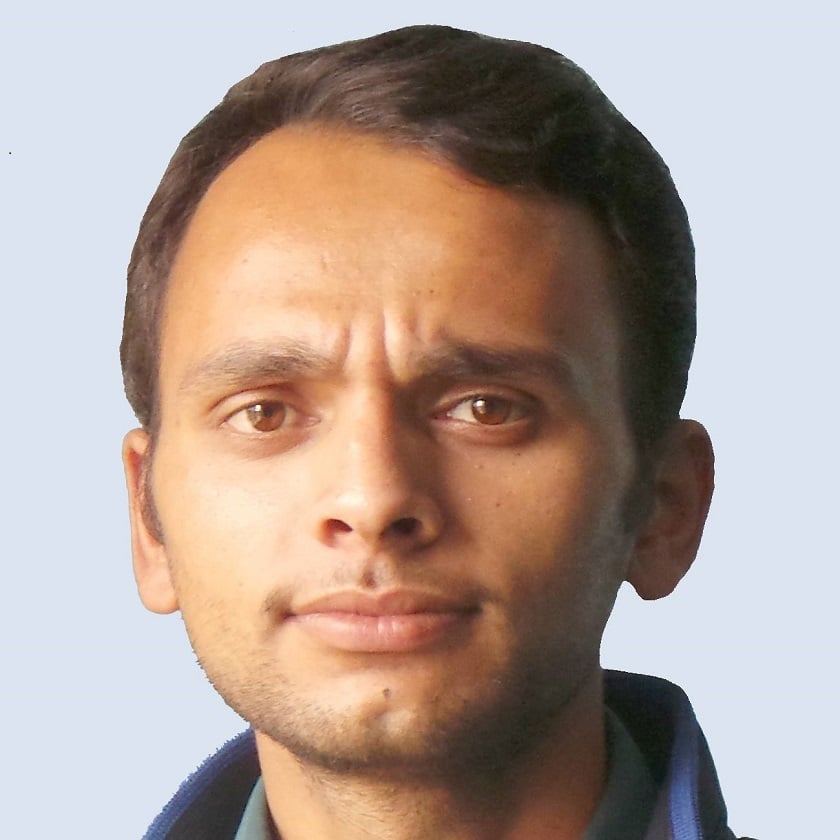

Kathmandu. The Securities Board of Nepal (SEBON), the regulatory body for the country's capital market, is currently without leadership. Following the resignation of Chairman Santosh Narayan Shrestha on Friday, the position has become vacant again after approximately 17 months.
With Shrestha's resignation, the process for a new appointment has already begun. The Cabinet meeting held on Tuesday formed a recommendation committee for the appointment of the chairman, led by Vice-Chairman of the National Planning Commission Dr. Gunakar Bhatta, with Finance Secretary Ghanshyam Upadhyay and expert member Bhuwan Dahal as members.
The committee will call for applications and recommend three names from the applicants, one of whom will be appointed as chairman by the Cabinet.
Three leaders in six years, a history of shifting government equations
The history of the Securities Board spans about 34 years. Established in 2049 BS, the board has had 9 chairmen so far. While the first chairman, Dambar Prasad Dhungel, led the board for over 10 years, it has recently become so unstable and controversial that three chairmen have been replaced in the last six years alone, with the fourth now being sought. However, the appointments and tenures of all three were not free from controversy.
Bhishmaraj Dhungana was appointed chairman of the board on 2076 Poush 21, about three months after the four-year term of Chairman Rewat Bahadur Karki ended. However, he was dismissed within two years. He was dismissed after it was found that he had purchased shares in a conflict of interest and was involved in insider trading.
The fact that he had purchased shares of Sarbottam Cement, which was preparing to issue an IPO through book building, in his daughter's name was made public. Following this, he was removed from the chairmanship in 2078 Ashoj. The then CEO of NEPSE, Chandra Singh Saud, also resigned at that time in the same case.
About five months after his dismissal, Ramesh Hamal became the chairman of the board. His appointment to the board was itself controversial and surprising. Before his appointment, he was not a known figure in the securities market. Coming from an electrical engineering background, he was the president of NRN Thailand before becoming the chairman of the board.
Apart from a master's degree in finance, he had no history of working in the securities market. However, he was appointed chairman of the board, bypassing Gopal Bhatta, Krishna Pokharel, and others. His appointment was recommended by a committee led by Bishwa Poudel, who is currently the Governor of Nepal Rastra Bank.
During his tenure, his main goal seemed to be the distribution of new licenses. In his two-year tenure, he granted licenses to 43 brokers and some merchant bankers. Similarly, his focus remained on granting a license to a rating agency and allowing some companies to sell IPOs at high prices. His attempt to advance the licensing process for a new stock exchange and commodities market was not successful.
After his tenure ended, the new appointment process became so controversial that it not only took nearly a year but also created a situation where the government itself could have collapsed.
Hamal's tenure ended in the last week of 2080 Poush. However, due to the dispute over who should be the new chairman, it took two months to form a recommendation committee. A committee was finally formed in the second week of Falgun under the leadership of the then Vice-Chairman of the National Planning Commission, Min Bahadur Shahi.
When the committee called for applications, 19 people applied for the board chairman position. The committee shortlisted Santosh Narayan Shrestha, Chiranjibi Chapagain, Krishna Bahadur Karki, Dr. Navaraj Adhikari, and Muktinath Shrestha, leaving out other veterans.
There was a dispute between the then ruling party, CPN (Maoist Center), and the coalition partner, Nepali Congress, over who should be made chairman among them. The Maoists wanted to make either Chiranjibi or Krishna Bahadur the chairman, while the UML preferred Santosh Narayan Shrestha.
After it became certain that Shrestha would get the appointment, three other candidates, except Muktinath Shrestha, boycotted the interview, adding legal complications to the appointment process. Amidst the uncertainty of the appointment, where only two people gave interviews instead of the required three, the power equation changed in 2081 Ashar.
After the government led by UML Chairman KP Sharma Oli, including the Congress, was formed, Santosh Narayan finally received the appointment as chairman in Mangsir. At the time of the final recommendation, Dr. Shivraj Adhikari was the coordinator of the committee.
Deepak Bhatta and business houses like the Shankar Group played a major role in bringing Dhungana, Hamal, and Shrestha as chairmen. They have been using the board chairman to influence decisions to get permission to sell shares at high prices, secure licenses ranging from broker rating agencies to commodity exchanges and stock exchanges, and even to gain immunity for securities trading crimes.
However, Santosh Narayan could not complete the task of granting licenses for the stock exchange and commodities exchange that Hamal could not do. The events that changed immediately after his appointment did not give him time to advance this process.
Even before Shrestha was appointed chairman of the board, the 'High-Level Economic Reform Suggestion Commission' formed by the then government under the leadership of Rameshwor Khanal suggested that a second stock exchange was not necessary. With the budget statement of the fiscal year 2082/83 also mentioning the implementation of the commission's report, the stock exchange licensing process became further uncertain.
Following the formation of a new government after the Gen-Z uprising on Bhadra 23 and 24, Rameshwor Khanal himself became the Finance Minister. With his appointment, his focus shifted to dismantling the network of settings built by Deepak Bhatta and his group. He increased pressure for resignation by creating difficulties through procedures related to employee facilities, but Santosh Narayan did not budge at that time.
After the Department of Money Laundering Investigation directed an investigation into insider trading at Himalayan Reinsurance in the last week of Falgun, he formed a committee. Based on the recommendation of that committee, he submitted his resignation to Finance Minister Swarnim Wagle on Friday regarding the decision to take action against Deepak Bhatta, Shekhar Golchha, and others.
With Shrestha's resignation, the main pillar of the setting empire of Deepak Bhatta and the business houses connected to him has collapsed.
Due to such inconsistencies seen in the board recently, former chairman Dr. Rewat Bahadur Karki feels embarrassed to call himself a former chairman of the board. Recalling his work day and night for the development of the capital market during his tenure, he says that these inconsistencies have overshadowed these reform works.
'When I talked about online trading, introduced DEMAT, T+3 provisions, and 10-share sales, I did revolutionary work. Some people obstructed this because they could not take unauthorized benefits from the market after this work started, but a lot of work was done,' says former chairman Karki, 'Recently, the tendency to act on the instructions of interest groups and work only accordingly has defamed the regulatory body itself.'
What kind of leadership and what kind of reform now?
Dr. Karki says that he is optimistic that the leadership coming to the board will be capable and selfless, looking at the network of settings breaking down in the financial sector, the formation of the new government, the new leadership of the Ministry of Finance and the Planning Commission, and the new committee formed for the selection of the chairman.
He says that for the leadership of the Securities Board to be selected correctly, the government's intention must be right first. He believes that if this happens, the selection committee will also be good and they will be able to make good recommendations. He emphasizes that people with a mentality of just holding a job and fulfilling someone's interests should not be brought into leadership.
Karki suggests that the new leadership must do four things at the Securities Board.
1. Structural change
Currently, the Federation of Nepalese Chambers of Commerce and Industry (FNCCI) and the Institute of Chartered Accountants of Nepal (ICAN) have representation on the board's board of directors. This leads to a conflict of interest.
The arrangement where one is an auditor and also a director of the regulator has raised questions about transparency. Therefore, Karki argues that the Securities Act should be amended to form a board of directors consisting only of experts.
2. Improvement in technology
NEPSE's software is still not of international standard. Even though the software bought for 30 million has reached 180 million, its reliability is in question. The new leadership must have the courage to modernize and privatize NEPSE.
3. Start of commodities market
It has been years since the Commodity Exchange Act was made in Nepal, but it has not yet come into operation. Karki says that if a derivative market, especially for agricultural products, can be started, it will benefit both farmers and investors. He says that the process was stopped in the past due to large financial irregularities in the name of granting this license. Now it should be taken forward in a competitive manner.
4. Second phase of financial liberalization
After the first phase of financial liberalization that started in 2048 BS, there is now a need for a second phase. Former board chairman Karki says the new chairman should bring non-resident Nepalis into the secondary market, internationalize the share market, and introduce new investment tools like option markets and future markets.
This specific news has been automatically translated by AI. As a result, there may be some inaccuracies or language errors.