Government Challenges Supreme Court Verdict in Unity Life International Fraud Case

Kathmandu. The government has returned to the Supreme Court seeking a review of the verdict in the nearly four billion rupee Unity International fraud case, arguing that the ruling unfairly benefits the perpetrators.
The government contends that the Supreme Court's decision appears to incentivize the offenders rather than punish them, effectively allowing the perpetrators to profit from the funds swindled from the public.
On 2082 Baishakh 2, a joint bench of Chief Justice Prakashman Singh Raut and Justice Til Prasad Shrestha had ruled that victims who come forward with claims could be reimbursed for their losses in the Unity Life International fraud case.
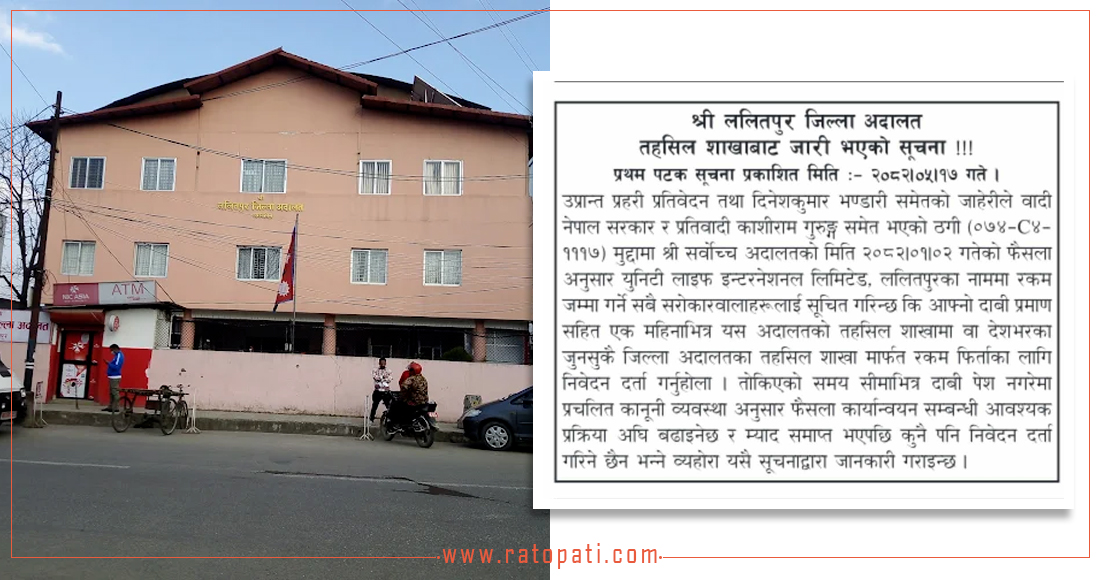
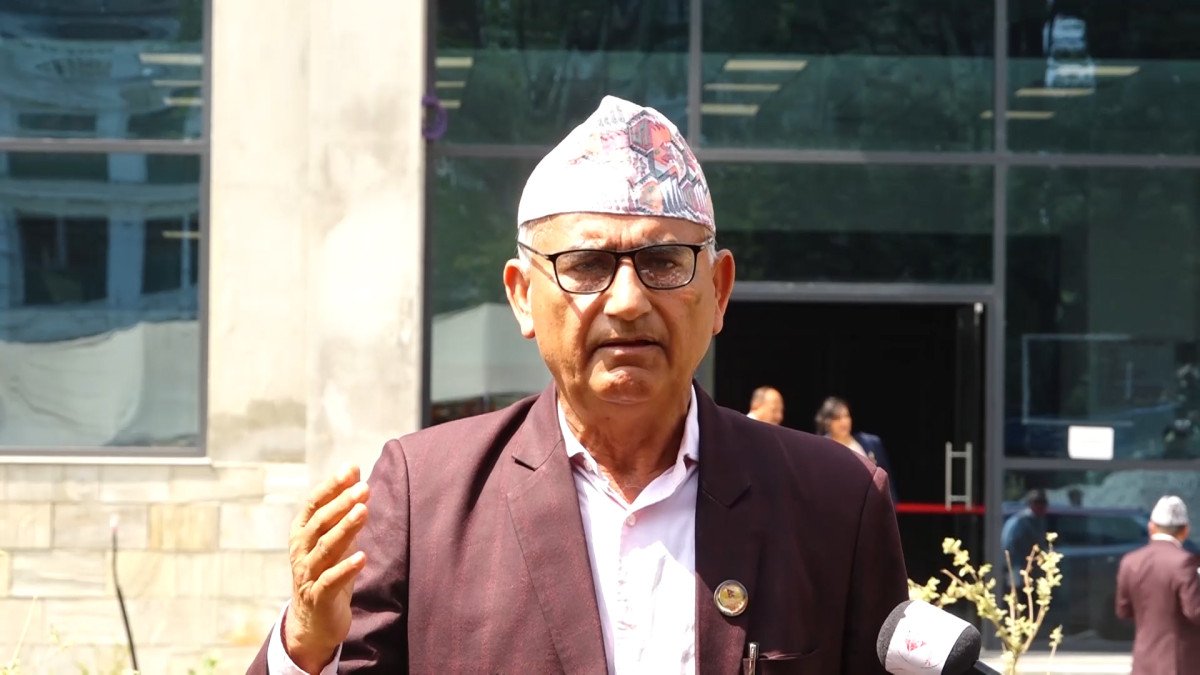
Deputy Attorney General Khemraj Gyawali stated that while the Supreme Court opened a path for victims to recover funds in this decade-old case, the ruling created a situation where victims without documentation would be excluded. Furthermore, the government challenged a specific clause in the verdict stating that if the 362,198 depositors who did not file claims failed to come forward, the remaining assets would be released to the company. The government argues this clause grants financial benefits to the criminals and strips victims of their rights.
Government's Argument: Perpetrators Must Not Benefit from Their Wrongdoing
The review petition is based on the fundamental principles of civil law. The government disputes the Supreme Court's interpretation, arguing it violates the principle that one should not benefit from their own wrongdoing, as outlined in Section 10 of the Civil Code, 2074.
The Office of the Attorney General argues that allowing the 'Unity' company—which served as the vehicle for the fraud—to retain the remaining funds is unjust. They warn that such a precedent would provide immunity for similar future fraudulent schemes.
'The funds of 362,000 victims cannot be unexpectedly seized'
The government argues that it is 'unjust enrichment' for the swindled funds to remain under the ownership of the perpetrators simply because many of the 362,198 depositors did not file formal complaints. The state, as a guardian, has a duty to protect the assets of all victims, many of whom are from remote areas or were unaware of the legal process.
International Precedent and the 'Sahara India' Example
The government cited the Indian Supreme Court's ruling against 'Sahara India,' where funds belonging to investors who did not file claims were ordered to be kept in a state-controlled fund rather than returned to the company. The government is demanding a similar practice for the Unity funds.
Risk of 'Economic Incentive' for Crime
The government lawyers argue that if the funds collected through fraud ultimately remain in the company's possession, it provides an economic incentive for criminals. They cited legal precedents emphasizing that individuals should not be allowed to profit from illegally acquired assets.
How much did the Unity operators swindle?
Investigations revealed that Unity operators registered 37 entities to launder money, including investments in real estate and various sectors like hospitals, shopping centers, and hydropower. Between the fiscal years 2062/63 and 2066/67, the company collected 3.83 billion rupees from 368,000 members, with 1.83 billion rupees distributed as commissions. The company, initially registered as So Insurance Unity Life International on 17 Falgun 2062, later engaged in illegal networking businesses without authorization.
This specific news has been automatically translated by AI. As a result, there may be some inaccuracies or language errors.