Tensions Escalate as North Korea Fires Multiple Short-Range Ballistic Missiles

Pyongyang. Tensions have flared again on the Korean Peninsula after North Korea launched multiple short-range ballistic missiles toward the sea on Sunday. This launch is viewed as a serious regional security concern, coming just days after the UN nuclear watchdog warned that Pyongyang has made 'very serious' progress in its nuclear weapons development.
According to the South Korean military, the missiles were fired from the Sinpo region and flew approximately 140 kilometers before landing in the country's eastern waters. Following the incident, South Korea stated it is in full readiness to respond to any potential provocations and has intensified intelligence sharing with the United States and Japan.
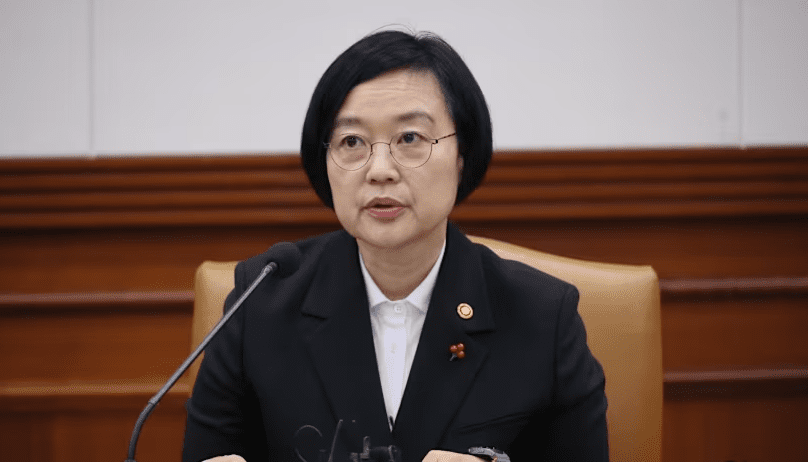
In an emergency meeting of South Korea's National Security Council, senior officials expressed deep concern over North Korea's repeated missile tests and urged an immediate halt to such activities. Notably, the timing of this launch is considered significant as it occurred just hours before South Korean President Lee Jae-myung departed for an overseas trip.
The US and Japanese militaries have confirmed detecting the launch. The US Indo-Pacific Command stated its commitment to regional security and the defense of its allies. Japan's Ministry of Defense strongly condemned the move, stating that North Korea's actions threaten regional and international peace and violate UN Security Council resolutions.
The Sinpo region, where the missiles were launched, is a key city on North Korea's east coast and home to a major shipyard for submarine construction. South Korean media reports indicate that an analysis is underway to determine whether the launch was conducted from a submarine, land, or both platforms. Japanese Defense Minister Masahisa Miyazaki also stated that coordination is ongoing with the US and South Korea regarding this matter.
If a submarine launch is confirmed, it would be North Korea's first submarine-based ballistic missile test in four years. Developing such a capability is considered more challenging for rival nations, as underwater launches are difficult to detect. Last year, North Korea unveiled a nuclear-powered submarine under construction, reflecting its ambitions in this direction.
North Korea has been conducting frequent weapons tests this year alone. Last week, leader Kim Jong Un inspected a missile test conducted from a warship. Prior to that, it was claimed that tests involving various new weapon systems were carried out over three days. Last month, Pyongyang announced it had tested a solid-fuel engine for a missile capable of reaching the United States.
Since nuclear talks with US President Donald Trump failed in 2019, Kim Jong Un has focused on expanding his nuclear and missile programs. Although Trump has expressed a desire for renewed talks and North Korea has signaled openness to dialogue, Pyongyang continues to urge the US to drop its demand for denuclearization as a precondition.
The upcoming summit between Trump and Chinese President Xi Jinping in May is also being viewed in connection with diplomatic possibilities with North Korea. Some analysts suggest that North Korea's latest testing activity could be a strategy to increase its bargaining power in future negotiations.
Meanwhile, International Atomic Energy Agency (IAEA) Director General Rafael Grossi recently confirmed a 'sharp increase' in nuclear production activities in North Korea. According to him, these activities indicate a significant expansion in North Korea's nuclear weapons production capacity.
External analysts have also stated that North Korea is expanding its main Yongbyon nuclear complex and building additional uranium enrichment centers. Last year, South Korean Unification Minister Chung Dong-young reported that North Korea was operating four uranium enrichment centers, further complicating the security situation in the region.
This specific news has been automatically translated by AI. As a result, there may be some inaccuracies or language errors.