Maldives President Muizzu reshuffles cabinet following local election setback
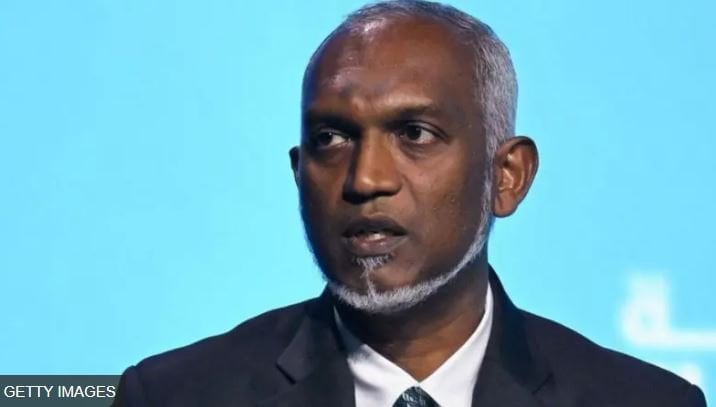
Male. Following the party's poor performance in local elections, Maldives President Mohamed Muizzu has reshuffled his cabinet and reduced the number of ministers. According to the government, this decision is directly linked to political pressure and the recent election results.
President Muizzu has reduced the 20-member cabinet to 15 members, incorporating new faces. Four new ministers have been appointed to the reorganized cabinet. In this process, Foreign Minister Abdulla Khaleel has been removed, and Iruthisham Adam, the Maldives High Commissioner to London, has been appointed as the new Foreign Minister.
According to a statement issued by the President's Office, the main objective of the cabinet reshuffle is to make the government more effective and agile. However, this move comes after the humiliating defeat suffered by the ruling People's National Congress in the local elections.
Previously, Defense Minister Mohamed Ghassan Maumoon and eight other ministers had resigned, which reportedly paved the way for President Muizzu to reorganize the government. A new appointment for the position of Defense Minister has not yet been announced.
This political change comes a few days after a controversial government plan, estimated to save about 8 million US dollars, was rejected. The plan had proposed holding presidential and parliamentary elections on the same day.
Similarly, President Muizzu's party, the People's National Congress, suffered a major blow in the local council elections held alongside the referendum. The opposition Maldivian Democratic Party has secured victories in key councils, including the capital Male and the second-largest constituency, Addu.
The Maldives, a small island nation spread across about 1,192 coral islands, is a highly sensitive region from a geopolitical perspective. Located on major East-West shipping routes, international power competition in the country is intense.
In the Maldives, which has a population of approximately 382,000, regional and global powers like India and China have been competing to expand their influence. In this context, the recent political instability and cabinet reshuffle are also being viewed as strategically significant.
This specific news has been automatically translated by AI. As a result, there may be some inaccuracies or language errors.