Historic US-Iran Talks Conclude in Islamabad Amid Ongoing Conflict

Islamabad. Historic talks aimed at ending the six-week-long war between the United States and Iran concluded in Islamabad, Pakistan, on Sunday morning. This marks the first direct meeting in over a decade and the highest-level political dialogue since the 1979 Islamic Revolution.
During the nearly 14-hour session, technical experts from both sides exchanged documents. The Iranian government indicated that while serious differences remain, they are committed to continuing the dialogue, though no date for the next meeting has been set.
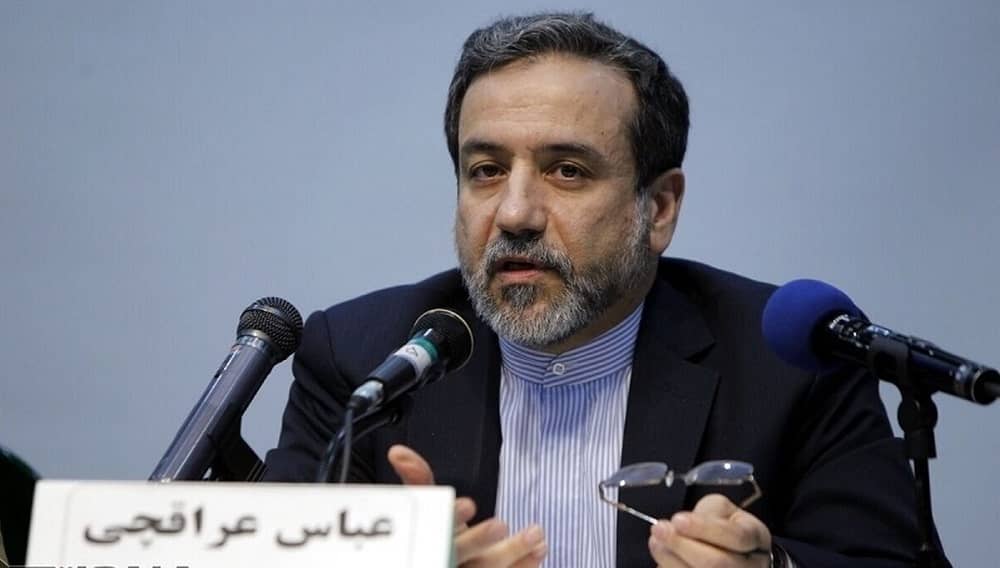
The talks, mediated by Pakistan, included US Vice President JD Vance, Special Envoy Steve Witkoff, and Jared Kushner, son-in-law of President Donald Trump. The Iranian delegation was led by Parliament Speaker Mohammad Bagher Ghalibaf and Foreign Minister Abbas Araghchi. Sources indicated that the atmosphere was volatile, with mutual distrust clearly evident.
The Iranian delegation wore black in mourning for Supreme Leader Ayatollah Ali Khamenei and others killed in the war, and placed shoes and bags of students killed in US bombings on the table as a form of protest.
The central focus of the talks was the Strait of Hormuz, a waterway accounting for 20 percent of global energy supply, which Iran has closed since the start of the war. While the US military claimed its warships had passed through the area and were preparing to clear sea mines, Iran has denied this. Iran has demanded the release of its assets frozen in Qatar and other foreign banks, war reparations, and a full regional ceasefire, including in Lebanon.
Meanwhile, President Trump has maintained a firm stance that the waterway must be opened for global shipping and that Iran's nuclear program must be completely neutralized.
Security in Islamabad was tightened with thousands of troops and paramilitary forces deployed during the talks.
However, with Israel stating that its attacks against Hezbollah in Lebanon will not be part of this ceasefire, the crisis in West Asia appears to be reaching a more complex turn. Although the talks did not yield immediate concrete results, they are viewed as a significant step toward stabilizing global oil prices and ending a war that has already claimed thousands of lives.
This specific news has been automatically translated by AI. As a result, there may be some inaccuracies or language errors.
_HSVUbGHJpC.jpg)
_fkg5u05PqN.jpg)