Election Fever Grips Federation of Nepalese Chambers of Commerce and Industry
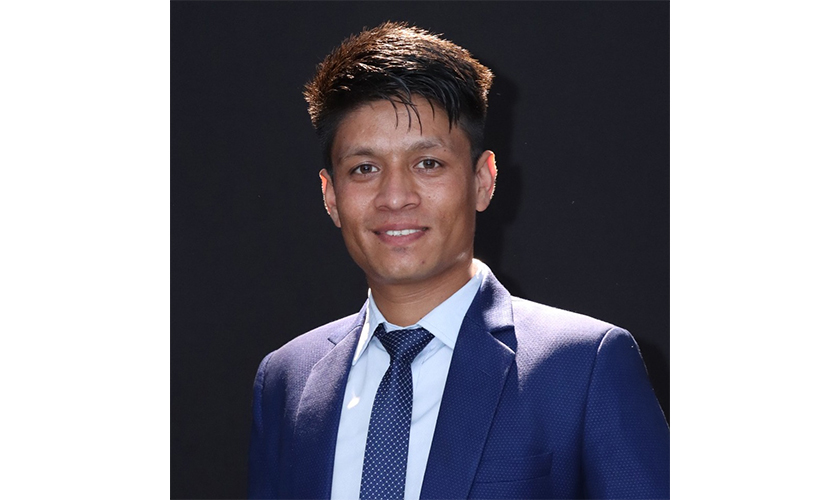

Kathmandu. The election fever at the Federation of Nepalese Chambers of Commerce and Industry (FNCCI), the umbrella organization of Nepal's private sector, has reached its peak.
Business leaders are actively campaigning for the upcoming election scheduled for the last week of Chaitra. The new leadership will be elected during the 60th Annual General Meeting on Chaitra 29 and 30, following the new provisions introduced by the amended statute and the revised selection process.
Candidacy registration for the new leadership concluded today. Chief Election Officer Lilamani Poudel informed RatoPati that 118 candidates have filed nominations for the FNCCI election. A total of 141 nominations were filed for 73 positions.
For the first time, a provision for a female Vice President has been introduced, who will be selected by the Executive Committee. There will be two Vice Presidents for the District-Municipal category. In total, five Vice Presidents will be elected to the FNCCI Executive Committee, representing District-Municipal, Commodity, Associate, and Women categories.
The Senior Vice President will now be selected by the Executive Committee, moving away from the previous system of direct election. According to the FNCCI statute, this time, elections are being held only for Vice Presidents, Central Members, Founders, and Binational positions. The selection process is unfolding amidst a power balance between current President Chandra Prasad Dhakal and future President Anjan Shrestha, with both factions claiming victory.
Under the amended statute, the current Senior Vice President will automatically become the President, and the subsequent President will be chosen through direct election. Anjan Shrestha is the current Senior Vice President and is set to become the FNCCI President after Chaitra 30.
The provision for automatic succession from Senior Vice President was introduced to avoid the high costs and intense campaigning associated with direct presidential elections. However, as similar trends persisted for the Senior Vice President position, the FNCCI has returned to its previous arrangement.
Following the statute amendment, Bhawani Rana became the first President under this system, followed by Shekhar Golchha and Chandra Prasad Dhakal. This year, intense competition is visible between two main groups: the 'Hemraj Dhakal group,' supported by current President Chandra Prasad Dhakal, and the 'Shiva Prasad Ghimire-Prabal Jung Pandey group,' supported by future President Anjan Shrestha.
The Hemraj and Chandra Dhakal Front
Commodity Vice President Hemraj Dhakal has announced his panel and is in the electoral fray with the full support of current President Chandra Dhakal. This group positions itself as a proponent of institutional continuity and reform.
Candidates from Dhakal's panel include Naresh Lal Shrestha for Commodity Vice President, Jyotsana Shrestha for Associate Vice President, Kamala Shrestha for Women Vice President, and Umesh Dalmia and Kalpana Gaire for District-Municipal Vice President. Naresh Lal's group is dominated by entrepreneurs from agriculture, tourism, exports, IT, and the capital market.
The Anjan Shrestha, Ramchandra Sanghai, and Shiva Ghimire Front
The group supported by Senior Vice President Anjan Shrestha has also registered its candidates. Shiva Prasad Ghimire is leading the bid for Commodity Vice President, while Prabal Jung Pandey is running for Associate Vice President, and Dil Sundar Shrestha and Krishna Prasad Sharma are competing for the District/Municipal category. Shiva Ghimire has pledged to reform the FNCCI secretariat and establish a dedicated unit to address private sector grievances if elected.
Triangular Competition for Senior Vice President
Although the person elected as Senior Vice President will not automatically become President, business leaders are prioritizing this position to maintain their claim as future presidential candidates. Commodity Vice President Hemraj Dhakal has already announced his team and is actively campaigning with the open support of current President Chandra Prasad Dhakal.
Meanwhile, the name of Ramchandra Sanghai is also circulating for Senior Vice President. Sanghai was defeated in the previous election for the same post. He is considered a contender within the future President Shrestha's group, though District-Municipal Vice President Surkrishna Baidya is also staking a claim. Since the Executive Committee elects this position, there remains uncertainty regarding whether Sanghai or Baidya will secure the nomination. Both are lobbying extensively to win the support of the newly elected executive members.
The selection of the Senior Vice President is complex, as general members do not vote directly for this position; instead, the elected executive members will decide. The outcome depends on which panel secures a majority in the Executive Committee. Ramchandra Sanghai, Hemraj Dhakal, and Surkrishna Baidya are the names currently in discussion.
Exciting Battle in Associate and Commodity Categories
The competition in the Associate category is particularly intense, with a strong rivalry between Prabal Jung Pandey and Jyotsana Shrestha. The Pandey group has a list of prominent business figures for the 19 member positions, while Shrestha's group has also attracted reputable entrepreneurs. There are 35 candidates for the 19 member seats in the Associate category.
The Pandey group appears to have the backing of the Anjan Shrestha faction, while Shrestha is supported by the Hemraj and Chandra Dhakal camp. Pandey is vying to become an executive member, while Shrestha is the current Associate Vice President. The Pandey group includes heavyweights like Hemanta Golchha, Ambika Prasad Poudel, and Rajesh Kumar Agrawal, while Jyotsana Shrestha's group features entrepreneurs like Abinash Bohora, Deshbandhu Basnet, and Bharat Ranabhat.
In the Commodity category, two clear panels have emerged. The Shiva Prasad Ghimire group, supported by Anjan Shrestha, has registered its candidates, promising secretariat reforms. Conversely, the Naresh Lal Shrestha panel has fielded experienced entrepreneurs like Kamala Shrestha, Subodh Kumar Gupta, and Lilendra Pradhan, claiming a team that represents all sectors.
How are they elected?
Under the new system, except for the current Senior Vice President (the future President), all other executive committee members will be elected by the General Assembly. The new statute provides for 1 Senior Vice President, 5 Vice Presidents, and a Treasurer. Out of the seven office bearers, four Vice Presidents will be elected by the votes of general members.
The Senior Vice President, Women Vice President, and Treasurer will be selected by the elected Executive Committee. The Senior Vice President must be a current executive committee member with at least three terms of experience or a former office bearer. The Women Vice President will be elected from the entire executive committee, requiring at least two terms of experience as a member.
The statute stipulates that there will be one Vice President for the Associate/Binational category, provided there are more than 20 binational associations as members. A Women Vice President will be appointed only if there are at least 12 female members in the executive committee. The Treasurer will also be selected from the executive committee, requiring at least two terms of experience.
Election of Executive Members
The committee includes the presidents of all seven provinces. The statute provides for 17 members from the open category of Chambers of Commerce and Industry (including at least two women) and 14 members from the seven provinces (two from each province). Additionally, there are 14 members from the commodity category (including at least one woman), 2 members if there are more than 15 commodity associations, 1 from binational associations, and 17 from associate members (including at least two women).
The committee also includes the ex-officio President of the FNCCI-promoted Nepal Young Entrepreneurs Forum, 2 members from the 12 founders, and 7 members nominated by the President to ensure representation across all groups, including at least two women.
As the country's economy remains sluggish, this election faces the challenge of selecting leadership that can act as a bridge between the private sector and the government. Business leaders emphasize the need for a dynamic leadership capable of amending cumbersome laws, creating an investment-friendly environment, and solving the problems of small and medium-sized enterprises.
This specific news has been automatically translated by AI. As a result, there may be some inaccuracies or language errors.