Former Commerce Director Kumar Dahal: Opaque Market Interests Block Reform


Kathmandu. One name that always comes up when discussing market monitoring and MRP in Nepal is Kumar Dahal. During his tenure as the Director General of the Department of Commerce, Supplies and Consumer Protection, he showed great courage in making MRP and billing mandatory in the market.
This issue has also been prioritized in the 100-point governance reform agenda recently introduced by the government. We spoke with Dahal, who fought for consumer rights amidst pressure from major market players and interest groups, about the current government's action plan, the reality of the market, the severity of revenue leakage, and measures for governance reform. Presented here is an edited excerpt of the interview (the full version can be watched/heard in the video):
The government's 100-point governance reform agenda prioritizes effective market monitoring and the implementation of MRP. You emphasized these issues significantly while serving as the Director General of the Department of Commerce. What was the situation like back then, and how challenging do you find this goal set by the government now?
The issue of MRP and billing is nothing new; it is a provision clearly stipulated in the Consumer Protection Act 2075. Even today, there is no need to formulate new policies, programs, or amend acts to implement it. If what is written in the Act is followed as it is, there will be significant improvements in the market.
However, the irony is that 60 to 70 percent of the provisions in our acts are not implemented in practice. Acts are made based on the ground reality, but when attempts are made to implement them, powerful market stakeholders are affected. Binding them to rules hits their unfair profits, which leads to significant obstacles and pressure in implementation.
When I was there, I tried to establish a transparent system in the market. While working, some people are satisfied, and some are not. Once the interests of major market players are hit, pressure naturally follows. There were many pressures and influences back then, but my main objective was to ensure compliance with the law. It is positive that the government has prioritized this again, but it requires strong willpower and selfless leadership.
Why is it such a struggle to implement this system?
This needs to be understood from a deeper perspective. MRP and billing are the keys to making the market transparent, making consumers aware of prices, and controlling the black market. When the billing system becomes mandatory in the market, there is a huge increase in state revenue. But there is a massive leakage of revenue here. Those who are benefiting from this leakage and those who are making profits in this opaque market do not allow this system to be implemented.
This is a large interest group. They never agree on MRP and billing because it exposes their hidden profits. From a macroeconomic perspective, not just billions, but trillions of rupees are disappearing in the market. This money neither goes to the state treasury nor do consumers benefit from it. It only goes into the pockets of middlemen and opaque traders. That is why they resist such a system.
You mentioned that trillions of rupees are disappearing in the market; how is this possible? Can the implementation of MRP and billing alone stop all this leakage?
Certainly, it can. MRP and billing are the main tools for market reform. I will give an example; we are currently walking around with a leaking pot. No matter how much water we pour from the top, the pot never fills up because it leaks from the bottom. We only make policies to pour water from the top, but we do not talk about patching the bottom. There is leakage at the very point of production and sourcing in the market.
Unless we track every point from purchase to sale, revenue will not increase. Consumers pay money when buying goods, but that money does not reach the state treasury. This system is cemented in place, and no one dares to break it. Because its direct impact falls on big traders and businessmen the very next day. That is why various types of resistance and obstacles are created when trying to implement it.
How do you evaluate the current state of the market? Has there been any improvement compared to the past?
The market is running almost the same way today as it was 20 years ago. Demand and supply are happening in the market, but no one has looked at how much leakage is within that process of demand and supply. Even today, bills are not issued for 70 percent of transactions in the Nepali market. This is a very large share.
The fact that a bill is not issued means there is no trace of what the source of the goods is, whether it is imported or domestically produced, what its actual price is, and how much tax has been paid at customs. Consumers pay the price when buying goods at the shop, but whether the tax they paid has reached the state treasury is the biggest challenge today. Amidst this confusion, trillions of rupees are hidden.
What could be the reasons behind traders not issuing bills? Why are they hesitant to provide bills?
There are three main reasons for this. First, 40 to 60 percent of goods in the market come without paying customs or through illegal routes. When there is no legal source for the goods, how can a trader issue a bill? As soon as a bill is issued, the source of the goods is revealed, and it is proven illegal. The second reason is under-invoicing at customs.
Goods are brought into customs by showing a price much lower than the actual value. For example, branded goods worth 10,000 are shown at a value of 30 or 40 dollars at customs. Now, when issuing an actual bill in the market for goods brought by showing a low value at customs, a large price difference appears, which causes problems in audits. That is why they do not issue bills. The third reason is the collusion between employees, traders, auditors, and in some cases, even at the political level. This is entrenched as a chronic problem. These are the reasons why the market has not been able to become transparent.
Can something be done at the customs point itself for the effectiveness of MRP and billing?
There are two points for applying MRP. If it is domestic production, MRP should be applied at the industry level, and if it is imported, it should be applied at the customs point. The Act even provides the facility to set different MRPs according to provinces or geographical conditions, because transportation costs differ when taking goods to Kathmandu and Taplejung.
The Consumer Protection Act has specified 6 bases for determining MRP, which include production cost, tax, transportation expenses, and reasonable profit. Applying MRP is not just about binding the trader; it is also a tool for market competition. But the irony is that in Nepal, MRP is set arbitrarily, or there are no standards for some items. In fact, MRP gives consumers price assurance and satisfaction, which is a part of good governance.
In some cases, the MRP is set very high, and consumers are being cheated. Why hasn't the regulatory body paid attention to this?
There should not be a huge difference in the price of goods of the same quality in the market. If a trader sets a higher MRP on goods of the same quality, they cannot survive in market competition. But the problem here is that sometimes industrialists or big traders collude to cartel. When all producers agree to set prices, consumers have no choice, and they are forced to be cheated.
We adopted a liberalization policy by abolishing the licensing system back in 2047, but now licensing and syndicates are active in a new form. There is a monopoly of limited dealers in some branded goods, which is causing artificial price increases of 10 to 20 percent in the market. To break this, the provision allowing individuals to bring goods by paying customs should be made simple and transparent.
What are the concrete benefits to the state and consumers when implementing MRP and billing?
The biggest benefit is the increase in state revenue. In times of economic crisis like the present, if this system is implemented effectively, trillions of rupees in revenue will be collected. In developed countries, even when buying goods worth 10 rupees, a bill and tax slip are provided, but here, even when buying goods worth thousands, no bill is provided. The tax that consumers are paying is going into the pockets of middlemen.
When billing becomes mandatory, one of the biggest sources of corruption will be closed. The main source of corruption is this opaque transaction of the private sector. MRP is directly linked to state income. Consumers are spending in the market right now, but that expenditure is not reaching the state's pocket. Therefore, the state will be strengthened by its implementation, and consumers will get goods at the actual price.
Knowing that trillions in revenue can be raised, why hasn't the government been able to implement it strictly?
For this, first, strong willpower and second, technical expertise are needed. Here, we always talk about distribution-oriented things, but the collection process is overshadowed. Even things clearly written in the Act have not been put into practice. Instead of making market monitoring bodies resource-rich, they are sometimes kept under pressure.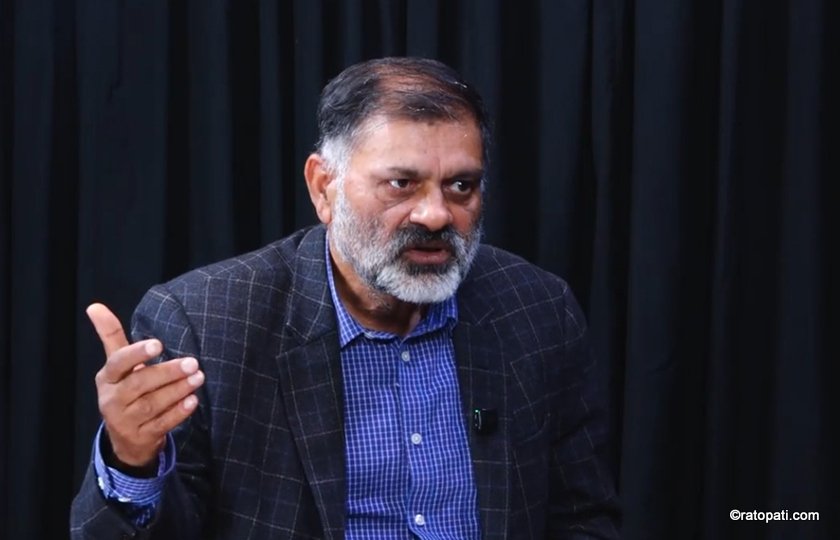
There is no sector that the Department of Commerce cannot monitor, but when monitoring touches large interest groups, the leadership is transferred. The influence of interest groups is so strong that they use all means—persuasion, money, punishment, and division—to stop the system. Therefore, no new law is needed to implement this; only leadership with the courage to implement the existing law is needed.
When talking about monitoring, retailers always complain that they are the only ones suffering. How do you view the trend of not monitoring producers and large importers but only fining small traders?
There is some truth in this complaint. A fully modern market culture has not yet developed in our market. We are still operating in an opaque manner to a large extent. Retailers just sell whatever comes from above. Therefore, the main target of monitoring should be the source, i.e., producers and importers.
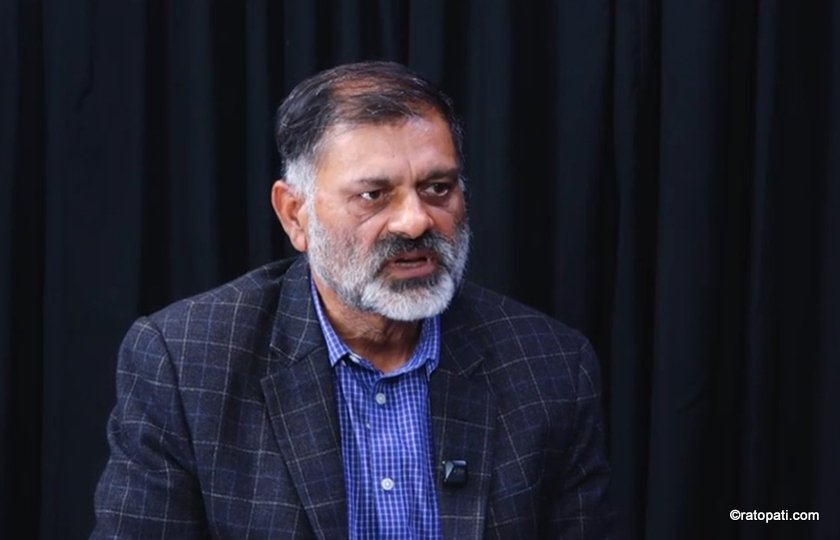
Instead of fining retailers, they should be made aware not to bring goods without MRP. When I was the Director General, I emphasized going to the source and monitoring rather than the retailers. When the source is clean, the traders below follow the rules themselves. Monitoring is not just about fining; it is also about establishing a system in the market.
What is your suggestion to the new government engaged in the campaign of governance reform? What immediate steps can be taken for market reform?
My first suggestion is that the leadership must be selfless and courageous. Whatever is written in the law must be implemented without discrimination. Technically, the market should be connected to a digital system. Software that connects the shop's billing system directly to the Inland Revenue Department's server should be made mandatory. This is not a big or impossible thing.
Every step from purchase to sale should be tracked digitally. If one ton of goods enters from customs, the system should show where it reached and where it was sold. By doing this, there will be no room for leakage. Another important thing is to make agreements regarding tax refunds with neighboring countries effective. The process of getting GST paid on goods coming from India refunded and the process of collecting customs and VAT in Nepal should be made easy. By doing this, smuggling will decrease, and revenue will increase.
What is the main key to formalizing the informal economy or informal market?
An informal market is a market where consumers are honestly paying taxes, but that tax is disappearing in the middle instead of reaching the state treasury. The only way to make this formal is to bring every transaction into the banking or digital system and make billing mandatory. In Nepal, nearly 60 percent of businesses are still operating without registration.
Local levels should bring every small and large shop in their area under the scope of registration. We have been filling water in a leaking pot until now; now is the time to patch that bottom. If every purchase and sale of goods and services is made transparent, MRP is made mandatory, and the billing system is connected to technology, Nepal's economy can be transformed. The real start of governance reform should begin here.
Video/Photo: Manoj Khadka/Ratopati
This specific news has been automatically translated by AI. As a result, there may be some inaccuracies or language errors.