Six Supreme Court Judges Nominated for Chief Justice Post Held Up at Constitutional Council Secretariat

Kathmandu. The list of six Supreme Court judges recommended by the Judicial Council for the next Chief Justice position is currently stalled at the Constitutional Council Secretariat. Chief Justice Prakashman Singh Raut is set to retire on Chaitra 18 due to the 65-year age limit.
In his place, the names recommended to lead the Supreme Court include the most senior judge Sapana Pradhan Malla, along with Kumar Regmi, Hari Prasad Phuyal, Dr. Manojkumar Sharma, Dr. Nakul Subedi, and Til Prasad Shrestha.
Article 129 (3) of the Constitution states that a person who has served as a Supreme Court judge for at least three years is eligible for appointment as Chief Justice. The Council has recommended the names of all judges who have completed this three-year tenure, as per this clause.
In the past, the Constitutional Council has recommended the Chief Justice appointment based on seniority from the names sent in this manner. Article 129 of the Constitution deals with the appointment and qualifications of the Chief Justice and Supreme Court judges.
According to Clause 2 of the same Article, the President shall appoint the Chief Justice upon the recommendation of the Constitutional Council, and other Supreme Court judges based on the recommendation of the Judicial Council. Previously, the Constitutional Council would send the name of the most senior judge on the first list for parliamentary hearing for the Chief Justice position. After the name sent was endorsed by the parliamentary hearing, it was sent to the President's office for appointment as Chief Justice.
The Rastriya Swatantra Party (RSP), which secured nearly a two-thirds majority in the House of Representatives elections on a platform of change, has indicated that it might select the Chief Justice based on a 'pick and choose' approach rather than seniority. The Constitutional Council faces no obstacle in recommending any name from the list of six judges that has reached its secretariat.
The Minister for Law and Parliamentary Affairs also serves as a member of the Constitutional Council when recommending the appointment of the Chief Justice upon the vacancy of the post. Even after the formation of the House of Representatives and the finalization of the Speaker and Deputy Speaker, the process for forming the Parliamentary Hearing Committee as per Article 292 of the Constitution remains pending. Due to structural delays in the Constitutional Council and the lack of parliamentary hearings, the judiciary appears set to be run by an acting Chief Justice.
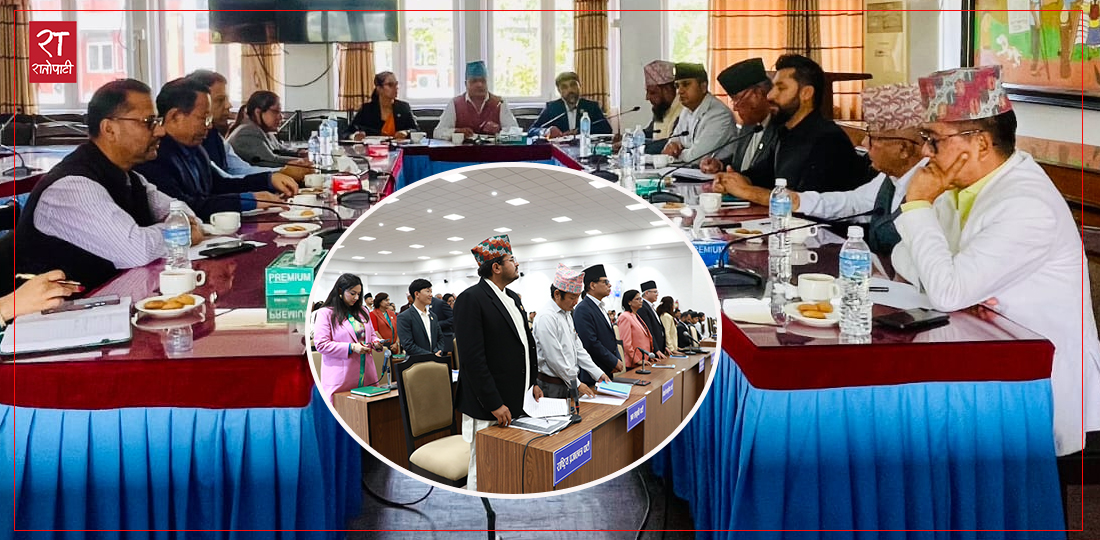
The Constitutional Council, comprising the Prime Minister, Speaker, Deputy Speaker, Leader of the Opposition, and the Chairman of the National Assembly, is required to recommend the Chief Justice. On Chaitra 13, senior leader Balen Shah of the Rastriya Swatantra Party (RSP) is scheduled to take the oath of office as Prime Minister. Currently, the only member of the Constitutional Council is National Assembly Chairman Narayan Prasad Dahal. The path for the Constitutional Council to convene will open once the Speaker, Deputy Speaker, and Leader of the Opposition are selected.
It appears that Prime Minister Balen Shah, chairing the Constitutional Council meeting, might face difficulty in recommending a name other than the most senior judge among the six judges.
Bypassing the principle of seniority in the appointment of the Chief Justice is termed 'supersession' in judicial terminology. In democratic countries, seniority is considered a primary basis for maintaining the independence of the judiciary. Vijay Prasad Mishra, President of the Nepal Bar Association, has already warned that the Bar will take a stand if the two-thirds government attempts to interfere with the judiciary by bypassing the most senior judge.
Addressing a conference of women lawyers in Bhaktapur a few days ago, he stated, "When a two-thirds government comes, the judiciary is the first thing they attack. The Nepal Bar Association gives the newly formed government the benefit of the doubt. We wish that all the government's activities are in accordance with constitutionalism and the rule of law."
He added that while they wish for the government to last the full five years, the Bar will take its position if it begins to undermine constitutionalism and the rule of law. "Doing so is our duty and what our ancestors have done," he said.
When the post of Chief Justice becomes vacant, the Minister for Law and Parliamentary Affairs is also a member of the Constitutional Council during the recommendation process. Even after the formation of the House of Representatives and the finalization of the Speaker and Deputy Speaker, the process for forming the Parliamentary Hearing Committee under Article 292 of the Constitution remains pending. Due to structural delays in the Constitutional Council and the lack of parliamentary hearings, the judiciary appears set to be run by an acting Chief Justice.
The Supreme Court, in various past judgments, has interpreted that 'seniority and qualification' should be the main basis for the appointment of the Chief Justice. The most significant and famous case in this regard is the case concerning 'Advocate Achyut Prasad Kharel versus the Constitutional Council.' This is the first and most important 'landmark' judgment in Nepal's judicial history that interpreted the criteria for appointing the Chief Justice.
In Nepal, there is no precedent of recommending a judge other than the most senior judge for the Chief Justice appointment so far. A lawyer stated that appointing a junior judge to lead could initiate factionalism among judges within the court, leading to disputes in bench formation and judgments.
"When citizens perceive a political smell in the judiciary, their trust in the justice system erodes," the lawyer told Ratopati.
The Supreme Court, in various past judgments, has interpreted that 'seniority and qualification' should be the main basis for the appointment of the Chief Justice. The most significant and famous case in this regard is the case concerning 'Advocate Achyut Prasad Kharel versus the Constitutional Council.' This is the first and most important 'landmark' judgment in Nepal's judicial history that interpreted the criteria for appointing the Chief Justice.
This writ was filed when an attempt was made to bypass seniority during the appointment process following the retirement of the then Chief Justice Bishwanath Upadhyaya. The special bench of the Supreme Court interpreted and stated: "Seniority should not be ignored in the appointment to the post of Chief Justice. If a junior judge is to be appointed by bypassing a senior judge, the objective basis and reason for that must be clear."
This judgment considered seniority as the 'primary' factor and qualification as 'supplementary'. The Supreme Court ruled that bypassing seniority without concrete reasons would be contrary to the constitution and the rule of law.
The Supreme Court has also interpreted this in recent disputes regarding Chief Justice appointments and parliamentary hearings in the writ petition of Advocate Santosh Bhandari versus the Constitutional Council (2075). While Article 129(3) of the Constitution states that a judge who has served in the Supreme Court for at least 3 years is eligible for the Chief Justice, the Supreme Court clarified that this does not give the executive branch the right to 'choose anyone they please'.
The court has interpreted 'seniority' as an established constitutional convention. The judgment mentioned that if this convention is broken, it will sow the seeds of 'political loyalty' in the judiciary and end its independence.
Attempts to appoint the Chief Justice by bypassing seniority have occurred multiple times not only in India but also in Pakistan. Such decisions made during the tenures of Zulfikar Ali Bhutto and later Nawaz Sharif in the 1990s led to major confrontations between the judiciary and the executive in Pakistan.
In India, when senior judges were bypassed for the appointment of the Chief Justice, judges resigned en masse. In 1973, in the history of the Indian judiciary, the government of then-Prime Minister Indira Gandhi appointed A.N. Ray as the Chief Justice of India, sidelining three senior judges.
In protest, the three senior judges—J.M. Shelat, K.S. Hegde, and A.N. Grover—resigned simultaneously. This is considered a major example of political interference in the Indian judiciary.
This dragged the Indian judiciary into political controversy for a decade. Allegations arose that the court was under government pressure. Later, through the 'Second Judges Case' (1993), the 'Collegium System' was implemented in India, which minimized the role of the executive in appointing the Chief Justice and made seniority mandatory.
The formal name of this case is 'Supreme Court Advocates on Record Association versus Union of India'. The nine-judge larger bench that delivered the verdict stated, "The most senior judge of the Supreme Court must be appointed as the Chief Justice of India. The government's discretion does not apply here." This very judgment stripped the power of appointing judges from the executive (government) and vested it in the judiciary (Collegium).
In an incident in 1977, again during Indira Gandhi's tenure, M.H. Beg was made Chief Justice by bypassing seniority, leading to the resignation of senior judge H.R. Khanna. He was sidelined because he had ruled against the government during the Emergency period.
Attempts to appoint the Chief Justice by bypassing seniority have occurred multiple times not only in India but also in Pakistan. Such decisions made during the tenures of Zulfikar Ali Bhutto and later Nawaz Sharif in the 1990s led to major confrontations between the judiciary and the executive in Pakistan. This is considered to have created an environment for judicial instability and frequent military intervention in Pakistan.
This specific news has been automatically translated by AI. As a result, there may be some inaccuracies or language errors.