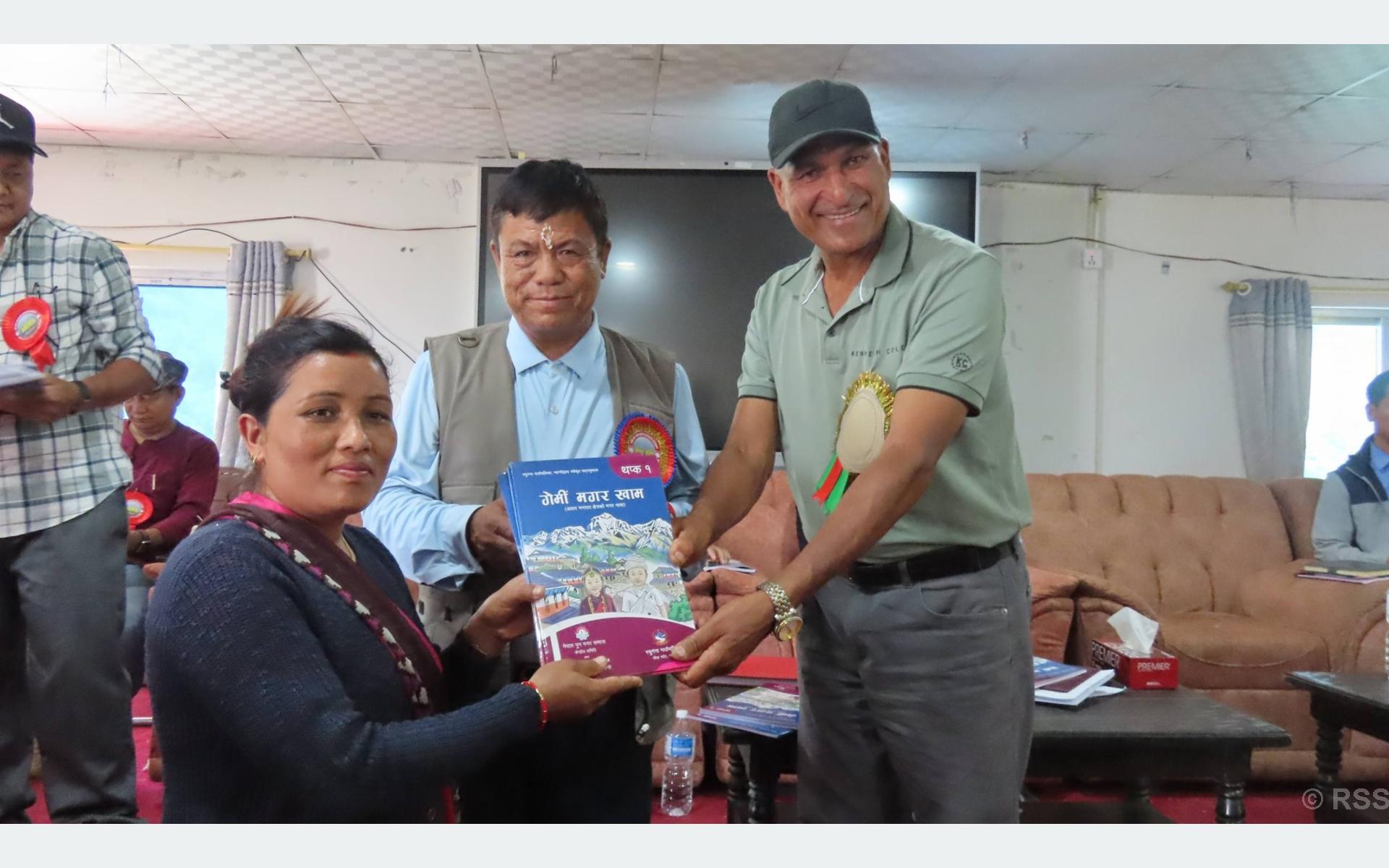
Nepal Rushes to Distribute Textbooks for New Academic Session Amid Printing Efforts

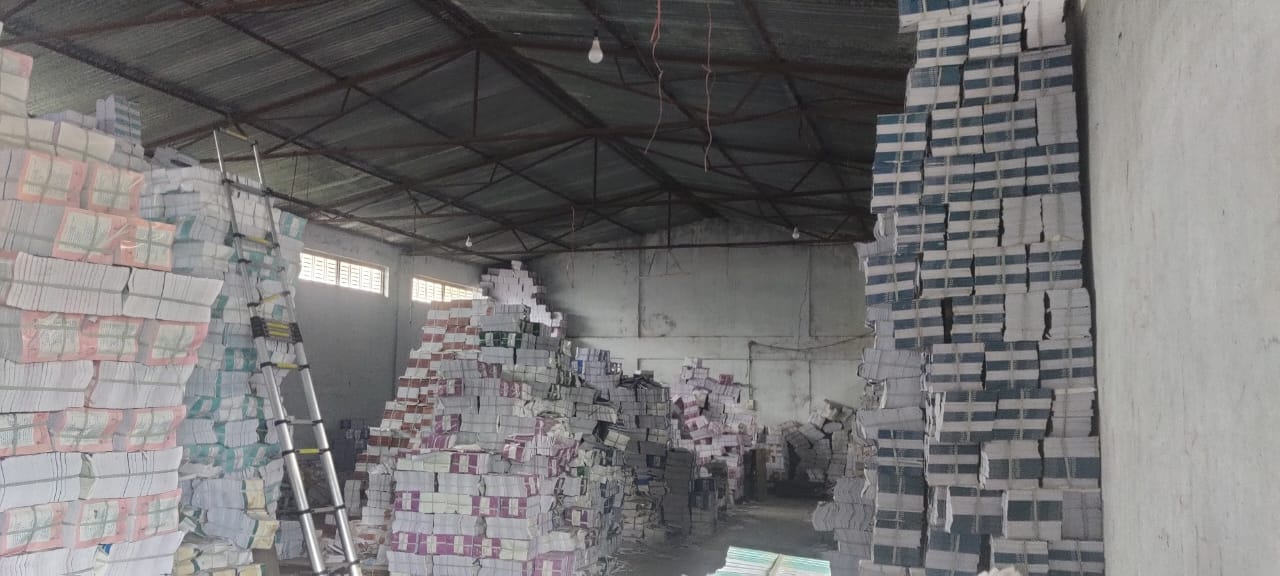
Kathmandu. The Ministry of Education, Science and Technology and relevant bodies are working intensively to produce textbooks on time for the new academic session and ensure they reach every student. Janak Shiksha Samagri Kendra Limited, fully owned by the Government of Nepal, has started preparations for sales and distribution after printing 97 percent of the target textbooks set for the school level as of today.
Relevant officials stated that students will not face textbook shortages because Janak Shiksha Samagri Kendra managed the regular responsibility of textbook production alongside printing ballot papers for the House of Representatives elections held on Falgun 21. Private sector printers have also confirmed that all assigned textbooks have been printed according to their responsibilities.
Chudamani Poudel, Secretary at the Ministry of Education and Chairman of the Board of Directors of Janak Shiksha Kendra, stated that arrangements have been made to ensure textbooks are available to students before the start of the academic session, as textbook printing continued despite the ballot paper printing work.
Yadunath Poudel, Managing Director of the Center, informed that the Center, which worked in parallel on textbook production alongside ballot paper printing, has selected 1,260 authorized vendors for the academic session 2083 and is preparing for sales starting from Chaitra 15 and 16. According to him, the Center had a target to print a total of 17 million textbooks, including translated and optional subjects, for approximately 4.5 million students in the classes assigned to the Center, and most of the books have already been printed. He added that sales will begin in full swing once the remaining task of collating some sets of books is completed.
The Center has already produced textbooks for 160 subjects, including 38 compulsory subjects, for the assigned classes. The Center has also produced and sent the question papers required for the 520,000 students participating in the Secondary Education Examination (SEE) starting from Chaitra 19 to the respective examination centers.
The government has entrusted Janak Shiksha Kendra with the responsibility of printing textbooks required up to Grade 12, excluding Grades 1, 2, and 4. The printing for Grades 1, 2, and 4 has been assigned to the private sector. The Center will print textbooks required for Grades 11 and 12 by the month of Ashar. Accordingly, Janak Shiksha handles 70 percent of the production, and the private sector handles 30 percent. The Center incurs losses when private presses print and sell textbooks for grades beyond their assigned responsibility.
Managing Director Poudel mentioned that only 30 percent of the textbooks printed by them for Grades 3 and 5 in the last academic session were sold, with the rest remaining in stock.
Deepak Bhandari, coordinator of the seven presses in the private sector responsible for printing textbooks, stated that they were assigned responsibility for limited grades and that the printing quantity assigned to them has been completed. He suggested that a policy decision should be made regarding the transformation of Janak Shiksha into a secure printing entity, as they have purchased presses capable of handling the responsibility of printing textbooks for all grades if the government assigns it to them.
Janak Shiksha provides a nine percent commission to vendors from textbook sales, while the private sector offers up to 30 percent. Private sector operator Bhandari argued that Janak Shiksha should be more profitable by selling at only a nine percent commission, and demanded that the government open up the responsibility of printing textbooks for all grades so that the investment of private presses is not ruined.
Janak Shiksha's Managing Director Poudel argued that in the past, private sector assistance was sought due to textbook shortages caused by a lack of machinery, but now, with sufficient machinery and infrastructure capacity, the Center should be solely responsible for printing textbooks for all classes as per the Center's operational charter.
Both Janak Shiksha and private presses produce the printable copies developed by the Curriculum Development Center. The Curriculum Development Center has maintained the price list for textbooks implemented since B.S. 2077 for the academic session 2083. The private sector has also agreed to sell at the old prices.
The encroachment of rights between Janak Shiksha and private presses due to policy decisions also causes market imbalance. This can lead to a shortage of textbooks in some grades and overproduction in others. There is also no uniformity in price lists and quality. The Ministry of Education has assigned the responsibility of monitoring such matters to the Education and Human Resource Development Center. Mahendra Parajuli, spokesperson for that Center, informed that correspondence has been sent to Janak Shiksha Kendra and the seven printing presses assigned responsibility by the private sector to ascertain how many textbooks are ready and by when the target will be met.
Janak Shiksha Kendra printed a total of 41,143,000 ballot papers in Falgun as per the mandate of the Election Commission for the elections held then: 20,323,000 for the first-past-the-post system and 20,843,000 for the proportional representation system.
This specific news has been automatically translated by AI. As a result, there may be some inaccuracies or language errors.

-education-and-sport_c0BHyFjlfq.jpg)