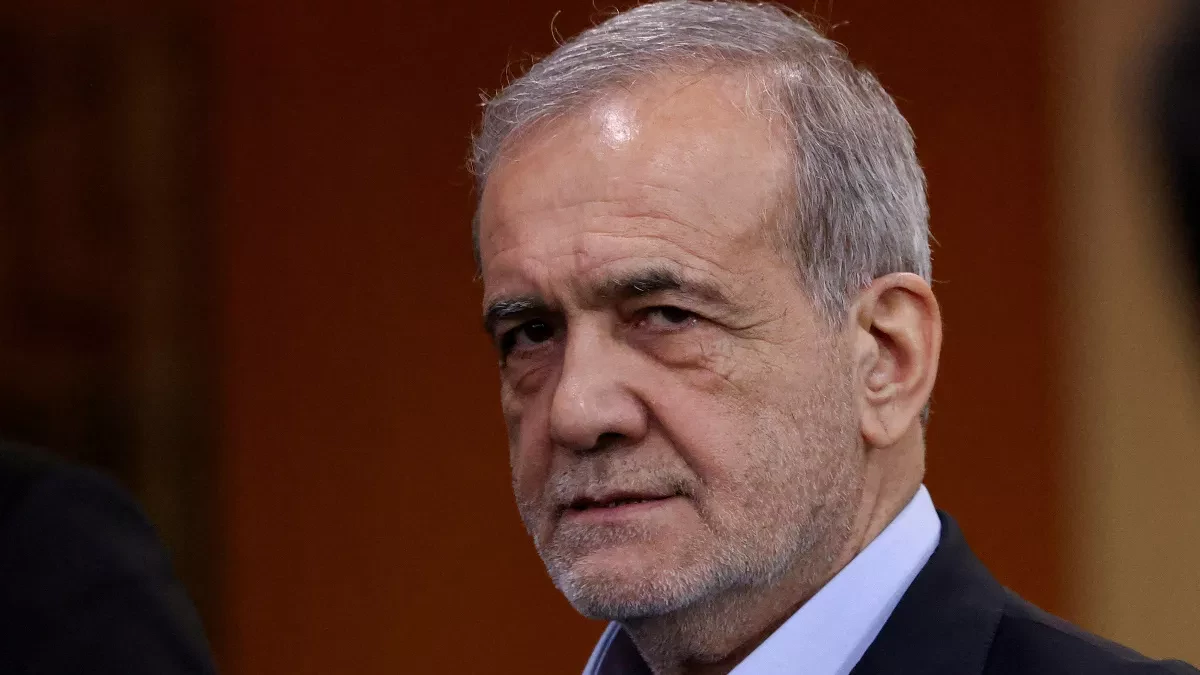
Iran Retaliates Against US Warnings, Escalating Tensions in West Asia

Amid rising military tensions in West Asia, Iran has strongly countered US warnings, clearly signaling that any attack on its infrastructure will result in counterattacks on strategic structures across the region. The situation has taken a more complex turn following US President Donald Trump's warning that a powerful strike would follow if Iran does not open the Strait of Hormuz.
Trump had previously warned via his Truth Social platform, giving Iran a 48-hour deadline, threatening to "destroy" the country's major power plants if the strait was not opened. In response, Iran's military operations command warned that energy, information technology, and desalination infrastructure related to the US would be targeted throughout the region.
Meanwhile, Iran has launched missile strikes on the cities of Arad and Dimona in southern Israel following an attack on the Natanz nuclear site. The missiles, which penetrated Israeli air defenses, caused damage to residential structures, injuring over 100 people. Further concern has arisen as the strikes landed near the sensitive nuclear facility in Dimona, although Israel has not formally acknowledged its nuclear capabilities.
In response, Israel announced it had initiated a new air attack on Tehran. This attack is considered one of the most devastating in the three-week conflict. Scenes of rescue workers searching for the injured in the rubble following the explosion in Arad have been broadcast, and local residents have described the horror of the blasts.
The Strait of Hormuz, central to this tension, is a critically important route for the global economy, handling nearly one-fifth of the world's crude oil transport. The current blockade has pushed international oil prices above $105 per barrel, signaling economic instability.
Trump has criticized NATO allies, urging them to play an active role in securing the strait. Twenty-two nations, including the UK, France, Italy, Germany, South Korea, Australia, the UAE, and Bahrain, have protested the waterway blockade by Iran.
According to the US Central Command, bunker-busting bombs were recently dropped on Iran's coastal underground structures, allegedly impacting Iran's maritime control capabilities to some extent. Concurrently, thousands of US troops are being deployed to the Middle East.
Iran has also been targeting countries in the Gulf region. Saudi Arabia reported the interception of three ballistic missiles and the downing of three drones near Riyadh. The United Arab Emirates also stated it had repelled an Iranian attack.
Furthermore, Iran reportedly attempted to launch a long-range missile strike on the US-UK military base at Diego Garcia, although this attempt was reported as unsuccessful. Analysts suggest that Iran's military capability appears more resilient than anticipated; despite damage to top leadership, the government and military structures are believed to have demonstrated flexibility.
Amid this tense situation, the end of Ramadan and the Nowruz festival were observed in Iran. The Supreme Leader has appeared less frequently in public since the change in leadership, with religious activities being conducted through other leaders. While the general public celebrated the New Year, the atmosphere was marked by the serious threat of war.
This specific news has been automatically translated by AI. As a result, there may be some inaccuracies or language errors.
_HSVUbGHJpC.jpg)