Non-Communist Candidate Wins Bhojpur Seat, Defeating Former Chief Minister Sherdhan Rai
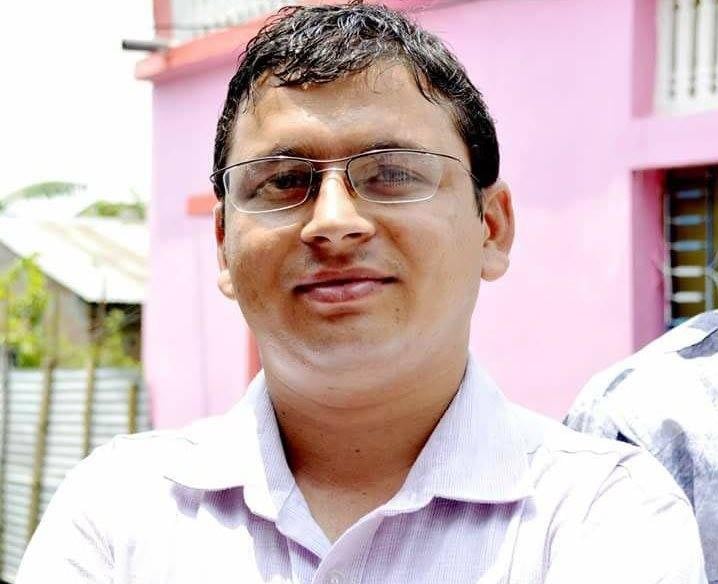

Biratnagar. The non-communist party has secured a victory in Bhojpur this time, a district traditionally considered a communist stronghold. The Shram Sanskriti Party candidate won the House of Representatives election in this district.
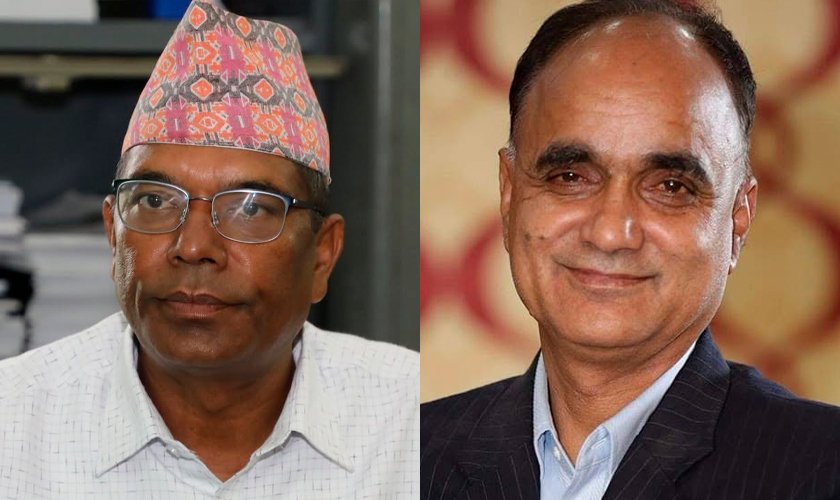
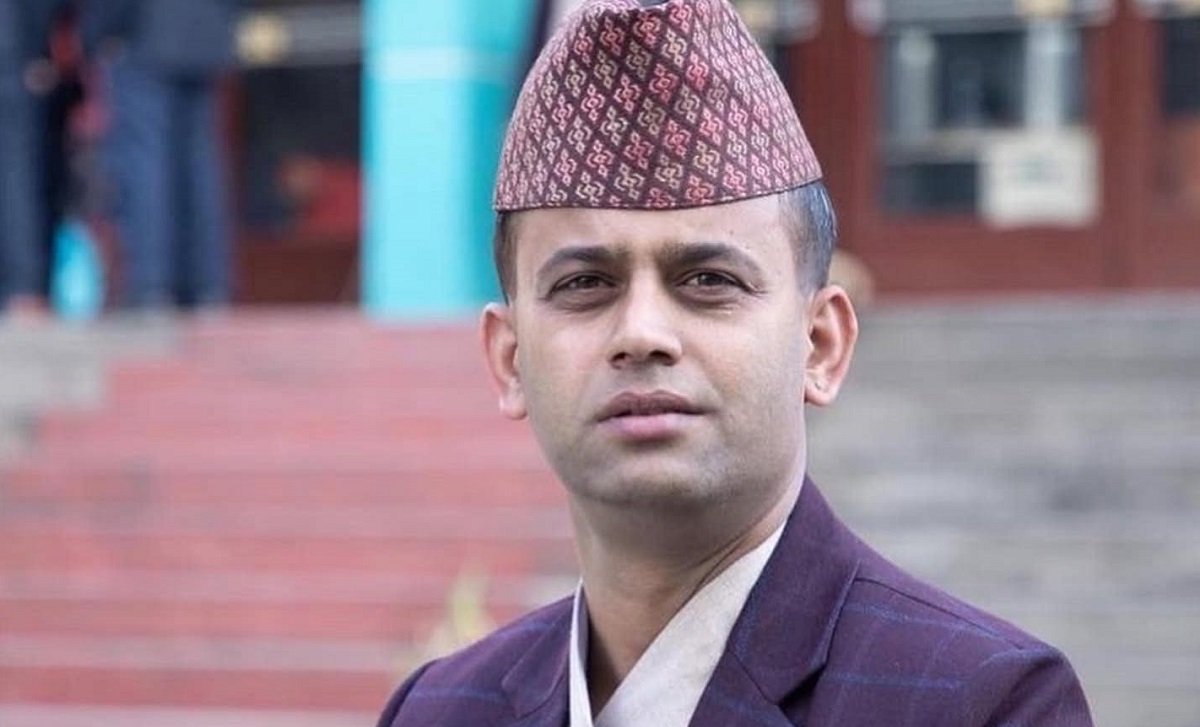
In previous elections, communists had consistently won from Bhojpur. As the final vote count for the election was made public, Sherdhan Rai, Secretary of CPN-UML and former Chief Minister of Koshi Province, suffered his third defeat. Dhruvraj Rai, the candidate from the Shram Sanskriti Party, was elected there. Dhruv secured 16,663 votes, while his closest competitor, Sherdhan Rai, had to settle for 14,750 votes.
Born in 1996 BS (2039 BS) into a humble family in the western region of Bhojpur, Dhruvraj began his political journey in student politics at Bhojpur Multiple Campus. After completing his Master's in Political Science from Tribhuvan University, Kirtipur, he became deeply involved in the politics of ANISU (UML affiliated) and was elected as the Student Union Chairman twice.
The primary reason he is known in Bhojpur as the 'Son of the Movement' is the extraordinary courage he displayed during the People's Movement of 2062/063 BS.
Dhruv's image of standing fearlessly before the army barracks and police administration, shouting anti-king slogans and giving speeches, remains fresh in the minds of Bhojpur's youth even today. Considered honest and combative in politics, he reached the central secretariat of the student organization but was defeated for the central vice-chairmanship. However, that defeat did not weaken him; instead, it brought him closer to the grassroots public.
In the 2074 local level elections, Dhruvraj Rai showed his strong presence in electoral politics for the first time. When he was elected Chairman of Temkemaiyung Rural Municipality from CPN-UML, his supporters nicknamed him 'Dhruve Elephant.' This name became very popular because, much like the Dhruve elephant that caused terror in Chitwan, he made the opposition alliance bite the dust in the electoral field.
During his five-year tenure leading the municipality, he did not choose a pompous or luxurious life like other representatives. His simplicity—always carrying a simple sling bag, sometimes walking and sometimes riding a motorcycle to reach every corner of the village—kept him dear to the people. Although he was defeated by a narrow margin against the Nepali Congress candidate in the 2079 election, he never abandoned the path of serving the people.
Dhruvraj, who was also a member of the Koshi Province Committee of CPN-UML, left UML, citing that the party leadership was acting against the sentiments of the people and cadres, and subsequently chose Harka Sampang's Shram Sanskriti Party. He publicly stated, 'Parties are ready to ally with anyone, from royalists to Congress, for power and seats, but no one pays attention to the problems of the people.'
He questioned why those who consider KP Oli a leader could not accept a leader of the toiling masses and patriot like Harka Sampang. In response to the question posed by UML cadres, 'Do you also consider Harka Sampang a leader?', he declared his readiness to carry Harka on his shoulders.
In the electoral arena this time, Sherdhan Rai appeared confident in his party's organizational strength and past legacy. Before the election, he publicly claimed, targeting Dhruvraj, that 'the soil' would only cut about 5,000 votes and that this would not stop UML's victory.
However, the result turned out to be the exact opposite. Nepali Congress's Balkrishna Thapa received 8,670 votes, and RASP's Ramesh Ojha secured 6,102 votes. By dividing the traditional votes, it became easier for Dhruvraj, who was once a cadre of Sherdhan, to secure the win.
The fact that CPN's Ajambar Rai Kangmang received only 5,628 votes clearly shows the fragmentation of communist votes in Bhojpur. This defeat is painful for Sherdhan Rai because he had previously faced defeat in the 2064 and 2079 elections as well. This is his third defeat. He had won the elections of 2056, 2070, and 2074. In the 2064 and 2079 elections, Sherdhan Rai was defeated by the then CPN (Maoist Centre) candidate, Sudan Kirati.
During the election campaign, Dhruv also went door-to-door in simple attire without any fanfare. This trust in him and the popularity of Harka Sampang's Shram Sanskriti led to the collapse of the communist dominance that had been deeply rooted in Bhojpur for years this time.
The election results show that Dhruvraj also succeeded in attracting the votes of the 34 percent Rai community and other ethnic groups in Bhojpur to his side. Internal strife within UML, visible disillusionment among cadres, and the arrogance of the leadership became the main reasons for Sherdhan Rai's defeat, while Dhruvraj's rebellious nature and clean image became the basis for his victory. How Dhruv maintains the Shram Sanskriti of Harka Sampang and his own identity after reaching parliament will determine his future political trajectory.
This specific news has been automatically translated by AI. As a result, there may be some inaccuracies or language errors.