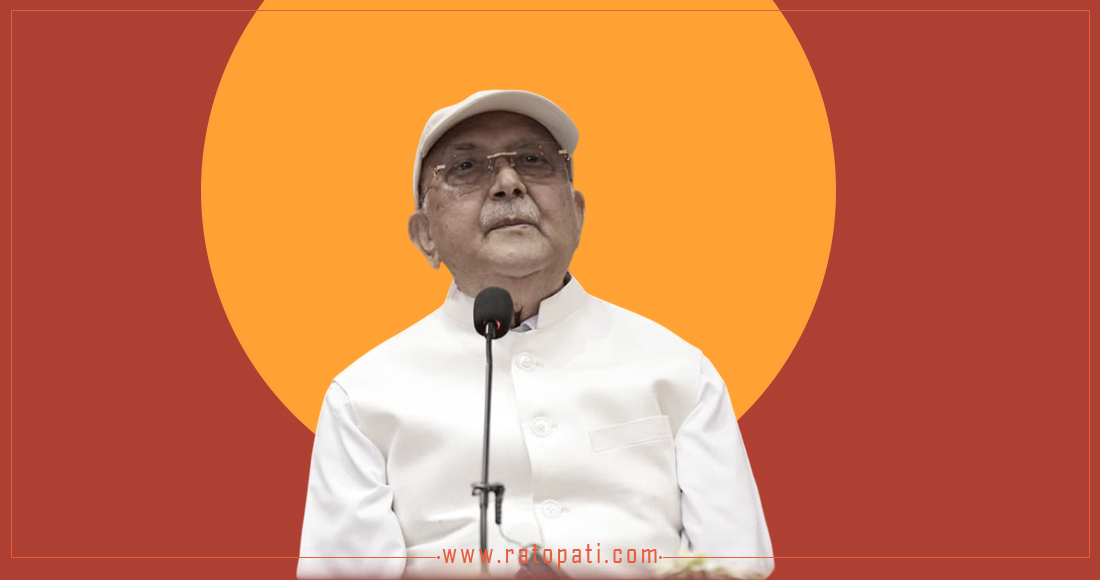
From Rapper's Rhyme to Political Force: Balen Shah Reshapes Nepal's Political Landscape


‘History is something that changes, brother, Balen hadn't arrived until now,’ was a line from a rap that echoed in the streets of Kathmandu a few years ago. At that time, it was merely the rhythm of a young man Balen's passionate rap. But the wheel of time has proven this to be the harshest and most realistic statement in Nepali politics. Today, from the streets of Kathmandu to the fields of Jhapa, Balen is no longer just a name; he has emerged as a force dismantling the archaic style entrenched in Nepali politics for decades.
The political miracle that Balen sowed with his unexpected victory as the Mayor of Kathmandu in the 2079 local elections has now grown into a massive tree capable of changing the very structure of the nation's governance.
Balen's political journey did not begin with traditional legacy or party blessings. After surprising everyone by winning as an independent mayor in Kathmandu Metropolitan City, a stronghold of political parties, many viewed his demolition of illegal structures within the metropolis merely as a populist move. But that bulldozer didn't just run over walls of cement and sand; it demolished the wall of inferiority complex of ‘nothing will happen’ residing in the minds of the Nepali people, igniting a ray of hope.
The tussle he initiated against the top leaders of traditional parties, who practice power from the closed rooms of Singha Durbar, provided an outlet for the frustration accumulated over years among Nepali youth. Balen was not just a title of a post; he had become the hope for millions of youth wandering in search of good governance. The stern replies he gave from Bag Durbar to Singha Durbar were not just words; they became the roar of an entire generation eager for change.
Balen arrived as a new wave when extreme despair gripped the general public. The lack of good governance and the stench of corruption were rampant. The Gen-Z movement on Bhadra 23 and 24 against social media shutdowns and for the rule of law shook the very foundation of Nepali politics. The oppressive policies of the then-government and the firing upon the youth once again stained the Nepali soil with blood, but that very blood began to write a new saga of change. Balen's open support for that movement acted as fuel to the fire. Balen became a center of trust for those tender hands and dreaming eyes who took to the streets. The wave of rebellion that spread across the country ultimately caused the powerful government led by UML-Congress to crumble like a house of cards, leading to the rise of an interim government under the leadership of former Chief Justice Sushila Karki.
Balen took the risky decision to leave the safe post of Mayor of Kathmandu to lead the nation. When the Rastriya Swatantra Party presented Balen as a candidate for Prime Minister, an earthquake struck Nepali politics, the tremors of which reached the strongholds of traditional parties. He wasn't just contesting an election; he was launching an assault against the centers of power entrenched for years.
During the transitional phase, the Nepali people, especially the new generation, were looking for a single face—Balen. The general election for the House of Representatives was announced for Falgun 21. Balen took the risky decision to leave the safe post of Mayor of Kathmandu to lead the nation. When the Rastriya Swatantra Party presented Balen as a candidate for Prime Minister, an earthquake struck Nepali politics, the tremors of which reached the strongholds of traditional parties. He wasn't just contesting an election; he was launching an assault against the centers of power entrenched for years. He chose a place for his candidacy that was considered an ‘impenetrable fortress’ of Nepali politics—Jhapa Constituency No. 5, where KP Sharma Oli had reigned supreme for decades.
Jhapa-5 was not just an electoral constituency; it was a symbol of political legacy and power. For UML Chairman KP Sharma Oli, who had been continuously victorious since 2048, with few exceptions, and who had made opponents taste humiliating defeat, this constituency was like a safe armor. But this time, history had decided to turn its page. When Balen stepped onto the soil of Jhapa carrying the ‘Bell’ symbol, a wave of change swept through. Many commented on it as Balen's ‘political suicide,’ but those commentators failed to gauge the lava of rebellion boiling in the minds of the younger generation.
As the final results of the election were being announced, an epic concluded and a new era began in Nepali politics. In that stronghold of Jhapa, where Oli had tried to maintain his dominance in the name of development by pouring billions from the state treasury, Balen achieved victory by a massive margin of 49,614 votes. While Balen won with 68,348 votes, Oli was reduced to just 18,734 votes. This was not merely the defeat or victory of one individual; it was a ruthless strike against the feudal mindset, arrogance, and the monopoly of the older generation in Nepali politics. The youth of Jhapa trusted the dream of good governance reflected in Balen's eyes more than the towering view tower Oli had built in Damak.
Behind Balen's rise was not just his personal charisma, but a mixture of the plans of a skilled engineer hidden within him and the rebellion of a rapper. This 36-year-old youth, proficient in Civil and Structural Engineering, had traveled to 65 districts of the country during the earthquake, understanding the problems of the Nepali soil up close. Through rap, he had been sending the message to the Nepali people that hollow speeches and nationalist slogans are no longer enough; they need results-oriented work and accountable leadership. This was also reflected in his election rallies. He gave short speeches connecting geography and culture.
Balen did not just use his social media as a medium for publicity; he used it as a weapon that overshadowed traditional media and party mechanisms. This electoral rebellion by Balen has propelled the Rastriya Swatantra Party to unprecedented heights.
Looking at the trend of the vote count, it is estimated that 121 seats will come from the first-past-the-post system. The proportional representation seems to have over 50 percent of the votes. At this pace, RSP is nearing a two-thirds majority. Old elephants like Nepali Congress and CPN-UML are wilting like pepper in front of this fierce wave of RSP. This time, the Nepali people have given such a massive mandate to a single party that even constitutional processes will now depend on the will of that one party. This mandate is a combined expression of trust in Balen and extreme hatred towards the old parties.
Oli had brought a flood of development to secure himself in the electoral field of Jhapa. But he forgot that time does not always move in the same rhythm. When the hunger for change awakens in people, old fortresses collapse like a house of cards.
The youth took revenge through the ballot paper for the wound inflicted on their hearts by the rebellion in Bhadra. A 36-year-old young man demolished the strong organization and grassroots network of UML with his ideological clarity and courage. An chapter of Nepali politics has now reached a full stop. KP Sharma Oli, who held the reins of UML for a long time and was considered the pivot of national politics, is now in a position where he has to stay outside the parliament. Balen did not just win in Jhapa; he sent a message across the entire Nepal: ‘The turn is for the youth, the path is for good governance.’
This specific news has been automatically translated by AI. As a result, there may be some inaccuracies or language errors.