From Pahlavi Monarchy to Khamenei's Theocracy: Iran's Tumultuous Journey Amid Global Tensions

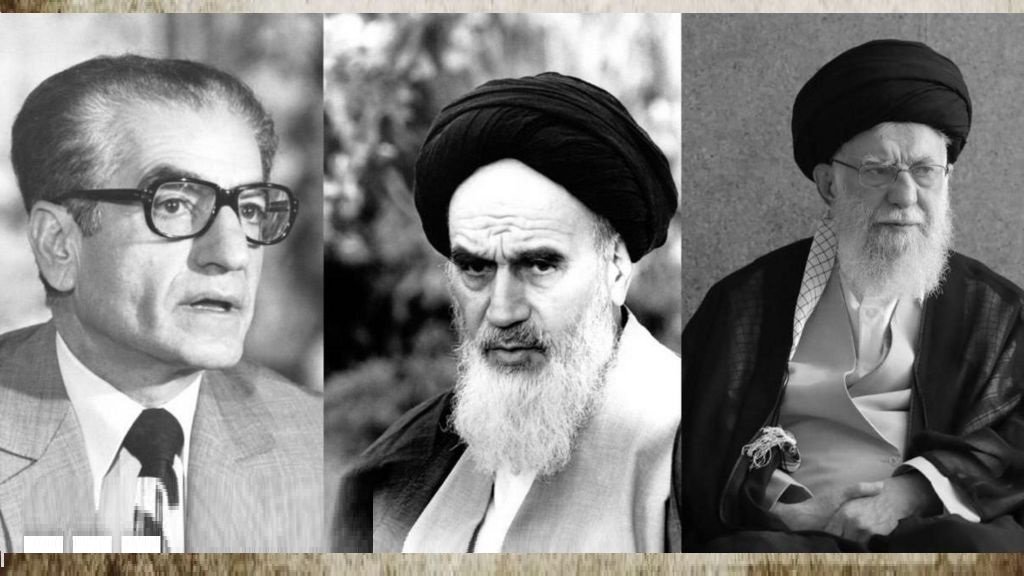
Tehran. On the eve of the New Year in 1977, then-US President Jimmy Carter described the regime of Iran's Shah Mohammad Reza Pahlavi as an 'island of stability' in the region. However, this praise did not last long.
Within two years, the Islamic Revolution in Iran overthrew the Pahlavi dynasty and fundamentally changed Iranian politics.
Reza Shah Pahlavi rose to prominence in Iran's modern history in 1925. During World War II, after he leaned towards Nazi Germany, Britain and the Soviet Union deposed him and installed his son, Mohammad Reza Pahlavi, on the throne.
Although Reza Shah attempted to bring Iran to the level of Western nations, he was viewed as a puppet of the United States and a cruel dictator.
In the 1950s, Prime Minister Mohammad Mosaddegh became very popular after nationalizing Iranian oil. However, Mosaddegh was removed through a 'coup' orchestrated by the US intelligence agency CIA and British involvement, and the Shah's autocratic rule was re-established.
Economic inequality grew under the Shah's rule, leading to an increasing attraction towards religious fundamentalists among the populace. By 1978, protests against the Shah escalated severely. Finally, on January 16, 1979, the Shah was forced to flee Iran. Immediately afterward, religious leader Ayatollah Ruhollah Khomeini, who had been in exile for 16 years, returned to Tehran from Paris.
With Khomeini's arrival, the monarchy in Iran ended, and an Islamic Republic was established. He declared the United States the 'Great Satan' and Israel an illegally occupying country. During Khomeini's tenure, the US embassy in Tehran was seized, and American citizens were held hostage for 52 days, leading to a complete breakdown in relations with the US.
Khomeini's Rise and Current Challenges
After Khomeini's death in 1989, Ali Khamenei became the Supreme Leader of Iran. Although Khamenei continued the previous fundamentalist policies, reformist presidents like Mohammad Khatami attempted to improve relations with Western countries for a time. However, after 2005, Iran returned to a fundamentalist path.
Under Khamenei's leadership, Iran has significantly strengthened its nuclear program and military power. But in recent days, dissatisfaction is growing in Iran due to economic crisis and unemployment.
Reza Pahlavi, the son of the former Shah living in exile, has been calling for a democratic movement in Iran in recent days. He described the current Iranian regime as a nightmare and stated that it must end. However, political analysts question how much legitimacy he will receive within Iran due to his closeness to the United States and Israel.
Amidst Iran's journey from the luxurious monarchy of the Pahlavi dynasty to Khomeini's religious rule, the world's attention is now focused on Iran in the context of recent attacks by the United States and Israel. The luxury of the Pahlavi lineage to Khomeini's religious power.
This specific news has been automatically translated by AI. As a result, there may be some inaccuracies or language errors.