
Nepali Congress President Gagan Thapa Discusses Shifting Constituency and Voter Skepticism in Sarlahi Interview


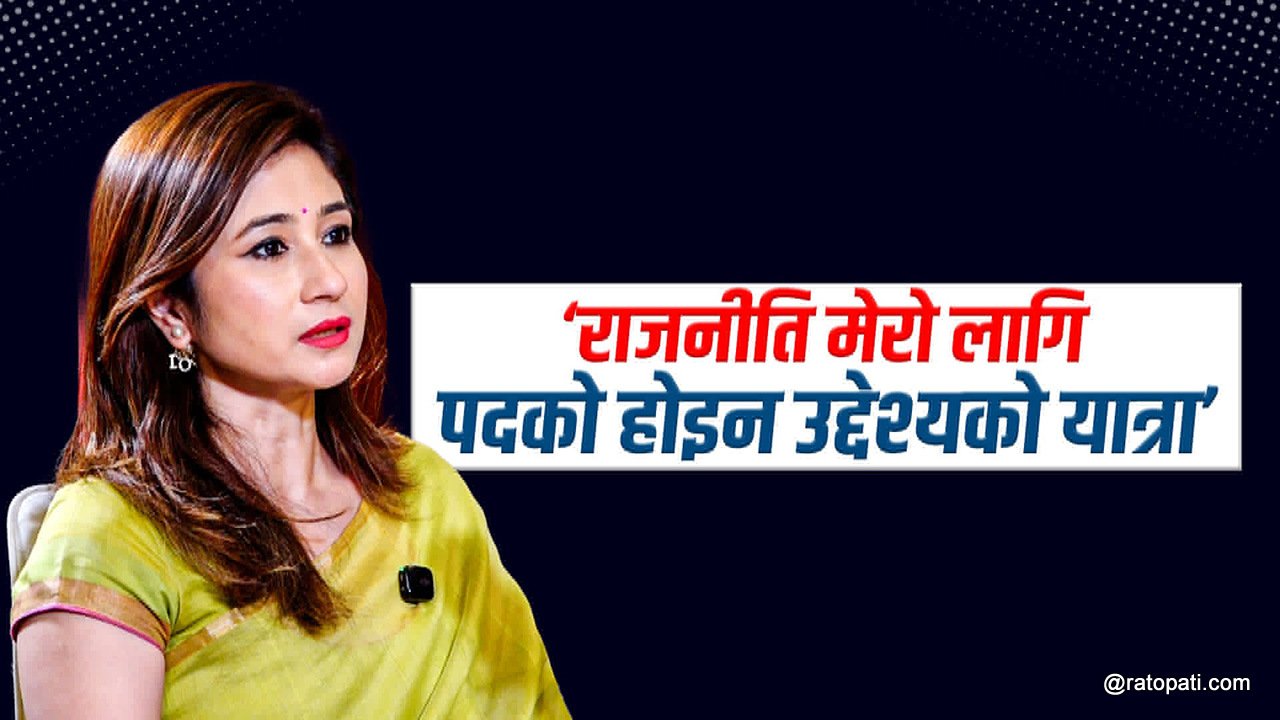
Nepali Congress President Gagan Thapa is contesting the House of Representatives election this time from Sarlahi Constituency-4, leaving behind the familiar terrain of Kathmandu. Ratopati caught up with Thapa in Sarlahi for an election-focused conversation. Here is the edited excerpt:
- How much did you know about this area before deciding to contest the election here?
I had visited about five programs in Sarlahi Constituency-4 before. So, I had some knowledge. But back then, I would drive from Kathmandu, everything seemed fine, I would reach the program venue directly, there would be a crowd. I would give a speech, listen to the concerns, and return to Kathmandu or the district headquarters in the evening. So, that knowledge was superficial. But now, as a candidate here, I am reaching every house and every neighborhood. The things I heard before were not new to me, but seeing and feeling those heard things myself is a completely novel experience for me.
- In many places, leaders are found only making promises. There is a complaint here that candidates who won in the past also only made promises. You have also spoken about some issues related to this constituency; are those also likely to remain just promises, which is a concern for many people?
I encountered that concern a lot. What seems to have happened here is that the same issues are raised in previous elections too. The other day, someone was talking about a bridge—he said he was the eighth candidate to promise to build that bridge! This means that bridge was the main issue in the seven elections before this one as well. In Kathmandu, it used to be that some things spoken about in one election would not remain the old issues when going to the next election. Those tasks would have been completed midway. New issues would arise in a new election. There were complaints there too, but they were of a different nature. Here, it seems all candidates have been saying the same thing continuously, but the work has not been done.
What is even more novel this time is that almost all the candidates I am contesting against were in different parties in the previous election. Now they have come with different party symbols. Amidst this atmosphere, I am trying to explain my points, but the voters here are tired of old promises. Therefore, they have a strong suspicion that the things I say might not be fulfilled tomorrow. I am trying to dispel that very suspicion.
- What are the bases for dispelling that suspicion, please tell us.
The main thing is how to create a mechanism for accountability tomorrow regarding what is being said today. Based on my experience as a Member of Parliament in Kathmandu since 2070 BS, the most useful thing here is the 'MP's Office.' I will establish a well-organized MP's office here. There will be an officer there, and local youth will work as volunteers. That office will be responsible for regularly implementing all the commitments we have made to the public. I will also be directly connected to that office. The biggest problem here is the large distance between the voter and the MP. Only those who have access to middlemen or local leaders get opportunities, while others do not. My office will break down that wall between the voter and the MP.
Another thing is that before I came here as a candidate, my team of experts had already visited. Experts in education, health, irrigation, and agriculture stayed here for 15 days and conducted studies. Therefore, I have prepared a list of the problems here not just by seeing them from the outside, but by reaching the depths. I will move forward with the work here based on that.
In Kathmandu, even though I had the desire to do many things, it was not possible due to local needs. For example, I did a lot of work in the public/community schools there, but since the children of more than 90 percent of my voters study in private schools, that work did not seem that significant. But here, improvements in community schools carry direct and significant meaning and value. I have a large network, my team, and a large group of friends ready to help me to do that work. I want to utilize that group here. Currently, 8-10 expert friends come here daily to support me; I haven't called anyone. They themselves are offering help in different sectors. I am trying to explain this very thing to the voters.
- One complaint people have is that you are being proposed as a future Prime Minister. But doesn't it seem like you are doing an injustice to the remaining 164 constituencies by focusing only on this area? Because one cannot become Prime Minister just by winning alone; others must also win. Other candidates are hoping that your presence increases their votes a bit; doesn't it feel like you are doing an injustice to the rest of the areas?
No matter which constituency I contest from, I must work hard for my area. Today is almost the last day of my campaign here. I will return here only after some time and have asked the local friends to take charge. Starting tomorrow, I will attend programs outside. The problem I faced was that I couldn't campaign by violating the code of conduct imposed by the Election Commission which prohibits door-to-door canvassing, but other candidates did. Voters here complained: 'You are a new person, we will vote for you, but you must visit our village at least once.' That's why I am trying to reach everywhere possible. My program here will conclude today or tomorrow. After that, I will try to visit at least 20 places outside Kathmandu, if possible.
- As the Nepali Congress President, what is the overall situation in the province you are contesting from?
After the Janakpur convention, in the interactions I am having with colleagues, I find the candidate friends very enthusiastic. What is both an opportunity and a challenge for us is that the rank and file of the cadres is very enthusiastic. The atmosphere I see here is similar elsewhere too. Party colleagues are working with full energy. But our main challenge is how to convey that energy and enthusiasm to the voters. Due to social media, there is a big clamor right now. We need to cut through that clamor and convey to the voters what the Nepali Congress, with its new leadership from the General Convention, means, what our commitments are, and what the basis for fulfilling them is. Candidates and cadres are enthusiastic, but because time is short, our main challenge is how much of our message can reach the voters.
- What is the situation of the Nepali Congress across the country?
For the last four or five days, I have been focused on my own constituency, so I haven't been able to observe the nationwide situation in detail. Bishwa Prakash Sharma is leading this. I had a long conversation with him just this morning. He has also visited many places. Overall, the situation is as I mentioned earlier. The next seven or eight days are very important for us. We are in the right place, and our message is also correct. But it is challenging to cut through the noise of social media and reach the party's voters through deep door-to-door campaigning, which we must accept. We will focus our election campaign on this.
- There are reports about forming alliances with other parties in some places; is there anything like that?
No, there is nothing like that.
- Is there still any doubt that the election will be held on time?
No.
- Finally, what is the basis for your victory or the challenge in this election? Who is the competition against? Some say new challenges have been added in this election; what do you see?
I always believe in moving forward by considering myself weak in an election. When someone asks me, 'Will you win?', I only say, 'I am trying.' My colleagues are also working hard. The main challenge for me here is the language. I understand what they are saying here, but I cannot reply in the same language. What others say about me and what I convey myself are different, aren't they! My main strength is being able to articulate my points well, but a big gap is being created here due to the language barrier. As a result, voters have to listen to what others say about me, and I cannot convey it directly myself. This is the biggest challenge for me. Everything else...
- What about the competitors?
I do not consider anyone weak. I do not evaluate who is strong or who is weak. I tell my colleagues too—all the competitors here are very strong. They are experienced and local to this area. So, I keep telling them not to underestimate anyone and to work hard.
Video: Manoj Khadka
This specific news has been automatically translated by AI. As a result, there may be some inaccuracies or language errors.



_XRgO2ypobQ.jpg)


