Nepal's Shifting Political Landscape: The Rise of Personality-Driven Leadership and the Case for Gagan Thapa


A curious trend is emerging in Nepal's electoral politics: parties are not only presenting policies and manifestos but are also putting forward the 'face of the Prime Minister.' Although voters do not directly elect the Prime Minister in a parliamentary system, the political competition is increasingly becoming personality-centric, resembling a direct presidential contest.
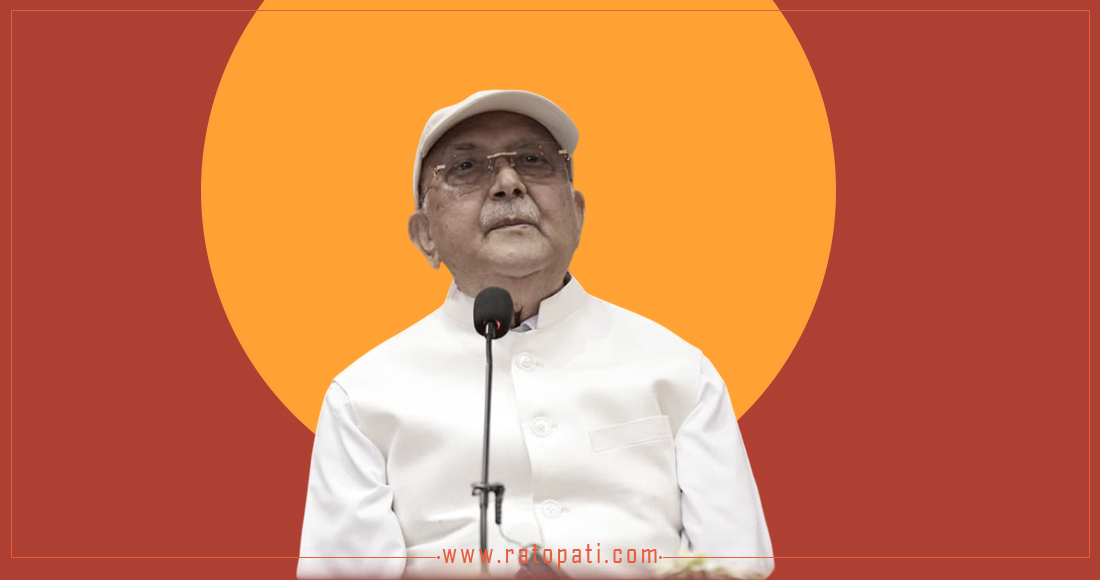
In this context, Gagan Thapa, put forward by the Nepali Congress, is at the center of discussion. The question arises: why does he appear different from other potential contenders? And broadly, what background and qualities are necessary for an individual to become Prime Minister?
Gagan Thapa's political journey began with student activism. Within the Nepali Congress, he has established himself across three arenas: organizational politics, parliamentary debate, and public discourse. His strength lies not just in youthful energy but also in policy clarity and the capacity for public expression.
The questions he raises on issues like health, education, good governance, and institutional reform signal his desire to be a 'leader of ideas' rather than a 'leader of the crowd.' In today's politics, it is easy to revel in the noise of the crowd, but running a government requires calm, fact-based, and visionary decisions.
Thapa's style appears based on logic and facts rather than emotional arousal. This quality is crucial in a democracy because the Prime Minister is the leader not just of a party, but of the entire nation.
An individual aspiring to be Prime Minister requires at least three types of background experience.
First, long experience in struggle and public life. Politics is not just the art of winning elections; it is the practice of understanding the pains and aspirations of various strata of society. Second, policy understanding and administrative vision. Running a state is not achieved by slogans alone; it requires deep knowledge of budgets, diplomacy, federal coordination, and legal processes. Third, commitment to state institutions. In a parliamentary system, the Prime Minister is not all-powerful; they must maintain a balance with the constitution, parliament, and the judiciary.
When Thapa served as the Health Minister, he highlighted the need for systemic reform. Although it cannot be said that all his efforts were completely successful, his characteristic was the attempt to publicize debate at the policy level. Leadership does not mean perfection; it means a commitment to continuous improvement.
In Nepal's current political scenario, there are other potential Prime Ministers, including experienced leaders like KP Sharma Oli and Pushpa Kamal Dahal. They are experienced, but their long tenure in power has left them fatigued and mired in controversy. Repeated power-sharing deals, coalition instability, and power-centric politics have become factors increasing public disillusionment.
In this context, Thapa signals a generational shift—the aspirations of a new generation connected with the continuity of old institutional traditions. He is trying to build an image that stands for reformist stability rather than revolutionary fervor.
Democracy currently needs this balance: change and stability. Democracy is also nurtured by the character of the individual. When a good person becomes Prime Minister, there are three benefits:
First, institutional strengthening. If the leadership is transparent and rule-based, institutions become strong. Governance stabilizes if the Prime Minister keeps constitutional bodies free from interference.
Second, policy-based competition. Good leadership can shift elections away from slogans and ethnic-regional polarization towards policy debates. This helps voters make conscious decisions.
Third, a moral message. The message that politics is not merely a means to acquire power spreads throughout society. When top leadership appears honest, the administrative culture down the line also improves.
However, mere change in personality will not solve all problems. Nepal's federal structure, economic dependency, and geopolitical sensitivities are complex. Maintaining a balance between powerful neighbors like India and China while securing national interests is a difficult test for any Prime Minister.
Furthermore, issues like unemployment, an economy dependent on foreign employment, and climate risks demand a long-term vision. Thapa's supporters say he is consultative, can listen to criticism, and emphasizes institutional reform. Critics say he has not yet been fully tested. Both perspectives are healthy in a democracy.
The evaluation of leadership should be based on performance outcomes, not blind devotion or prejudice. Nepal's democracy currently stands at a crossroads between personality-centrism and institution-centrism. Will we revert to personality worship, or will we strengthen institutions?
If a Prime Ministerial aspirant places themselves above the constitution, democracy weakens. But if they present themselves as servants of the institution, the nation benefits. Gagan Thapa may be a symbol of hope in this regard.
If he can translate youthful energy, policy clarity, and commitment to institutions into practice.
Ultimately, in a democracy, the question is not just 'which face,' but 'what character.' Democracy needs prudent leadership, not the impulse of the crowd. And perhaps this is the core question of our time: are we merely looking for a Prime Minister, or a responsible guardian for the nation?
This specific news has been automatically translated by AI. As a result, there may be some inaccuracies or language errors.