Calls for Open Debate Among Prime Ministerial Aspirants Expose Flaws in Political Culture


Some media outlets and ordinary citizens have called for the prime ministerial aspirants to engage in an open debate on the same stage. Specifically, leaders presented as future prime ministers for the election scheduled for Falgun 21 have been invited to a public debate.
The expectation that leaders vying for the executive leadership of the country should stand on a single platform to debate their policies, principles, past performance, and clear future roadmap before the public can be viewed positively.
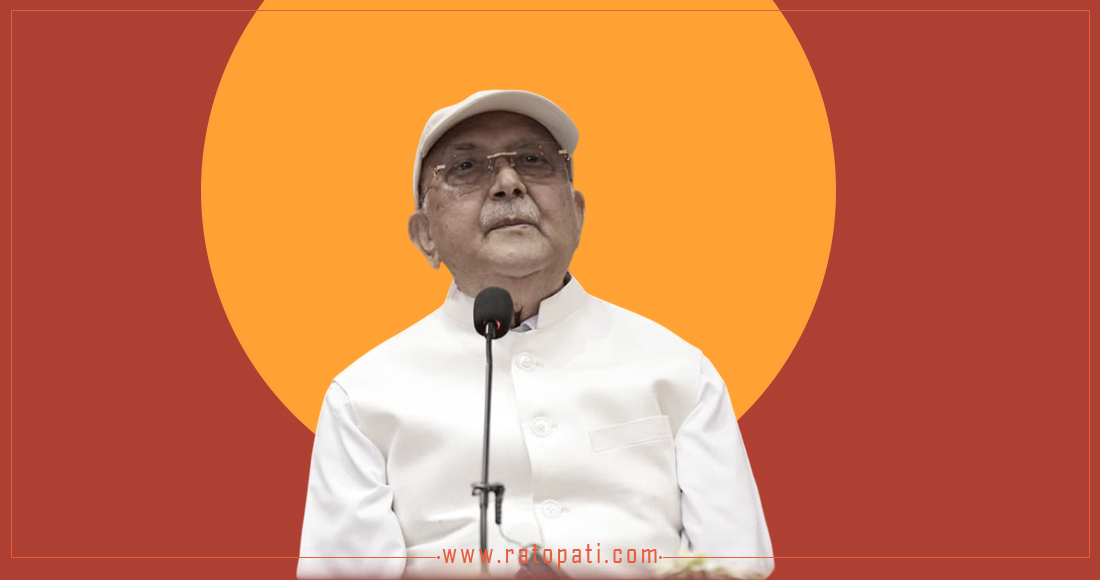
KP Sharma Oli, Chairman of CPN-UML, Gagan Thapa, President of Nepali Congress, and Balen Shah, Senior Leader of the Rastriya Swatantra Party, are seen as the main contenders for the post of future Prime Minister. Their respective parties have formally put them forward.
Along with them, there are rising calls to include Pushpa Kamal Dahal 'Prachanda', Convener of the CPN (Maoist Centre), Hark Sampang, Chairman of the Labor Culture Party, and Kulman Ghising, Chairman of the Ujyalo Nepal Party, in the debate. However, the primary interest of the public remains focused on seeing Oli, Gagan, and Balen on the same stage.
- The 'Flunky' Tendency of Cadres
Voters wish to see a competition of policies, plans, and visions. However, even before the debate takes place, the behavior of the parties and their cadres has exposed a different reality of Nepali politics, where the stance of 'our leader is right, everyone else is wrong' dominates over debate.
Oli has stated his readiness for a debate. However, Shah has announced a boycott of the debate. This issue is currently a subject of intense debate and commentary on social media.
Until Shah made his stance on the debate public, RSP cadres claimed that if a debate occurred, Shah would outperform everyone. But once Balen stated he would not debate with Oli, the cadres' opinions also shifted. That is, they started arguing that Oli is a bad character and there is no point in debating him.
But the question arises: what if the situation were reversed? If Shah were ready for the debate and Oli boycotted it? Those same supporters of Shah would say—Oli is afraid to debate Shah. That is, the issue is not about the debate itself, but the psychology of defending one's own leader.
When Oli is ready, the language of CPN-UML cadres is one way; when he is not, it's different. When Shah is ready, the views of RSP supporters are one way; when he is not, they are different.
The Congress claim that Gagan Thapa will participate in the debate also appears to be inspired by the same mindset. If he refuses, it won't take long for those same cadres to argue that it is unnecessary.
During the 079 elections, when Oli called for an open debate, Sher Bahadur Deuba was the President of the Congress. At that time, Congress members were not as enthusiastic about the open debate as they are now. This is because Deuba, while experienced in politics, is considered weak in oratory skills. This makes it clear that Congress cadres desire an open debate now because Thapa, who is skilled in rhetoric, is the president.
This shows that the cadres' views are not stable independent of the leader's decision but rather shift according to the leader's actions. It is not ideology but personality worship that prevails. It is not principle but partisanship that dominates.
How Necessary is an Open Debate?
The demand for an open debate is a healthy practice of democracy. However, accepting a debate only when it is favorable to one's side is contrary to democratic culture. A debate is meaningful only when all sides are prepared, can tolerate criticism, and can admit their shortcomings.
Unfortunately, in Nepal, this level of maturity is not seen in cadres before the leaders. They are active in the campaign to protect 'our person' rather than focusing on policy and ideas. Because of this, the subject of debate is limited to emotional accusations and counter-accusations rather than logic and facts.
This exposes a harsh truth: although the parties are different, the character of the cadres is the same. Only the flags are different; the mindset is the same. Whatever the leader says is the truth. Whatever the leader does is right.
Prachanda, Hark Sampang, and Kulman Ghising have also not made their views public yet. Nevertheless, the possibility of a public debate among leaders other than Balen remains open.
Ultimately, the issue of open debate has clearly exposed the unstable and opportunistic ideology of the cadres more than that of the leaders. As long as critical consciousness does not develop within the parties and the culture of blind support is not ended, Nepali politics will remain confined to personality worship, and debate will be limited to slogans.
If Nepali politics is to mature, it is necessary to develop a culture of accepting debate, not just demanding it. For this, self-criticism and an open mind are essential for both leaders and cadres.
- Should We Learn from Global Examples?
Many democratic countries around the world have institutionalized the practice of open public debates among candidates before elections.
In the United States, televised debates between presidential candidates have become an integral part of the electoral process. Candidates must directly present their plans on issues ranging from the economy, foreign policy, security, and taxes to employment and social issues.
Presidential debates are regularly organized in countries such as the Philippines, Brazil, Chile, Mexico, South Korea, Poland, and Portugal. In some countries, the Election Commission or an independent body manages the debates, ensuring impartiality.
In Nepal, the culture of debate is only beginning to emerge. Election campaigns in Nepal are largely limited to one-sided speeches, accusations and counter-accusations, and emotional slogans. Candidates only speak to their crowds of supporters and are not forced to face direct questions. Temptation is prioritized over ideas to win over voters.
While countries like the US, the Philippines, or Brazil have made this practice a part of their democracy for decades, why can't Nepal? Open debate does not weaken anyone; rather, it clarifies competent leadership.
(Pokhrel is the editor of Prime Television)
This specific news has been automatically translated by AI. As a result, there may be some inaccuracies or language errors.