A Traditional Practice for Child Health: What is the 'National Swarna Bindu Prashan' Program?


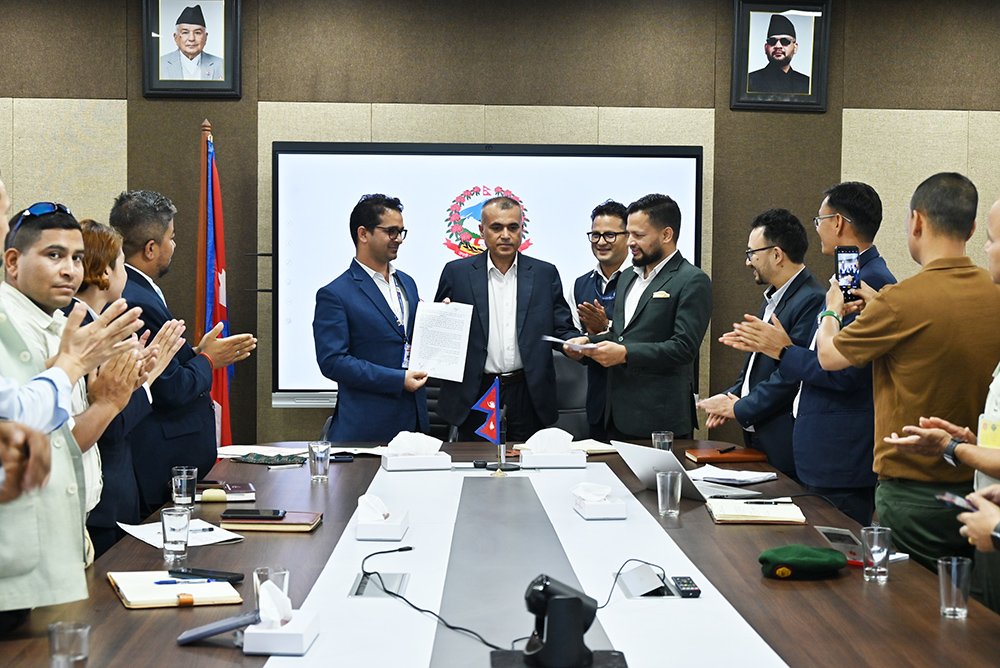
The Government of Nepal has launched the 'National Swarna Bindu Prashan' program as a national initiative, prioritizing an ancient medicinal practice. While fully embracing modern allopathic medicine with its drugs, surgeries, and high-tech treatments, the Ministry of Health and Population is also giving priority to traditional medicine. To run this program in a systematic and uniform manner, Health Minister Pradeep Poudel has approved the 'National Swarna Bindu Prashan Program Implementation Guidelines 2082'. The program commenced from Dhangadhi in Sudurpashchim Province this Thursday.
What is Swarna Bindu Prashan?
According to the Department of Ayurveda, the government will now administer a special Ayurvedic medicine to children between the ages of six months and five years. As per the ministry, the 'Swarna Bindu Prashan' will be distributed monthly from 25 Ayurveda centers across the country, following classical methods and timed for the morning Pushya Nakshatra (an auspicious astrological period).
Dr. Upadhyay, former Director-General of the Department, explained that Swarna Prashan is an ancient Ayurvedic practice, comparable to the modern concept of vaccination. Its purpose is to boost the physical and mental development of children and protect them from various diseases.
Director-General of the Department of Ayurveda, Dr. Shyambabu Yadav, stated that 'Swarna Bindu Prashan' is a traditional method described in the 'Kashyap Samhita', an Ayurvedic text nearly five thousand years old. He explained that the purified gold ash (swarna bhasma) helps balance and regulate the body's immune response. The herbal Brahmi Ghrita enhances brain capacity, protects nerve cells, and improves memory. Pure honey is itself a natural antibacterial substance that protects against infection.
Scientific Basis and Modern Perspective
Dr. Yadav emphasized that this is not a superstition-based tradition but a science grounded in thousands of years of experience and research. Modern research confirms the immunomodulator properties of swarna bhasma, the neuro-protective capacity of Brahmi, and the natural antimicrobial properties of honey.
Similarly, Dr. Pushparaj Poudel, head of the Ayurveda and Alternative Medicine section at the Ministry, explained the scientific basis of 'Swarna Bindu Prashan'. From a modern scientific viewpoint, it is a highly sophisticated nano-medicine and neuro-immunomodulator formulation. The 'swarna bhasma' used is not ordinary gold; it is a nano-particle of gold prepared through a special purification process, with the ability to balance the body's immune system.
Former DG Dr. Upadhyay added that active ingredients like 'nootropics' and 'adaptogens' found in herbs such as Brahmi and Shankhapushpi protect nerve cells and enhance the brain's learning capacity. He described it not just as a tradition, but as a scientifically synergistic combination that strengthens a child's immune and nervous systems.
Addressing Concerns About Honey
A common concern is the use of honey, as it is generally advised not to give honey to children under two years old due to a risk of botulism.
Former DG Dr. Upadhyay clarified that the amount of honey used in a single medicinal dose is extremely minimal. The risk associated with directly consuming honey in large quantities is not present here. It is combined with other herbs in a way that makes it safe for children. He strongly advises against preparing or administering this medicine at home. It is to be prepared and administered strictly at official centers under the direct supervision of experts following government standards. All ingredients must be certified by the Department of Drug Administration and the Department of Food Technology and Quality Control, ensuring safety and quality.
Program's Scientific Basis and Past Experience
Dr. Upadhyay stated that while the 'Swarna Bindu Prashan' program is based on classical knowledge, it also has scientific testing and evidence. Research by various universities has shown that Swarna Prashan helps reduce frequent colds, coughs, malnutrition, and other health issues in children.
The World Health Organization (WHO), through its 'Traditional Medicine Strategy 2014-2023', has encouraged member states to integrate evidence-based traditional medicine into national health policies.
In Nepal itself, the Ayurveda Hospital in Bijauri, Dang, Lumbini Province, has been successfully running this program for a long time. Service recipients (parents) there have reported positive improvements in their children's health, increased appetite, and fewer illnesses.
Nepal's national program aims to integrate traditional treatment methods into the national health system and expand citizens' access to alternative treatments alongside allopathy. Countries like India have been running 'Swarna Prashan Sanskar' for years as a key part of child health under their national Ayurveda mission, offering it free through government health centers. Similarly, developed countries like China, Germany, and Australia are increasingly accepting Ayurvedic and traditional medicine practices as complementary health services.


_iL3K2wYemS.jpg)