China's Manufacturing Sector Expands in June Driven by AI Demand and Exports
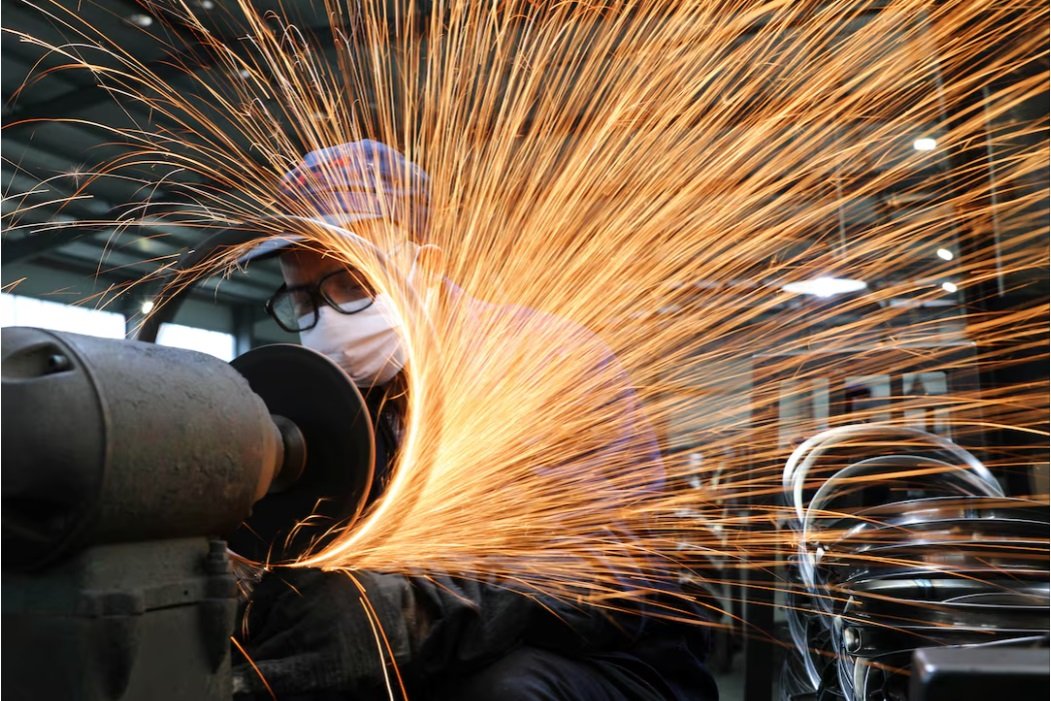
Beijing. China's manufacturing sector has returned to expansion in June. Factory activity has increased with the global demand for artificial intelligence (AI) related chips, computers, and other technology products. The strategy of exporters to ship goods before the imposition of US additional customs duties (tariffs) and strong export demand seem to have provided some relief to China's sluggish economy.
According to data released by China's National Bureau of Statistics (NBS), the Purchasing Managers' Index (PMI) for manufacturing in June rose to 50.3 points. In May, this index was 50 points. A survey conducted by the international news agency Reuters showed that this index was expected to remain at 50 points in June as well. A PMI index above 50 indicates that activity is increasing in any economic sector.
According to analysts, the demand for semiconductors and computer equipment required for data centers, AI systems, and advanced electronic devices worldwide has strongly supported China's manufacturing sector. According to Dan Wang, China Director at consulting firm Eurasia Group, the export of AI-related products, along with efforts to increase exports before the new US tariffs effective from the end of July, has helped expand manufacturing activity. She also stated that domestic demand has improved somewhat due to the decrease in raw material costs.
US retail trade companies have also increased their orders for goods from China to target the Black Friday and Christmas shopping seasons, before potential tariff increases. According to shipping officials, US importers have started ordering goods four to six weeks in advance.
According to the data, the new export demand index has increased from 48.6 points to 50.1 points. The production index remained at 51.4 points, while the new orders index rose to 51.2 points. However, the factory gate price index has fallen from 51.9 points to 48.2 points, indicating that price pressure is increasing again. The employment-related index has also been on a continuous decline.
According to Su Tianchen, Senior Economist at the Economist Intelligence Unit (EIU), China's exports are expected to remain strong in the near future due to global investment in the AI sector. According to him, government spending is likely to increase in the coming months, and monetary policy is expected to be further eased.
During the review period, the non-manufacturing sector's PMI, which includes the service and construction sectors, also increased from 50.1 points to 50.2 points, and the overall composite PMI reached 50.6 points. However, challenges in China's economy still persist. The long-standing real estate sector crisis, weak domestic consumption, and a decline in new home prices are creating pressure on overall economic activity. According to May data, retail sales declined for the first time in three years.
According to Julian Evans-Pritchard, Head of China Economics at Capital Economics, the improvement in the manufacturing sector is mainly limited to exports and AI-related industries. According to him, the manufacturing sector appears to be heading towards the risk of price decline again.
This specific news has been automatically translated by AI. As a result, there may be some inaccuracies or language errors.