Bird Flu Spreads Rapidly Across Nepal, Affecting Kathmandu Valley


Kathmandu. The deadly avian influenza, or bird flu, which has been observed in Nepal for some time, has spread rapidly in various districts including the Kathmandu Valley. The three districts of the Kathmandu Valley – Kathmandu, Lalitpur, and Bhaktpur – have emerged as the main 'hotspots' for this infection. According to the Department of Animal Services, this year's outbreak has become more complex and sensitive as bird flu infection has been confirmed not only in commercially raised chickens but also in native and wild birds, especially crows. The government has intensified efforts to destroy infected birds, eggs, and feed by deploying rapid response teams in affected areas to control the infection. However, as the rate of infection has not decreased as expected, the poultry sector has suffered significant economic losses, and the trade of chicken meat in the market has also seen a notable decline due to increased fear among consumers.
Started from Koshi, Devastating in Kathmandu
The first bird flu outbreak of the current fiscal year 2082/83 was confirmed on March 18, 2082, in Sundarharaincha-4 and Urlabari-8 in Morang district of Koshi Province. Since then, this infection, which has gradually spread to other parts of the country, has now severely gripped the capital, Kathmandu Valley. According to Dr. Umesh Dahal, Director General of the Department of Animal Services, the Kathmandu Valley has now become the epicenter of bird flu infection. Its presence has been found intensely in various local levels of these three districts. Although it was claimed to be under control earlier, technical analysis suggests that the infection has spread again due to the virus's mutable nature and environmental adaptability.
_3dS8PpmBOZ.jpg)
Director General Dahal stated that the control work has become more challenging as the infection is seen not only in commercial farms in the valley but also in wild birds living in open areas. He mentioned that the confirmation of bird flu in crows found dead in various parts of Kathmandu indicates that this virus has become widespread in the community and environment. Outside the valley, the infection has also been confirmed in some commercial farms in Kavrepalanchok and Chitwan. However, according to current data, more than 90 percent of the total infection is concentrated within the valley.
Over 1 Million Eggs and 600,000 Chickens Destroyed
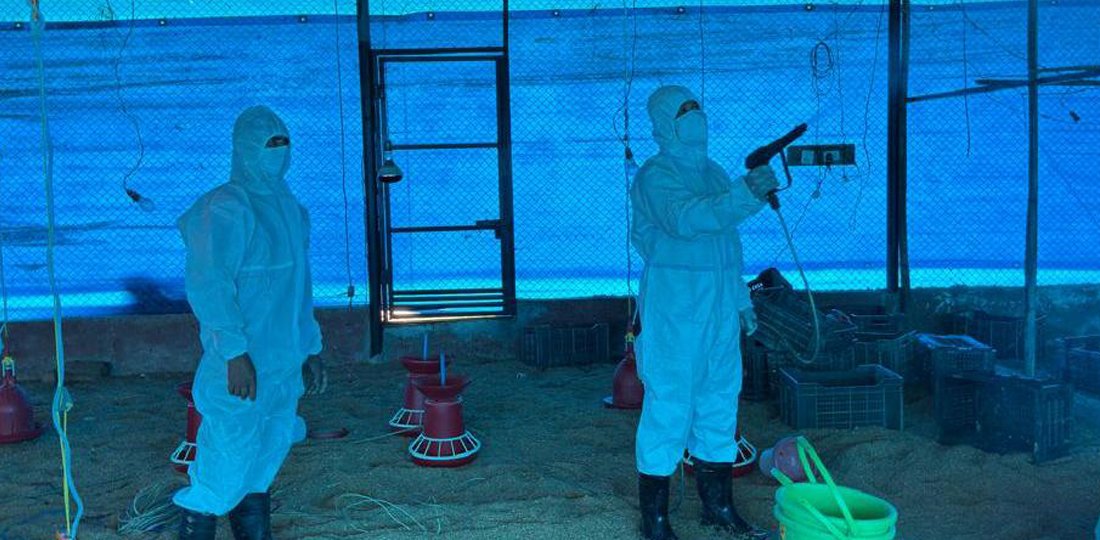
Nepal's poultry business has suffered one of the biggest losses in history due to this bird flu outbreak. According to the Bird Flu Control Regulations issued by the government, there is a legal provision to destroy all birds, eggs, feed, and other infected materials within a certain radius of the area where infection is confirmed. In accordance with that provision, the department has accelerated the process of large-scale biological destruction. According to Director General Dahal, approximately 550,000 to 600,000 chickens and other birds have been destroyed across the country so far. This number has reached around 600,000 as new infected areas continue to be added to the past data. Similarly, to prevent the spread of infection, more than 1 million eggs and about 200 to 500 tons, or more than 207,000 kg, of feed and other feed materials have been destroyed using scientific methods. He clarified that as soon as the infection is confirmed, the department's team seals the concerned farm, destroys the birds and eggs there, and buries them in a safe manner.
Local Chickens Increasing Bird Flu More Than Farm Chickens
The analysis of the Department of Animal Services suggests that bird flu is more prevalent in the peripheral areas and semi-urban areas of the valley, where biosecurity conditions are relatively weaker, rather than in the inner urban areas. 'Budhanilkantha, Shankharapur, Gokarneshwor, Tokha, Chandragiri, Kirtipur in Kathmandu district, and some outer areas of Kathmandu Metropolitan City are more affected,' says Director General Dahal of the department. In Bhaktpur district, infections are intense in farms in Sallaghari, Changunarayan, and Suryabinayak areas, while various commercial and domestic farms in Godawari and Imadol areas of Lalitpur have been affected. Outside the valley, its impact is also seen in Banepa and surrounding areas of Kavrepalanchok. According to the department, compared to urban areas, infection has spread easily in rural and peripheral areas where farmers raise commercial chickens and native local chickens side by side. 'In many places, farmers raise a small number of local chickens next to commercial farms, which come into contact with wild birds or crows when they go out to forage, and bring the virus back into the farm, causing the infection to spread rapidly to commercially raised chickens. Technical analysis suggests that crows spread the virus through their droppings or urine while eating feed or drinking water inside the farm,' Director General Dahal told Ratopati.
Chicken Meat Sales Down by 30 Percent
The direct impact of the increased psychological fear among consumers due to the rise in bird flu has been on the chicken meat business. According to Jang Bahadur BC, Chairman of the National Poultry Sellers Association, consumption of chicken meat in the Kathmandu Valley has declined by 20 to 30 percent due to bird flu. The Kathmandu Valley is the largest consumer of chicken meat in Nepal, with a daily demand of about 300,000 kg of meat under normal circumstances. 'Due to the fear of bird flu, this demand has decreased by 20 to 30 percent, resulting in a daily consumption reduction of 60,000 to 90,000 kg of meat. Currently, only about 210,000 to 240,000 kg of meat is being sold and distributed daily in the valley,' BC said. He mentioned that business and consumption are proceeding normally in districts outside the valley.
Businesses Claim No Negligence
Regarding disease control, both the government and businesses are fulfilling their responsibilities, and businesses claim that there has been no negligence on anyone's part. Chairman BC clarified that efforts to control the infection are being carried out regularly in areas where infection is detected, and infected birds are being destroyed. As bird flu has become a natural problem that occurs annually or at intervals of a few years, it will take time to completely prevent it, but arrangements have been made to send only safe meat to the market. Since the government immediately seals farms where bird flu is confirmed and destroys all birds there, there is no possibility of unhealthy meat entering the market from infected areas. Director General Dahal of the department also stated that since chickens die on their own when they get bird flu and the entire farm is destroyed if the disease is hidden, farmers do not hide the disease. 'If chickens start dying suspiciously even slightly on the farm, farmers themselves inform the department or the local veterinary hospital,' he added. 'The possibility of sending infected meat to the market is low, and since farms with confirmed infections are immediately sealed, consumers do not need to be overly alarmed about the meat and eggs available in the market,' Dahal said. Although the bird flu virus is considered highly sensitive from a public health perspective, no cases of bird flu transmission to humans have been confirmed in Nepal during the current outbreak. The department immediately informs the Ministry of Health every time bird flu is confirmed on a farm, and the Ministry of Health team conducts health checks and monitoring of the operators, workers, and residents of the infected farms. According to animal health experts, this virus cannot survive at high temperatures, so consumers can consume chicken meat and eggs with normal precautions. The department has advised consuming chicken meat or eggs only after cooking them thoroughly at a temperature of at least 70 degrees Celsius and keeping the meat cutting area, knives, and utensils clean.
Department Planning Strategic Measures as Infection Rate Does Not Decrease
As the infection rate has not decreased as expected this time, the Department of Animal Services is preparing to take stricter measures. For this, high-level discussions and review meetings are being organized in coordination with stakeholders. Director General Dahal said that although efforts are being made to control the infection using all available mechanisms, more strategic planning is necessary as the virus appears to persist in the environment for a long time. For this, a joint review meeting is being organized in coordination with representatives from the Ministry of Agriculture and Livestock Development, Ministry of Health and Population, Ministry of Home Affairs, and security agencies. Special vigilance is being exercised in coordination with the forest and wildlife administration to protect rare birds in Kathmandu's central zoo and other national parks. As bird flu is a disease that can be transmitted from animals to humans, efforts to intensify human health surveillance are being accelerated in collaboration with the Department of Epidemic and Disease Control and the National Public Health Laboratory of the Ministry of Health. Although bird flu has been observed in Nepal in the past, the nature and spread of this year's infection are somewhat different, prompting the department to study the possibility of virus mutation or a new variant. Director General Dahal stated that the process of genetic sequencing is underway to determine if the virus has changed its nature. 'The South Asian Regional Coordination Mechanism and internal laboratories have been activated for this, and the actual nature of the virus will become clear after the scientific test report is received,' he said.
What is the Department Doing to Prevent Spread?
Based on past experience, it takes at least one and a half months, or 45 days, for bird flu to be completely controlled in any area. As the infection started in the valley a few weeks ago, the department estimates that it will gradually start decreasing in the coming days. Since completely halting movement in the valley to control the disease would cause significant economic and social problems, the department has strengthened animal quarantine at entry points, considering practical difficulties. Testing of animal and poultry products entering the valley has been tightened. Although it is difficult to completely stop the spread of diseases transmitted through air and wild birds, it is projected that the infection has reached its peak and will gradually decline from now on. 'The Department of Animal Services is making all possible efforts within its capacity to control bird flu, and arrangements are being made to provide relief or compensation to affected farmers according to the standards set by the government,' said Director General Dr. Dahal.
_bAVeuM4IVZ.webp)
What to Do to Prevent Spread?
To prevent the disease from spreading elsewhere and to protect poultry farms and domestic birds from bird flu, the Department of Animal Services has urged the general public and businesses to adopt various safety measures. It has been stated that unnecessary persons and vehicles should be completely prohibited from entering poultry farms. 'If vehicles or persons must be allowed to enter the farm premises, they should be disinfected completely before entry. Workers or individuals working on one farm should not go to another farm. Used cardboard egg crates should not be reused, and a footbath containing lime or disinfectant should be mandatorily placed at the entrance of the farm or coop, ensuring entry only after stepping on it or spraying it each time,' the department said. Similarly, separate boots and aprons must be used when entering the coop, disinfectant should be sprayed daily inside and outside the coop, and biosecurity should be strengthened to prevent other animals or creatures like dogs, cats, and mice from entering the farm premises, the Department of Animal Services has appealed.
This specific news has been automatically translated by AI. As a result, there may be some inaccuracies or language errors.