New Mining Bill Proposes Uranium Mining Monopoly for Government

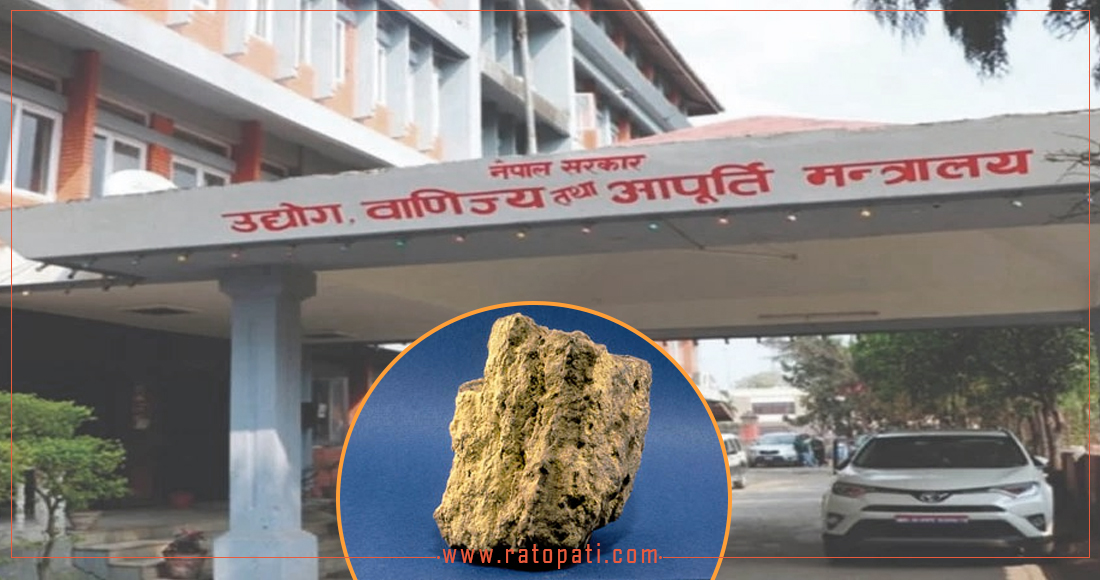
Kathmandu. The government has proposed a new bill to repeal the four-decade-old law related to mines and minerals. According to the proposed bill, only government companies will be allowed to excavate radioactive minerals including uranium.
Furthermore, a policy has been adopted to heavily increase fees and royalties to discourage intermediaries from hoarding mining licenses and to directly revoke licenses if work is not done.
The Ministry of Industry, Commerce and Supplies has made the draft of the 'Bill to Amend and Consolidate Laws Relating to Mines and Minerals, 2083' public and sought suggestions from stakeholders. This bill, brought to replace the Mines and Minerals Act, 2042, clarifies the jurisdiction of the federal, provincial, and local levels in the exploration and excavation of mineral resources.
- Government Monopoly on Uranium Excavation
According to the new mining bill, strict control will be exercised over the excavation and management of minerals of national security and strategic importance. Private sector will no longer be allowed to excavate radioactive minerals like uranium and thorium. Clauses 8 and 32 of the bill clearly state that the right to carry out mineral activities of radioactive minerals shall be vested only in the Government of Nepal and such excavation shall be carried out only through a company wholly owned by the government.
Due to the potential for radioactive radiation to cause serious harm to public health and the environment, strict standards will be set for the safety, storage, and transportation of such mines. Clause 39(4) provides for a fine of Rs 500,000 to Rs 1,000,000 and imprisonment for 5 to 10 years for excavating or causing the excavation of radioactive minerals in violation of the law. Additionally, the government may, by publishing a notice in the gazette, declare any mineral as strategic or tactical and ban its export or use.
- Fine Up to Rs 1 Crore for Excavation Without Permission
The proposed bill provides for a fine of up to Rs 10 million for excavating mines without permission. According to Clause 39, anyone excavating minerals without a license will be fined between Rs 2.5 million and Rs 10 million depending on the nature and quantity of the mineral, while unauthorized exploration work will be fined up to Rs 500,000.
To prevent the trend of excavating more than the permitted quantity of mines in the past, strict provisions have been made in Clause 31. If more is excavated than the annual quantity specified in the license or if the actual quantity is concealed, a penalty of up to 50 times the specified royalty rate for such minerals will be imposed. Machinery, tools, equipment, and vehicles used in illegal mining operations will be confiscated, and obstruction to government inspectors will result in an immediate fine of Rs 10,000.
- Days of Hoarding Licenses Are Over: Licenses Revoked if Work Not Started on Time
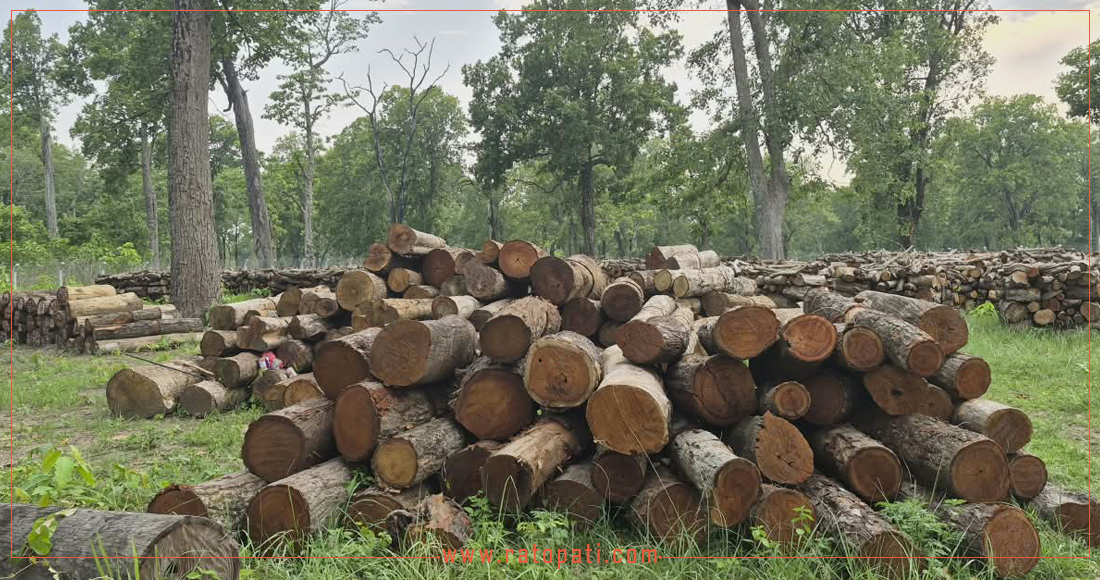
The government has introduced strict provisions to end the practice of obtaining mining licenses but not working and hoarding them for years. According to Clause 20 of the bill, licensed companies must commence exploration work within six months and excavation work within two years. If work is not started within this period without a valid reason, the government may revoke the license.
Similarly, to discourage the practice of holding licenses, the rate of land rent tax has been proposed to increase annually. According to Schedule-5, companies will have to pay Rs 10,000 per square kilometer as land rent for the first year for the area they occupy. This amount will increase every year, reaching Rs 60,000 per square kilometer from the sixth year onwards.
- Right to Stone, Gravel, and Sand Given to Local Levels
The right to stone, gravel, and sand, which has been a subject of dispute for a long time, will now be resolved through the mining bill. Clause 7 of the bill gives the responsibility of managing and issuing permits for ordinary construction minerals (stone, gravel, sand, soil, and slate) to the respective local levels based on an approved environmental study report.
Furthermore, Clause 51 stipulates that 10 percent of the total royalty received from the excavation of large and precious minerals for which the federal government grants permission must be paid to the concerned local level as 'Local Mineral Use Fee'.
- Immediate Halt if Environment is Affected, Compensation Mandatory
As complaints of landslides in villages and drying up of drinking water sources due to mining activities have increased, the bill prioritizes public safety and the environment. If there is a risk of loss of life, property, or land degradation to the general public due to mining activities, the department may order an immediate halt to the work.
If private land, houses, or crops are damaged during excavation, the concerned company must provide appropriate compensation. If an agreement on compensation cannot be reached, the Chief District Officer will assess and ensure compensation within 30 days. The government has also been given the authority to declare sensitive areas as 'prohibited areas' and stop mining operations.
- Significant Changes in Royalties and Fees: What are the Fees for Each?
The proposed bill classifies minerals into three categories: precious, important, and ordinary, and revises the rates of fees, deposits, and royalties.
Under the new system, the royalty for gold has been set at Rs 1,000 per gram and for silver at Rs 10,000 per kilogram. The royalty for precious stones like ruby and sapphire has been proposed at Rs 15,000 to Rs 25,000 per kilogram. The royalty for iron has been set at Rs 200 per ton, for copper at Rs 500 per ton, and for zinc at Rs 15 per kilogram. The royalty for limestone, the main raw material for the cement industry, has been increased from Rs 60 to Rs 75 per ton. For ordinary construction minerals (stone, gravel, sand, soil), a royalty of Rs 100 per cubic meter under a scientifically unified unit applicable across the country, and for natural gas, a royalty of Rs 5 per cubic meter has been set.
Similarly, to prevent the malpractice of obtaining licenses at low cost and selling them at high prices to foreign or domestic large investors, the license fee has been increased hundreds of times. Now, it will cost Rs 150,000 to obtain a license for very small mines and Rs 500,000 for large mines. The deposit required before excavation has also been increased to Rs 600,000 for small mines and Rs 2 million for large mines. If work is not done within the stipulated time, this deposit will be directly forfeited.
This specific news has been automatically translated by AI. As a result, there may be some inaccuracies or language errors.