Supreme Court Orders Development of Homeopathy in Nepal

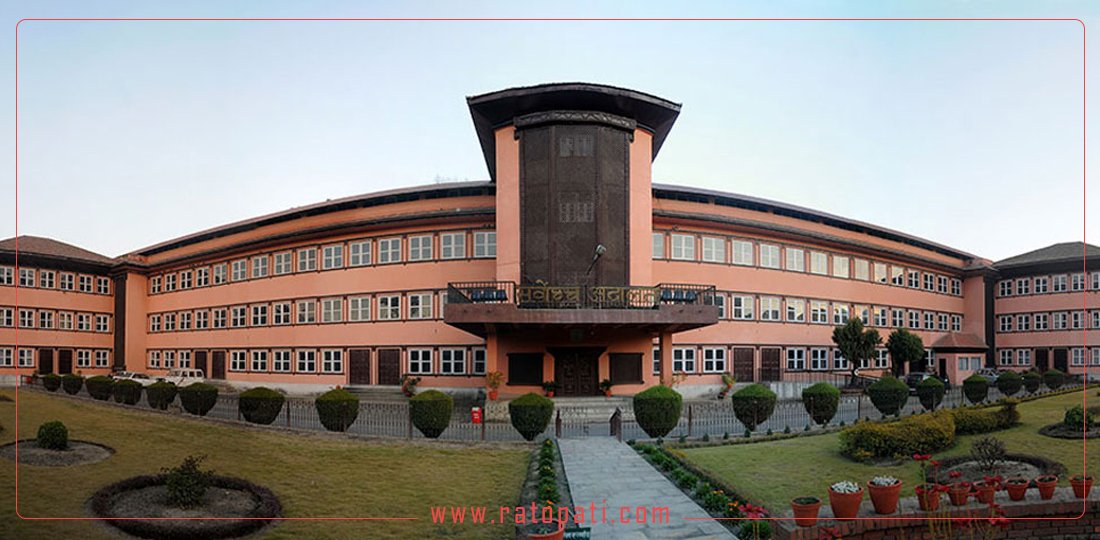
Kathmandu. The Supreme Court has issued a directive order to the government for the development, expansion, and strengthening of the homeopathy medical system in Nepal, respecting the citizen's 'right to choose health'.
A joint bench of Justices Hari Prasad Phuyal and Srikanth Paudel issued a directive order to the government to implement homeopathy in practice, not just in policy, in response to a writ filed by Dr. Khagendra Katuwal.
The court has issued a directive order in the name of the government to create the necessary laws for the formation of a powerful and autonomous 'Homeopathy Medical Council', similar to the 'Ayurvedic Medical Council', for the registration, inspection of the homeopathy medical system, and the creation of a code of conduct for practitioners.
Similarly, it has been stated to upgrade the Pashupati Homeopathic Hospital in Lalitpur to a 'Central Specialized Hospital', establish at least one provincial hospital in each of the seven provinces, and establish homeopathy units in all 77 district health offices.
Furthermore, the Supreme Court has issued a directive order to the Ministry of Health to allocate a separate budget title for homeopathy within the total budget and to arrange for adequate budget and manpower. In the budget for the fiscal year 2080-81, only 0.045 percent of the total budget of the Ministry of Health was allocated for homeopathy. The court termed this as 'extreme indifference' and concluded that service expansion and development are not possible with such a meager budget.
The court has directed to build infrastructure for homeopathy education in universities, support its promotion by including homeopathy in government scholarships, and conduct clinical trials and scientific research on the efficacy of homeopathic medicines and the use of Nepali herbs through the Nepal Health Research Council.
Currently, the registration of homeopathy practitioners in Nepal is done at the Nepal Health Professionals Council, where technicians and radiologists are also registered. The court stated that since homeopathy is an independent and complete medical system, it should have its own separate and autonomous 'Council', which alone can maintain professional dignity and quality.
The court has interpreted Article 35 (Right to Health) and Article 44 (Right to Consumer) of the Constitution in conjunction. Citizens have the right to choose the method of treatment. The government prioritizing only allopathy and neglecting other recognized systems (like homeopathy) is a violation of citizens' constitutional rights.
Similarly, it has been directed to create an environment for collaboration between doctors of both systems in hospitals under the concept of 'Integrated Medicine' to increase coordination between allopathy and homeopathy.
This specific news has been automatically translated by AI. As a result, there may be some inaccuracies or language errors.