Supreme Court Issues Interim Order for Right to Live with Dignity

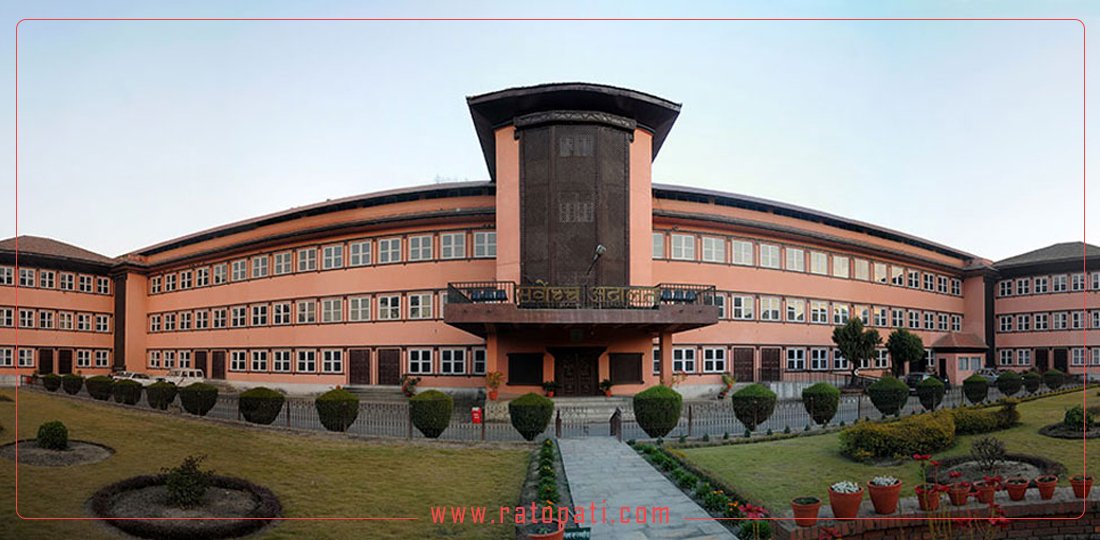
Kathmandu. The Supreme Court has issued an interim order in the name of the government to ensure the constitutional right of citizens to 'live with dignity'. On Jestha 1, a joint bench of Justices Hariprasad Phuyal and Tekprasad Dhungana issued such an order in the case filed regarding practical problems at customs and the harassment given to citizens.
The Supreme Court's order states, '...except for controlling the offense of transporting goods for commercial purposes or smuggling, regarding bringing minimum personal goods for medicines related to the health of the concerned person, goods of minimum necessity used in social relations, and minimum personal goods of local residents of border areas for personal use in accordance with the law, when implementing the said notice, the law enforcement officers shall treat each person with dignity in a manner that is not contrary to the right to live with dignity guaranteed by Article 16 of the Constitution of Nepal. An interim order has been issued in accordance with Rule 49(2)(a) of the Supreme Court Regulations, 2074, directing the respondents. Inform the respondents of this order and proceed as per regulations.'
Advocate Amitesh Pandit and others had filed a writ petition making the Office of the Prime Minister and Council of Ministers and others as respondents. The writ sought an order not to implement the notice published in the Nepal Gazette on 2082/02/15 under Section 13(3) of the Customs Duty Act, 2081, and the practical difficulties raised in its implementation, immediately. Similarly, an interim order was sought to quash the government's decision to set a limit of one hundred rupees, questioning its legality and justification.
However, since the court will consider the legality, relevance, and justification of the government's set limit of 100 rupees only during the full hearing, it has asked to ensure the citizens' constitutional right to 'live with dignity' for now.
Some factual errors were present in the previously published news, which have been corrected - Editor
This specific news has been automatically translated by AI. As a result, there may be some inaccuracies or language errors.