Construction Entrepreneurs Face Crisis Amidst Rising Costs


Kathmandu. Friday, 12 PM. When a team including the President of the Federation of Contractors' Associations of Nepal, Nicholas Pandey, reached the Ministry of Physical Infrastructure, Secretary Gopal Sigdel's office was empty. Secretary Sigdel, who had given the construction entrepreneurs a time of 12 PM for discussion, had gone to the Prime Minister's Office for a discussion.
The entrepreneurs waited in the hall for some time, called repeatedly, but the phone was not answered. Finally, after President Pandey sent a message, the secretary's reply came – 'I am coming to the Ministry of Urban Development, let's meet there.'
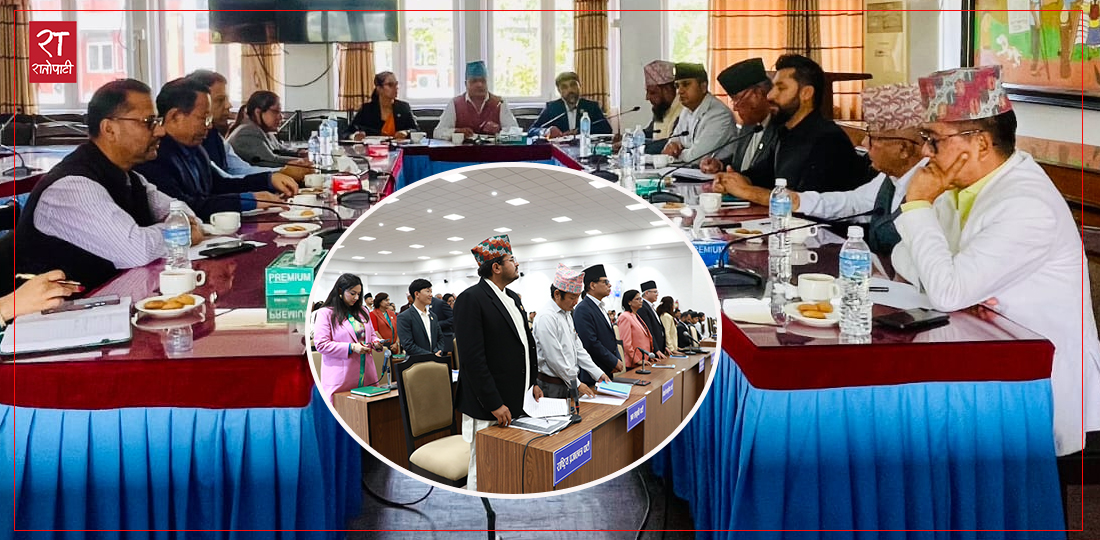
The team of eagerly waiting entrepreneurs hurried to the hall of the Ministry of Urban Development. A small number of journalists were also present. After a short wait, Secretary Sigdel arrived in the hall in a hurry. The construction entrepreneurs appeared happy.
Secretary's first outburst – Remove this camera!
When Secretary Sigdel entered the hall, he was more annoyed by the cameras and journalists present than by listening to the problems of the entrepreneurs – 'Remove this camera from here.' But the entrepreneurs said they would film for internal use. But Secretary Sigdel did not agree.
Then, when some journalists ignored the request and pointed their lenses at Secretary Sigdel, saying 'Film ours only,' he again got angry with the journalists, 'Don't you hear me saying don't film?'
After he repeatedly instructed to turn off the cameras, there was silence for a while. Then the dialogue between the secretary and the entrepreneurs began, and there were not only complaints but also the cry of an entire industry on the verge of collapse.
President Pandey's question – Relief for everyone, why distress for us?
At the beginning of the discussion, Federation President Nicholas Pandey elaborated on the extreme crisis faced by the construction sector. He told the secretary that construction entrepreneurs were the most affected due to the rise in the price of petroleum products caused by the obstruction in the Strait of Hormuz.
'Secretary, we have come many times,' Pandey said in a dejected tone, 'When the price of petroleum increased, transport entrepreneurs increased fares, the rebar industry increased rates, the Oil Corporation increased prices, and the price of bitumen doubled. But for us, neither the rates increased in new contracts nor was the price adjusted in old contracts.'
Explaining how much the entrepreneurs were suffering, Pandey added, 'We are under so much pressure from friends from all over the districts that they are now in a situation where they are leaving their work and going to India. If we work, we don't have money; if we don't, we fear punishment. There is no way for price adjustment in contracts of less than one year.'
President Pandey said that they had to come out in protest because they were in a situation where they could not work. He further said, 'This is not just a construction holiday; it is a situation where work has stopped automatically because we cannot work. Roads cannot be built without diesel and bitumen, and local governments have blocked the supply of stones and sand. How can we work?'
Secretary Sigdel's confession: I am an employee, I also have limitations
After listening patiently to the entrepreneurs, Secretary Gopal Sigdel stated some serious realities. He admitted that the problem was complex and indicated a weakness in the government mechanism as well.
'The ministry and the minister are also serious about the issues you have raised,' said Secretary Sigdel, 'But one thing is true, when the government uploaded bid documents against the law yesterday, you should have also spoken up. Mistakes were made, and our departments did not pay attention.'
He argued that price adjustment according to the contract would not be possible.
Furthermore, regarding the entrepreneurs' demand for issuing a circular, the secretary clarified his limitations. Secretary Sigdel said sternly, 'You say that the secretary should write a letter, but I am an employee. I also have my limitations. This is a difficult situation for the entire country, and the government has to make a collective decision on this.'
Regarding the extension of the deadline, the secretary added, 'The authority to extend the deadline lies with the Project Manager according to the contract. I cannot write 'extend everyone's deadline,' as it would be against the principles of the contract. However, I agree that this is an extraordinary situation, and the state must consider something.'
8 Thousand Contracts at Risk of Collapse
Towards the end of the discussion, the entrepreneurs said in a warning tone, 'If the problems of price adjustment and payment are not resolved before the budget on Jestha 15, about 7 to 8 thousand small contracts across the country will completely collapse.'
The entrepreneurs, who went to the Ministry of Physical Infrastructure considering it their 'guardian', appeared somewhat reassured after the secretary's response, but the 'drought' in the construction sector is still showing no signs of ending until a concrete solution is found. As they left the hall of the Ministry of Urban Development, the same question was still on the faces of the entrepreneurs – Will the state really look after us now?
Second Stop: Lament at the Ministry of Irrigation
After the discussion with the Secretary of Physical Infrastructure, the entrepreneurs' team reached the Ministry of Energy, Water Resources, and Irrigation. There, they met Water Resources Secretary Sarita Dwadi and shared their pain. President Pandey stated that the projects across the country have been halted due to the significant increase in the prices of diesel, kerosene, and bitumen due to the war in the Middle East.
Federation General Secretary Shivahari Ghimire mentioned that due to the adverse circumstances, entrepreneurs have had to observe a 'construction holiday' voluntarily. He said, 'It is not that we do not want to work; it is that we are in a situation where we cannot work. The deadline for projects that could not be completed should be extended, and the burden of expenses should not fall on the entrepreneurs.'
The entrepreneurs also expressed anger, stating that government employees often remove the provision for price adjustment in the Public Procurement Act during contract negotiations.
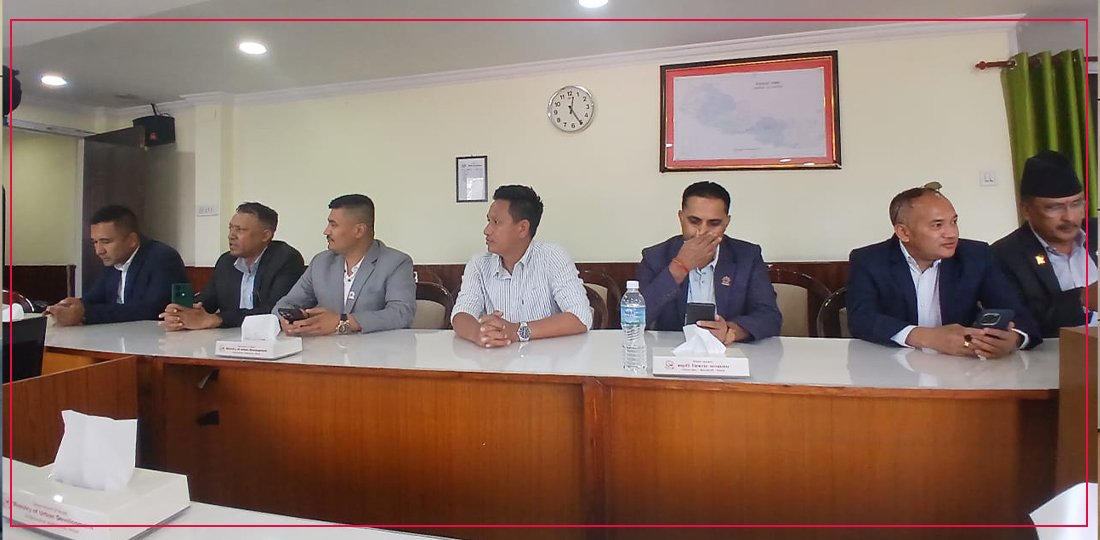
'Project chiefs threaten to blacklist'
The entrepreneurs also raised a serious issue at the ministry – mental stress. They complained that they were greatly harassed by the threats of project chiefs to blacklist them or confiscate their bank guarantees due to significant losses incurred while working and the fear of punishment for stopping work.
President Pandey said that project chiefs and engineers are intimidating construction entrepreneurs. 'Work at all costs, you won't get price adjustment, and if you don't work, I will confiscate your bank guarantee and blacklist you,' Pandey said, describing the threatening letters being written. He mentioned that due to such pressure, some entrepreneurs feel insecure and are in a situation to leave Nepal.
They warned that the collapse of this sector, which contributes 13 to 14 percent to Nepal's economy and involves more than 2 million workers, would cause great damage to the state itself.
Ray of Hope: Secretary Dwadi's Assurance
Compared to Secretary Sigdel of Physical Infrastructure, Water Resources Secretary Sarita Dwadi appeared somewhat more positive. She stated that the ministry is serious about the problems of the entrepreneurs.
'This is indeed an adverse situation. We are also discussing with the secretaries of the Ministry of Finance and other ministries,' she said, 'The process of amending the Public Procurement Regulations is also moving forward. We will find a way out in consultation with you.'
However, the entrepreneurs also complained that they were not invited to the discussions for the second amendment of the Public Procurement Act.
Claim of being forced to sign contracts against the law
The Public Procurement Act clearly provides for automatic price adjustment in contracts of more than one year and adjustment if the price increases by more than 10 percent in contracts of less than one year. However, Pandey alleged that project chiefs have snatched the rights of entrepreneurs by making them write 'Not Applicable' in the contract documents. He claimed that entrepreneurs were forced to sign against their will by showing the fear of being blacklisted or having their deposits confiscated if they did not sign.
The Federation has put forward three main demands to the government. They demand immediate price adjustment for the work done so far, extension of the deadline considering the inability to work with compensation, and a decision on deadline extension before the upcoming budget speech with budget assurance.
President Pandey said that entrepreneurs are facing further hardship because the 'index' for oil has been removed from the contract, even though the prices of petroleum products have increased. He argued that work cannot proceed because the price of oil is not adjusted even though the rates of other materials have increased. He clarified that entrepreneurs from all 77 districts and seven provinces have submitted memorandums to the respective offices, and work cannot resume until this problem is resolved.
This specific news has been automatically translated by AI. As a result, there may be some inaccuracies or language errors.