Justice Manoj Kumar Sharma Nominated for Chief Justice Amidst Controversy


Kathmandu. Dr. Manojkumar Sharma, who was recommended for the post of Chief Justice of the Supreme Court by the Constitutional Council on last Baisakh 24, has not been attending the court sessions recently. After the Judicial Council sent a list of 6 names, the Constitutional Council meeting recommended Justice Sharma, who was in fourth priority, for the post of Chief Justice, following which a full court meeting of all Supreme Court justices was held on Baisakh 25.
In the full court meeting, Sharma had said, 'I am unable to hear cases today' and left. Since that day, Justice Sharma has not drawn lots to sit in the bench. Although Sharma has been attending the court after the meeting, he has not been sitting in the bench.
According to sources, the justices were divided in the full court meeting regarding the recommendation. Some justices argued that the constitutional provision states that any justice who has completed three years in the Supreme Court is eligible for the post of Chief Justice, and the recommendation made accordingly cannot be faulted.
After being recommended for Chief Justice, Justice Sharma was unwilling to sit in the bench under the leadership of Acting Chief Justice Sapana Pradhan Malla. According to sources close to him, Justice Sharma has now decided to sit in the bench only after being appointed as the Chief Justice.
The Parliamentary Hearing Committee had already called for objections against Sharma, who was recommended for Chief Justice, last Friday.
After the full court meeting turned into an exchange of barbs among the justices, Sharma attended but did not sit in the bench, waiting for a conducive environment. Since that day, Sharma has not heard any cases. After attending court, he has been working on pending judicial tasks in his chamber.
The Parliamentary Hearing Committee had already called for objections against Sharma, who was recommended for Chief Justice, last Friday. So far, five complaints have been filed against Sharma in the committee. The call for objections, with a deadline of 10 days, has been extended until Jestha 4. A committee meeting has been called for Jestha 5. After that, the complaints will be heard. If the proposal for Chief Justice is passed by the parliamentary hearing, President Ramchandra Paudel will appoint him.
- How will Sharma manage his fellow justices?
There is significant interest in how Sharma, who has not been attending the bench after disagreements among senior justices in the Supreme Court's full court meeting following his recommendation for Chief Justice, will proceed after being appointed Chief Justice. After Sharma was recommended for Chief Justice, Acting Chief Justice Sapana Pradhan Malla, and justices Kumar Regmi and Hari Prasad Phuyal are in no mood to resign in the current situation.
Two days after being recommended for Chief Justice, Acting Chief Justice Malla urged her fellow justices not to be disturbed in public on the occasion of Law Day. With the top three justices in the seniority order not resigning in this situation, questions have arisen as to how Sharma will coordinate with his fellow justices if he is appointed Chief Justice.
He clarified that there is no compulsion for those ahead in seniority to resign after Justice Sharma, who is fourth in seniority, was recommended for Chief Justice.
Senior Advocate Purna Chandra Poudel says that the Acting Chief Justice's statement on Law Day was not appropriate. According to him, it is a matter of concern that the Acting Chief Justice, who should create a harmonious environment in the judiciary, has not been able to do so.
'The impact of this will be seen in the judiciary's justice delivery, such as cases not being scheduled, benches being boycotted, and people's cases not being heard,' said Senior Advocate Poudel. 'This is a serious crisis for the judiciary.'
He clarified that there is no compulsion for those ahead in seniority to resign after Justice Sharma, who is fourth in seniority, was recommended for Chief Justice. He said, 'After the Constitutional Council recommended Justice Sharma for Chief Justice, they should have been able to say, 'Now you take charge.' That could not happen.'
Senior Advocate Poudel believes that there is no alternative but for everyone to work together to create a conducive environment in the judiciary, not an uncomfortable one.
- Rastriya Swatantra Party has a clear majority in the Parliamentary Hearing Committee, making Sharma's path easier
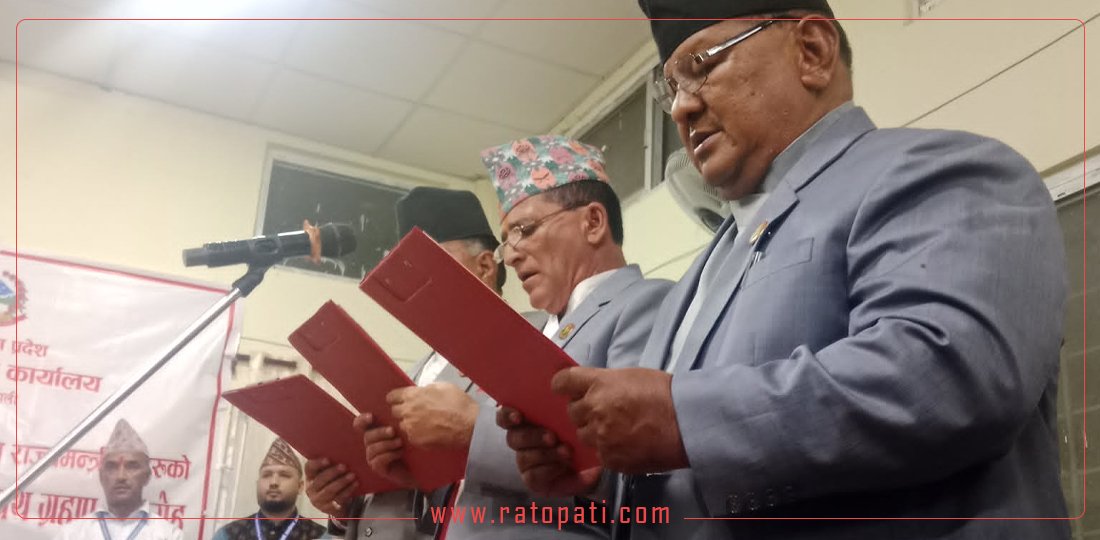
Although the Constitutional Council recommended him for Chief Justice, the appointment will only be made after the Parliamentary Hearing Committee approves it. Article 292, Sub-article (1) of the Constitution states that before being appointed to the post of Chief Justice, Supreme Court Justice, member of the Judicial Council, head or official of a constitutional body, and ambassador, a parliamentary hearing shall be conducted in accordance with federal law.
According to the constitutional requirement for approval by the 15-member Parliamentary Hearing Committee, after the complaints against proposed Chief Justice Sharma are heard, he will present his future work plan. After discussion on Sharma's work plan, if the Parliamentary Hearing Committee approves it, the path to appointment as Chief Justice will open.
If the council's decision is not approved by the parliamentary hearing, the recommendation will be canceled, and another person will have to be recommended for Chief Justice.
Looking at the arithmetic of the Parliamentary Hearing Committee, with Rastriya Swatantra Party alone having 8 members, Sharma's name is likely to be approved by a simple majority.
The Parliamentary Hearing Committee is required to conduct a hearing on the recommendation from the council within 45 days. The parliamentary hearing provision has been included in the constitution to test the competence, capability, and integrity of the person proposed for appointment to a public post of importance by the executive, and to make the executive accountable and responsible to the legislature.
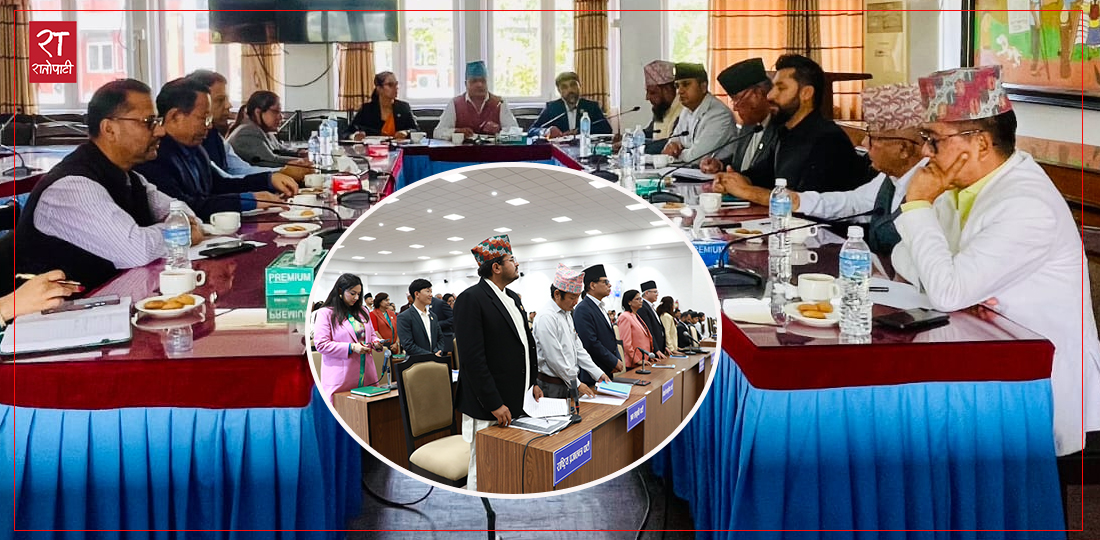
The Parliamentary Hearing Committee functions according to the Rules of Procedure of the Federal Parliament's Joint Meeting and Joint Committee (Operation), 2080. The working procedure for conducting committee meetings states that a minimum of 51 percent, i.e., 8 members, must be present to form a quorum. However, to reject the proposal from the council, a two-thirds majority, i.e., 10 members, is required. To decide in favor of the proposal, the name can be approved by a simple majority of the total number of members, i.e., 8 members.
Looking at the arithmetic of the Parliamentary Hearing Committee, with Rastriya Swatantra Party alone having 8 members, Sharma's name is likely to be approved by a simple majority. The legal provision states that the committee can reject the proposal only with a two-thirds majority; otherwise, it will be considered passed.
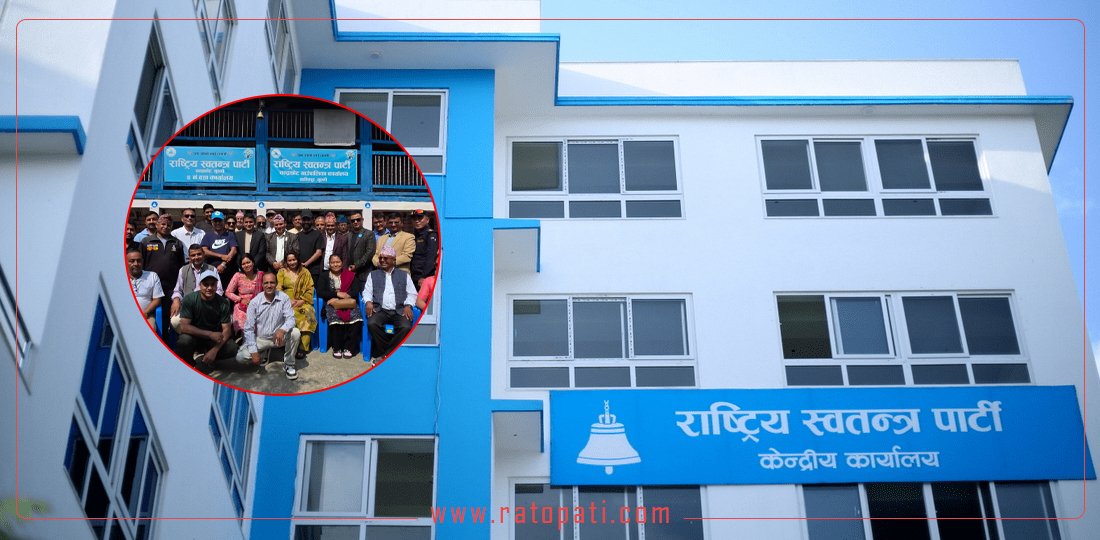
The Parliamentary Hearing Committee has 8 MPs from the ruling Rastriya Swatantra Party, including the chairman. There are 3 members from the Nepali Congress, 2 from UML, and 2 from the CPN. Although the Rastriya Swatantra Party and the opposition parties will have an equal number of 7 members each in the committee, the ruling party will have a majority when the chairman votes.
From the Rastriya Swatantra Party in the Parliamentary Hearing Committee are House of Representatives members Kabindra Burla Koti, Gajala Shamim Mikrani, Lekhjung Thapa, Deepakraj Bohora, Punam Kumari Agarwal, Madhukumar Chaulagai, and Rajiv Khatri. Similarly, from the Congress are parliamentary party leader Bhishma Raj Angdembe, Arjun Narsingh KC, and Anand Prasad Dhungana. Dhungana is a National Assembly member. From UML are Padmakumari Aryal and Prem Prasad Dangal, and from the CPN are Barshaman Pun and Narbahadur Bisht. Dangal and Bisht are National Assembly members.
This specific news has been automatically translated by AI. As a result, there may be some inaccuracies or language errors.