MP Calls for 'Right to Recall' and Parliamentary Reforms


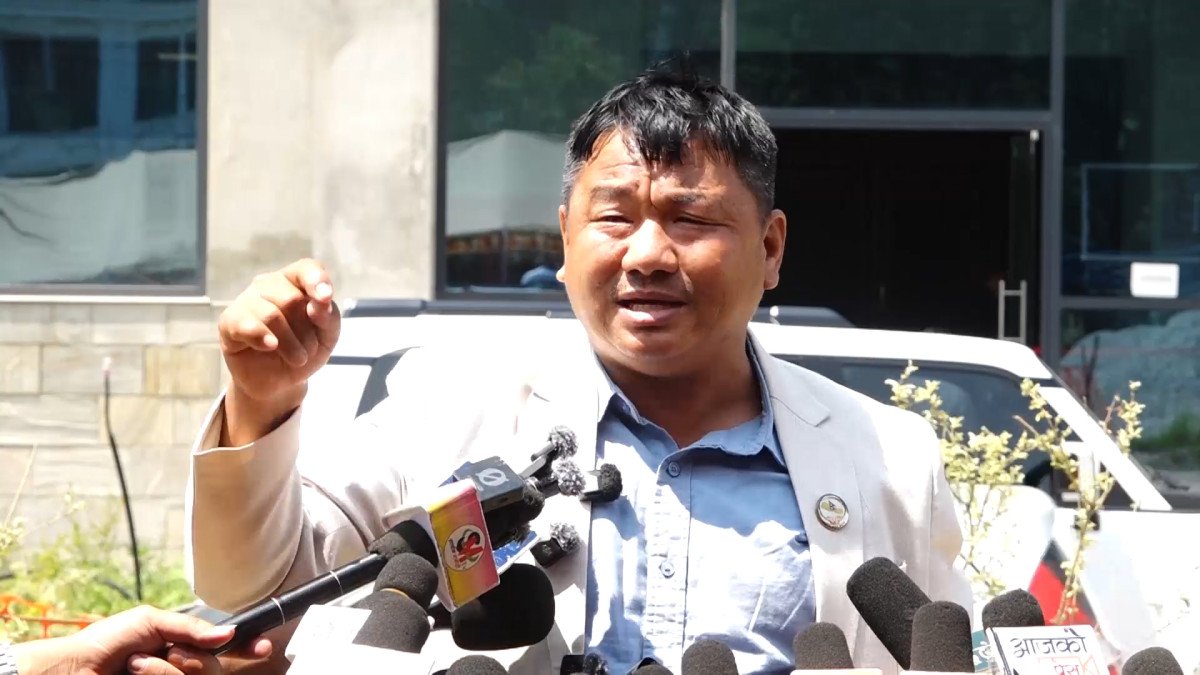
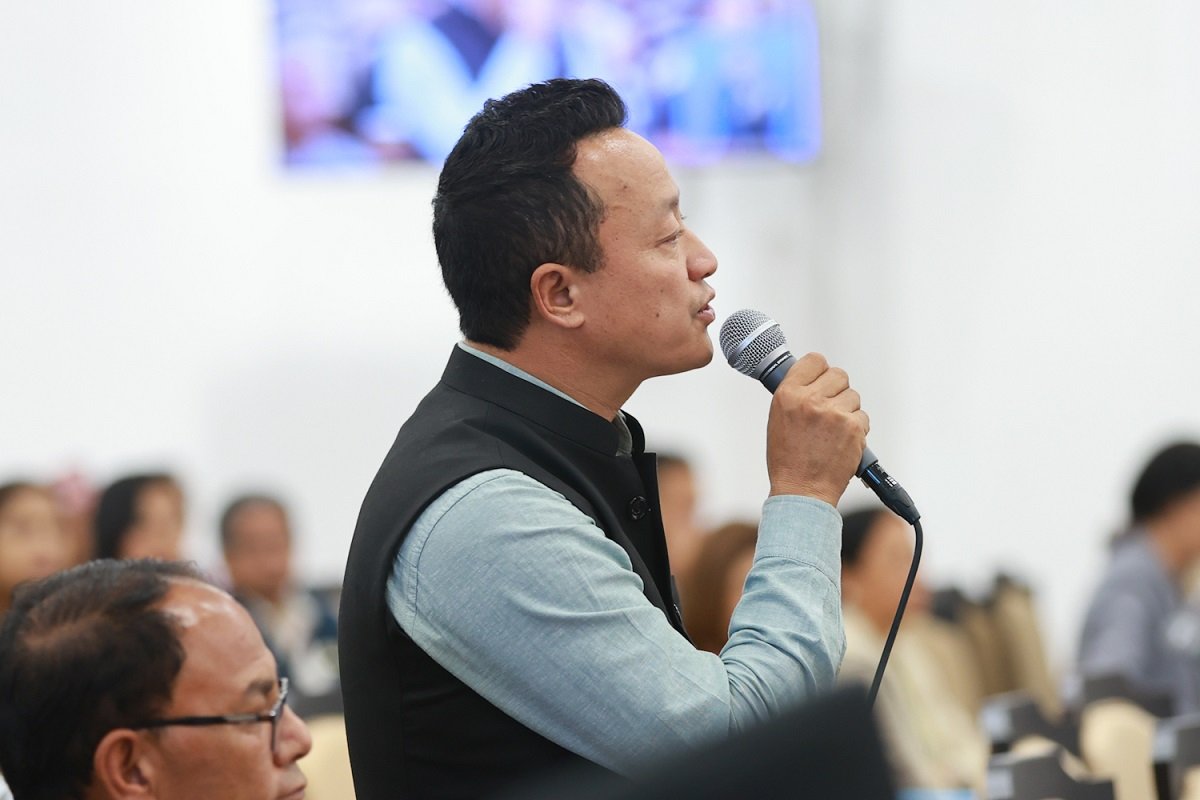
KATHMANDU. National Independent Party (NSP) MP Bipin Kumar Acharya has suggested the government prioritize the 'Right to Recall' system, allowing the removal of elected representatives who fail to meet public expectations before their term ends. Acharya made this suggestion to the government during a parliamentary discussion on the government's policy and program on Wednesday.
"Prioritizing democratic accountability, let the government's policy and program give high priority to the structural and policy arrangements necessary to institutionalize the concept of 'Right to Recall,' enabling the public to recall elected representatives who fail to meet public expectations before their term ends," Acharya said.
Meanwhile, amidst widespread criticism over Prime Minister Balendra (Balen) Shah's attire in parliament, Acharya explained it as a break from tradition.
He said, "The sports shoes worn by the Honorable Prime Minister in parliament may seem cool to some, while to others, it is a direct attack on parliamentary values and norms. Some may feel that the questions raised during the discussion on the government's annual policy and program must be answered by the Honorable Prime Minister himself, and this is a parliamentary tradition, while others may see it as a break from tradition."
Here is Acharya's statement-
Honorable Speaker,
As individuals, we may have our own values and beliefs. In a parliament with such diversity in age groups, there can be differences in the thinking of every sovereign member of parliament. The sports shoes worn by the Honorable Prime Minister in parliament may seem cool to some, while to others, it is a direct attack on parliamentary values and norms.
Some may feel that the questions raised during the discussion on the government's annual policy and program must be answered by the Honorable Prime Minister himself, and this is a parliamentary tradition, while others may see it as a break from tradition.
Therefore, established methods and procedures are always superior. If the opposition party members feel that the Honorable Prime Minister, who has exercised the authority granted by the House of Representatives Regulations, has not been accountable to the sovereign parliament, they should know that they have a legal path under Rule 56 of the House of Representatives Regulations to ask the Prime Minister direct questions in parliament.
Did the activities of the opposition party friends, which created a compelling situation to postpone the parliament without using that option and going outside the established procedure, prove that they are accountable to the sovereign parliament and the public? I am making this statement because the proper implementation of policy is linked to intention. Let our intentions be correct for the success of the policy and program of the entire country.
Now, some suggestions on the policy and program presented by the government.
Honorable Speaker,
There is no doubt that the primary and supreme responsibility of the legislature is to formulate policies and laws. But our current practice is not that. Except for a few, the real 'steering' of lawmaking is in the hands of the bureaucratic structure of the ministry, not in parliament. We, the members of parliament, are only in the role of responding to and amending those drafts.
If parliament is truly the supreme body for policy-making, let's change the procedural structure of lawmaking itself. Let this policy and program also pave the way for a system where the 'origin' of policies and laws comes from parliament and members of parliament, and ministries provide their opinions or amendments on the challenges of implementation or technical matters.
Can the real practice of separation of powers and parliamentary supremacy be achieved unless members of parliament are in the 'driving seat' of policy-making?
Honorable Speaker,
Billions are spent directly and indirectly by the state to conduct a federal election. The importance of policy-making by the members of parliament, who carry the responsibility for the future of millions of citizens, is more than trillions. However, why is the state hesitant to invest in the professional development and capacity building of members of parliament who carry such a huge responsibility? The reality is that almost every member of parliament needs a lot of help in policy, legal, and multifaceted issues.
If the opposition party members had been clearly taught about the regulations, perhaps the parliament would not have been adjourned yesterday? Therefore, let the policy and program include investment in the professional development and capacity building of members of parliament to make them capable. And the first investment should be made by providing parliamentary secretaries to the members of parliament.
Honorable Speaker,
The sovereign parliament is the supreme forum where the voice of the citizen resonates. Some issues raised here may be political maneuvers, but most issues are directly related to the direct concerns of the citizens. There is no mechanism yet to show whether the state has addressed the serious issues raised by the citizens' representatives in this supreme forum, and if not, why not. Both members of parliament and citizens should transparently know the accounting of the questions raised in parliament.
Therefore, this time, the policy and program should include the creation of a 'digital dashboard' where ordinary citizens can directly track which member of parliament raised what issue, to whom they drew attention, and what action was taken.
Honorable Speaker,
Prioritizing democratic accountability, let the government's policy and program give high priority to the structural and policy arrangements necessary to institutionalize the concept of 'Right to Recall,' enabling the public to recall elected representatives who fail to meet public expectations before their term ends.
Many of us have repeatedly said that the tendency for 'notes' to work but 'votes' not to work must end. The time has come to transform this slogan into practice. According to the Local Election Act, the local elections are about 300 days away.
Let us commit in this year's annual policy and program to advance the development of a voting system that ensures the right to vote for Nepalis scattered across the world as a national pride project. We no longer have the luxury of depriving those whose sweat sustains this country's economy of the right to choose the country's leadership.
Let the government adopt a policy this time to allocate capital budgets solely based on the mathematical weight of the 'infrastructure needs index,' ending political influence and discretionary power. The selection of every project and the expenditure system should be made fully transparent by linking them to a public digital dashboard.
Let a policy be made to implement a 'time card system' to ensure that all types of government services received by citizens are provided within the stipulated time. Furthermore, let the policy and program include the development of a performance-based accountability mechanism by strictly monitoring employees who cause delays in service delivery and shirk responsibility.
To make investigations by state mechanisms more responsible, the policy and program should also include provisions for the state to provide mandatory compensation if it is proven that an innocent person was imprisoned due to malicious or false prosecution, and to hold the officer responsible for such false prosecution legally accountable.
Nepal, moving towards a digital economy, must now rise above traditional '?' or 'NPR'. I seriously draw the government's attention to creating Nepal's own 'currency unicode symbol' that reflects Nepal's originality and modernity on the world map, just like the Dollar, Euro, and Indian Rupee ₹.
And, finally, are we not getting lost in the fog of the words 'Honorable' and 'Respected'? If the Honorable understands that they are servants of the public and the Respected understands that they are chief servants, would that not preserve humility and respect among us? Thank you.
This specific news has been automatically translated by AI. As a result, there may be some inaccuracies or language errors.