Judiciary Faces Disruption Due to Judicial Council's Recommendation


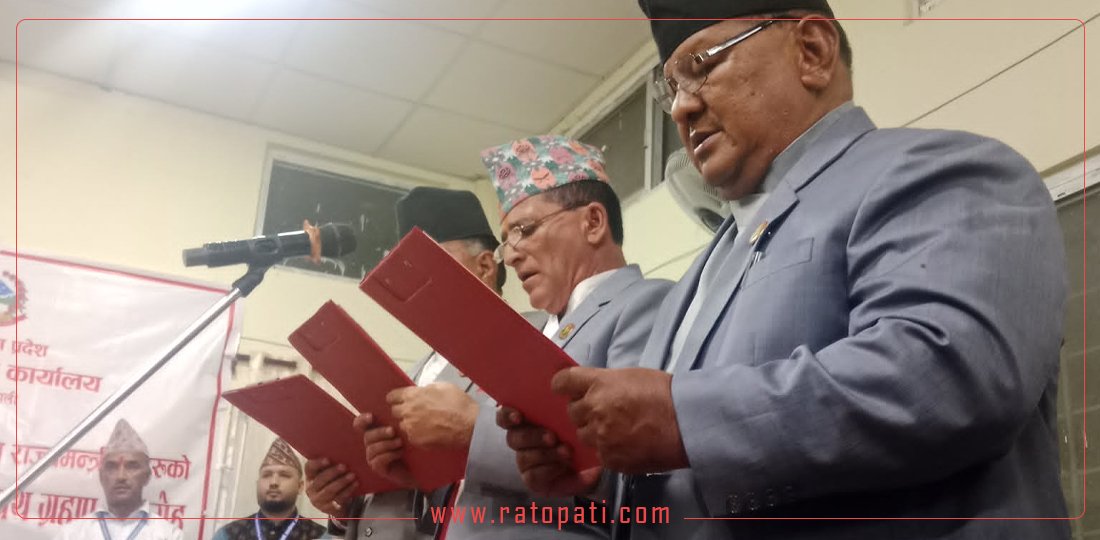
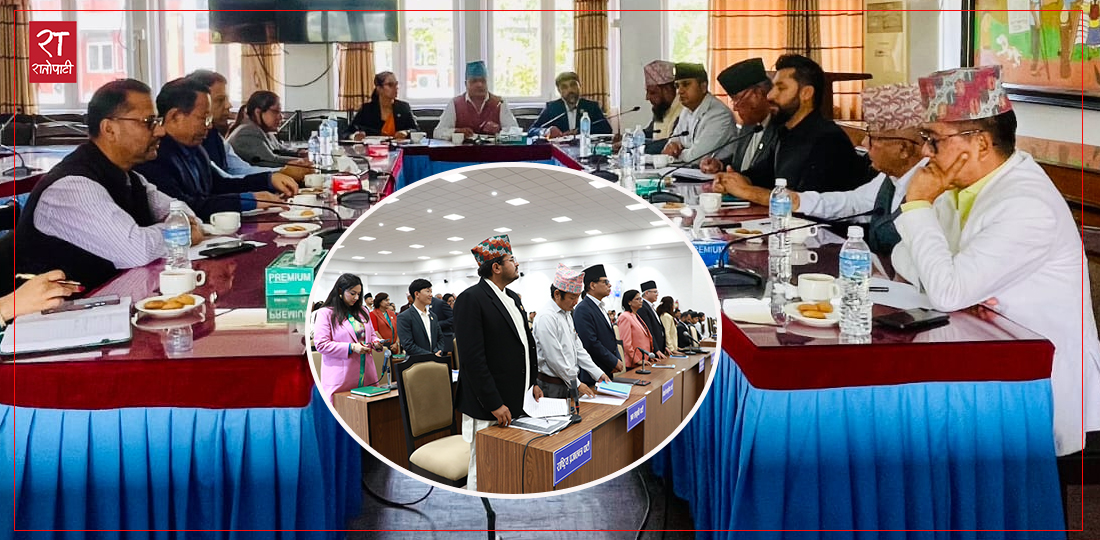
Kathmandu. The judicial process in the Supreme Court has started to be affected after the Constitutional Council recommended a Chief Justice by going beyond seniority. The judiciary has been affected by the Constitutional Council meeting bypassing the first-ranked judge Sapana Pradhan Malla, second-ranked Kumar Regmi, and third-ranked Hariprasad Fuyaal among the six judges sent by the Judicial Council and recommending fourth-ranked Dr. Manojkumar Sharma for the Chief Justice. With the recommendation of the Chief Justice, a front has appeared among the Supreme Court judges. Its direct impact has been seen in two cases from the Constitutional Bench recently. Legal experts argue that if the current strained relationship between the government and the judiciary persists, the conflict will escalate and directly impact the judicial process of the Supreme Court in the future. Senior Advocate Dr. Surendra Bhandari says that the state of tension between the executive, judiciary, and legislature, where there should be separation of powers and checks and balances, is not a good sign. He said, 'If this dispute is not resolved quickly, it will have a long-term impact on the judiciary.' He argues that its direct impact on judicial process and case hearings needs to be analyzed. Senior Advocate Purnachandra Poudel says that the recent public statement by the acting Chief Justice and the recent order from the Supreme Court have visibly increased the conflict between the three organs of the state. He said, 'It is not a good sign to see its impact in the judiciary.' He added, 'If the current conflict persists, a major crisis will appear in the judiciary and the judicial process will be affected.' Senior Advocate Poudel argues that if the conflict between the judiciary and the executive and legislature escalates, it could even lead to the impeachment of Supreme Court judges. He said, 'Its impact is seen in the judicial process of the judiciary, and it can lead to situations where benches are not formed, benches are boycotted, and people's cases are not heard.' He added, 'This means a serious crisis for the judiciary.' Poudel said that if public accusations and counter-accusations between the judiciary and the government start, the public's trust in the justice system will be broken. He said, 'Citizens will start to feel that the court also works under political pressure, which is considered fatal for democracy.' The collection of burnt case files due to the arson at the Supreme Court after the Gen Z movement is still incomplete. The hearing of cases has been postponed for 6 months due to the time taken to collect the files. In this situation, where it is already difficult to get a hearing, if the strained relationship between the government and the judiciary continues, the hearing of more than 22,000 cases could be affected. Advocate Anantraj Luintel said that the judiciary should be kept out of power and political influence, but the clash of powers seen in the judiciary may force judges to think before making decisions. He said that if the current situation continues for a long time, the dignity and respect of the judiciary will diminish. According to Luintel, if power centers and political parties threaten judges with impeachment or exert other pressures, an environment will be created where judges cannot make independent and fearless decisions. He said this could directly affect the judicial process and impact justice. According to him, the internal unity of the judiciary is weakened when the executive or power centers try to create factions among judges for their own interests. He argues that when judges are divided, it affects the writing of judgments, and a long time can be spent on a subject, leading to a lack of judicial process. He said, 'When judges are divided, the entire justice system becomes chaotic. The government is responsible for implementing the judgments made by the court.' He added, 'If the relationship between the government and the judiciary remains cold, the government may become hesitant or defiant in complying with court orders.' He said this would make court orders merely 'paper tigers'. The psychological impact on employees due to political interference and disputes in the court also affects them. This creates confusion in administrative tasks such as case registration, hearings, and execution of judgments, leading to unnecessary delays in judicial process, according to Advocate Luintel. Similarly, the tendency of the government or other bodies not to comply with orders or judgments given by the court (e.g., operating bulldozers despite a stay order) can challenge the 'rule of law,' he said. He said, 'The non-compliance of orders means the emergence of terrible anarchy in the country instead of the rule of law.' He added, 'An independent judiciary is the backbone of democracy. Constant attacks and interference in the judiciary ultimately put human rights, the rule of law, and the entire democratic system at risk.' Luintel said that this could push the country towards authoritarianism and autocracy. He said, 'The judiciary has the right to interpret the constitution, but the conflict with the parliament and the government can lead to political color being mixed in the interpretation of constitutional provisions, creating a constitutional crisis.' He added, 'In the past, when former Chief Justice Cholendra Shumsher Rana bargained with the government and lawyers went on strike for 100 days alleging factionalism within the judiciary, the hearing of thousands of cases became uncertain. If a similar strained situation arises now, it will be a blow to the citizens waiting for justice.' How did the judiciary's dispute come to the surface? After the Constitutional Council recommended Dr. Manoj Sharma as Chief Justice, acting Chief Justice Sapana Pradhan Malla indirectly protested the Constitutional Council's decision in her speech at a program organized by the Supreme Court on the occasion of Law Day on April 26, Saturday. She warned, 'It cannot be said that the tiger that eats one will not eat another. The operator concerned with the constitution cannot be adorned by distorting the constitution.' She stated that the constitution cannot be faithfully implemented unless those who violate it are held accountable. She sharply criticized that the judiciary cannot remain silent when the constitution is violated with the power of two-thirds majority. Pradhan urged the judges to focus on judicial work without fear of two-thirds majority and impeachment. She warned the executive indirectly, saying her fight was not over yet. The President, Speaker, and Chairman of the National Assembly were present at the program, but the Law Minister was not present on behalf of the government. After the statement made by acting Chief Justice Pradhan on Saturday, a majority of judges in the Supreme Court's Constitutional Bench, including her, Kumar Regmi, and Hariprasad Fuyaal, ordered not to immediately implement the provision of the ordinance to remove trade unions in the civil service. Dissenting, judges Sharanga Subedi and Binod Sharma opined that a short-term interim order should not be issued. Judges Sharma and Subedi agreed with the show-cause order issued by the acting Chief Justice but disagreed with issuing a short-term interim order. Judges Sharma and Subedi raised the issue of whether that dispute should come before the Constitutional Bench, and if so, whether an interim order should be issued without hearing both parties. The judges expressed a dissenting opinion as they could not agree with the three judges. The opinion was also divided in another matter in the Constitutional Bench. In a dispute where a law passed by the Sudurpashchim Provincial Assembly conflicted with a federal law, three judges issued a short-term interim order. In that case too, judges Sharma and Subedi expressed a dissenting opinion. Not only in the Constitutional Bench, but a joint bench including Kumar Regmi, who is in the second list of seniority in the Supreme Court, issued an interim order against the Balen government's decision to remove the slum settlements. Gopal Ranpheli, Senior Advocate Dinesh Tripathi, and Majid Ansari, among others residing in the slum settlements, filed a writ in the Supreme Court against the government's decision. In that writ, a bench of judges Kumar Regmi and Nityananda Pande sought a response from the government last Friday and issued an interim order not to remove the slum dwellers without management. The order stated, 'Considering the irreparable damage to the rights to education, health, and housing and the potential humanitarian crisis that may arise from displacing slum dwellers and disorganized residents from their places of residence and removing them from management without proper legal process...' Similarly, the Supreme Court has also become an obstacle to the decision to abolish the SWO. The government decided to abolish student organizations through an ordinance. Against this, eight student organization leaders, including Deepak Dhami, filed a writ in the Supreme Court. In that writ, a single bench of judge Shrikant Poudel issued a short-term interim order not to abolish the student organizations.
This specific news has been automatically translated by AI. As a result, there may be some inaccuracies or language errors.