Rastriya Swatantra Party to Hold First General Convention in Chitwan

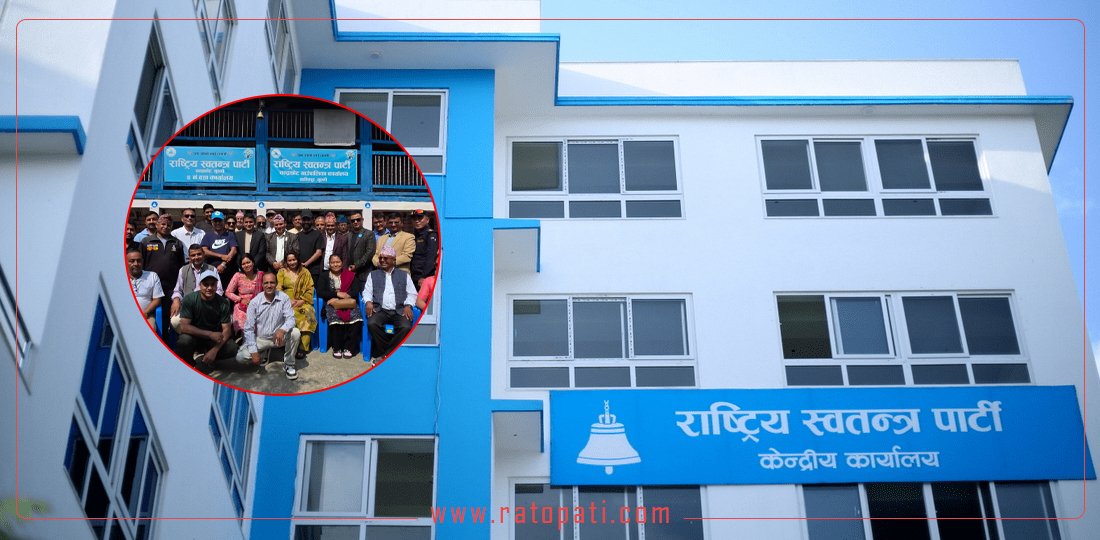
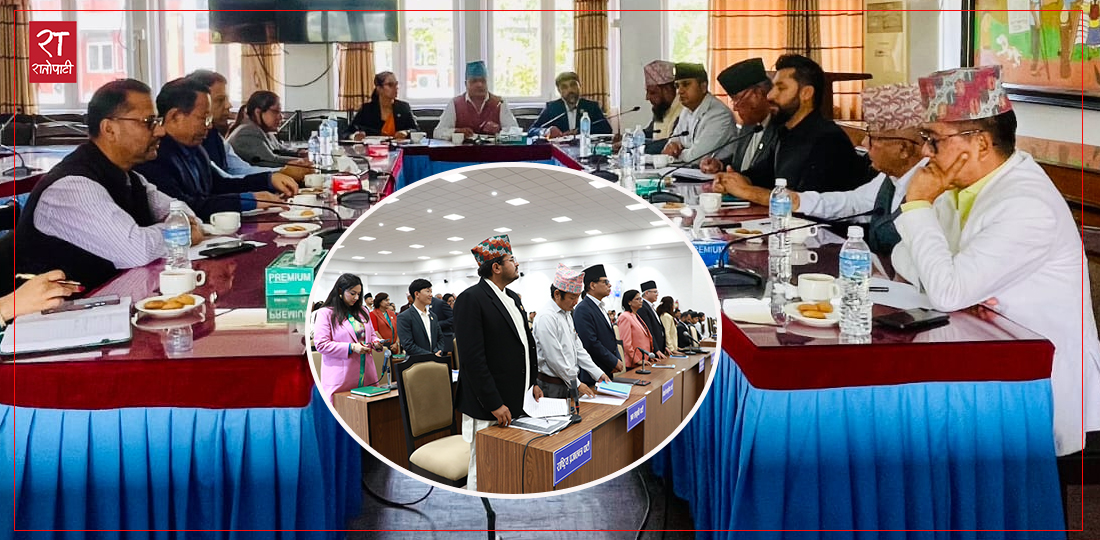
Kathmandu. The ruling party Rastriya Swatantra Party (RSP), which has received massive public support within four years of its establishment, has decided to hold its first general convention in Chitwan from Ashar 7-9. The central committee meeting held at the central office in Vanasthali on Wednesday decided to hold the general convention coinciding with the party's establishment day. The meeting decided to form a main organizing committee for the general convention under the convenership of Chairman Rabi Lamichhane. The RSP has formed various committees to make the general convention grand and organized. Deputy General Secretary Bipin Kumar Acharya has been given the responsibility of coordinating the convention. The meeting approved the General Convention Procedure, 2083, prepared by the committee under the convenership of General Secretary Kabindra Burlakoti, to conduct the general convention in an organized manner. Another General Secretary Bhupdev Shah's convenership of the Unity Adjustment Committee and Deputy General Secretary Acharya's convenership of the Statute Drafting Committee have been instructed to submit their drafts by Jestha 10. Party leader Prakash Chandra Pariyar said that the historic first general convention of the party will be grand and will make full use of technology.
"It is not a small matter to complete the national convention with grandeur. Moreover, the ruling party is going to hold its convention on its establishment day. We will work hard to make it short but comprehensive. Efforts will be made to make it grand by using digitalization, technology, and manpower," said Pariyar.
Deputy General Secretary Bipin Kumar Acharya said that although the general convention procedure was approved by the central committee meeting, it has not yet been finalized. He said that the convention operation procedure will be formulated based on the amendment of the statute, as the work of amending the statute is still pending.
"We estimate that about 2500 representatives will participate in the general convention. The existing central committee has automatically transformed into the general convention organizing committee. How to select the remaining representatives? How many will participate? How to organize them will be in the procedure," he told Ratopati.
Clarifying further regarding the procedure, he said, "The procedure prepared by the committee under the convenership of General Secretary Kabindra has been approved by the meeting, but it is not yet finalized. Since some things can only be clearly outlined after amending the statute, homework is being done."
The RSP had united with the Bibeksheel Sajha, Balen group, Tharuhat/Tharuwan, and various Gen Z groups before the elections held in Falgun. Acharya informed that the process of selecting leadership for the general convention will be carried forward with fair competition.
"This is the first time we are going to hold a national convention. The party, which started small four years ago, has established itself as a mainstream political party with massive public support through hard work," he said, "Our goal is to build a cultured party based on rules, regulations, and procedures. Perhaps rules were violated in some places during the party's construction, and procedures may not have been followed in some places. Now we are working to ensure that no one can violate the rules, regulations, and procedures."
According to Acharya, the political document, statute, and procedure will be prepared based on the provisions in the interim statute, regulations, procedures, and manifesto. The general convention schedule has been set to complete the conventions of the ward, municipality, district, and province by Ashar 1.
Jestha 3 - Ward Convention (for wards where committees were formed before Baisakh 20)
Jestha 9 - Municipality Assembly (for municipalities where committees have not been formed)
Jestha 10 - Municipality Convention (for municipalities where committees were formed before Baisakh 25)
Jestha 16 - Ward Convention (for remaining wards formed before Jestha 3)
Jestha 17 - Municipality Convention (for remaining municipalities formed before Jestha 10)
Jestha 23 and 24 - District Convention
The central committee meeting held on Wednesday decided to complete the conventions of all seven provinces from Jestha 26 to Ashar 1. According to leader Prakash Chandra Pariyar, the convention of Bagmati Province will be held on Jestha 26, Koshi Province on the 27th, Madhesh Province on the 28th, Gandaki Province on the 29th, Lumbini Province on the 30th, Karnali Province on the 31st, and Sudurpashchim Province on Ashar 1.
How are General Convention Representatives Selected?
Article 23 of the RSP's Statute 2079 (Amendment 2081) explains the general convention representatives, which include the central committee, central advisory council, chairpersons of the three central bodies, and at least 33 women representatives, totaling 11 people, provincial committee members, provincial body members, and department officials.
Similarly, chairpersons of provincial-Kathmandu contact departments (one woman) and three people, district committee chairpersons (including one woman) and five people, district-Kathmandu department chairpersons, constituency coordinators, and deputy coordinators will be representatives.


Similarly, representatives will include chairpersons of contact departments of various countries under the foreign department and their branches, and a maximum of 11 people including the chairperson as per the department's regulations, and one municipality chairperson.
Among the representatives selected by the municipality convention, 1 representative from municipalities with more than 201 party members, 2 from municipalities with more than 401 members, 3 from sub-metropolitan cities with more than 501 party members, and 4 representatives from metropolitan cities with more than 701 party members will be included.
Representatives elected to the House of Representatives and Provincial Assemblies from the party, mayors and deputy mayors elected from the party, and 5 representatives including the coordinator from the central level can become representatives. Deputy General Secretary Acharya clarified that although the number may vary slightly with the amendment of the statute, the process will be the same. According to him, the size of the central committee and officials may increase slightly to accommodate everyone in the spirit of party unity.
The current central committee has 129 members, including one chairman, 2 vice-chairmen, 2 general secretaries, 2 deputy general secretaries, one treasurer, and one deputy treasurer. The RSP's central committee has provisions for ex-officio membership of the chairpersons of the seven provinces. The secretariat meeting of the RSP held on Baisakh 20 expanded the secretariat to 16 members.
RSP's Leap in Building a Powerful Party
RSP was formed on Ashar 7, 2079, with the commitment to promote democratic governance, fulfill the aspirations of lasting peace, good governance, development, and prosperity envisioned by the Constitution of Nepal, and improve the standard of living of the Nepali people.
The party was registered in the Election Commission on Ashar 17 under the leadership of former journalist Rabi Lamichhane. Within five months of gaining recognition from the commission, RSP established itself as the fourth political force in the parliament. At that time, RSP won 20 seats with more than 11.30 lakh popular votes. The party faced legal challenges regarding its name, flag, and election symbol during its establishment. Chairman Rabi Lamichhane became embroiled in cases related to citizenship, passport, cooperative fraud, organized crime, and money laundering. However, Rabi and RSP leaders have been claiming that the cases were filed by the government based on political vendetta and prejudice.
Earlier, Rabi's parliamentary seat was canceled and suspended due to the cases. He was in judicial custody for 8 months for alleged organized crime and money laundering. RSP collected 40 lakh signatures against the then government, accusing Rabi of political prejudice and revenge. However, the Gen Z movement held on Bhadra 23 and 24 changed the politics of Nepal.
After 23 Gen Zs died during the movement, the angry mob destroyed state properties including the parliament building, Singha Durbar, and the Supreme Court, leading to the fall of the coalition government led by KP Oli, Congress-CPN (UML). The interim government led by former Chief Justice Sushila Karki dissolved the parliament and announced elections for Falgun 21.
As RSP was becoming defensive due to numerous cases against its leadership and internal contradictions within the party, Rabi was released on bail of Rs 2.68 crore on Poush 4, following a court order. Taking advantage of the public anger against traditional political parties, Rabi and former mayor of Kathmandu Metropolitan City, Balen, stood together. According to the 7-point agreement reached on Poush 13, Rabi became the party chairman and Balen became the candidate for the future prime minister.
RSP, which entered the elections according to the agreement between the two sides, succeeded in achieving unprecedented results in its history. In this election, RSP has secured nearly two-thirds of the seats in the House of Representatives, defeating traditional established parties.
RSP has made a significant leap in parliamentary politics in a short period since its establishment. Currently, RSP has set a record by winning 125 seats in direct elections and securing more than 51.83 lakh votes in proportional representation. It is discussed in political circles that RSP achieved great success due to the public's disillusionment with old parties and the chemistry between Rabi and Balen based on populism.
This specific news has been automatically translated by AI. As a result, there may be some inaccuracies or language errors.