Supreme Court Rules Packaging Materials Integral to Production, Allows Excise Duty Offset

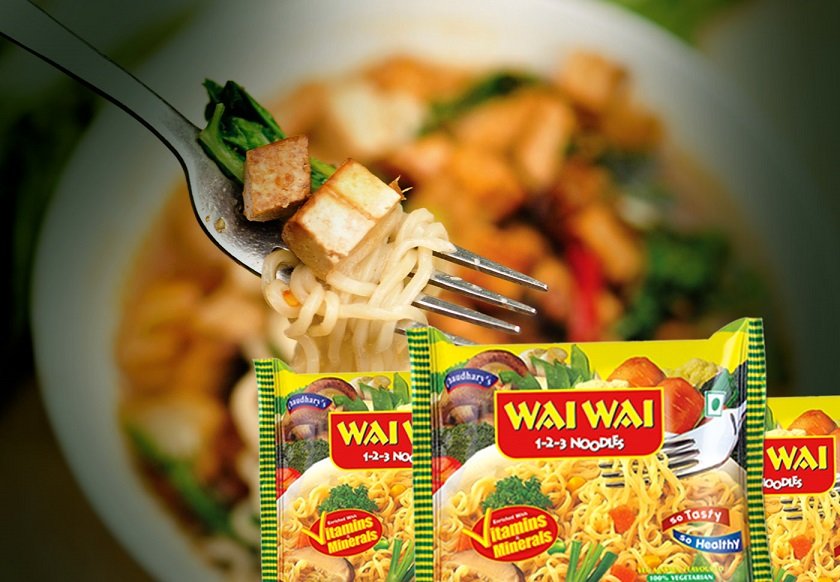
Kathmandu. The Supreme Court has ruled that packaging materials (wrappers) used in noodle production are an integral part of the production process, allowing for the offset of excise duty paid on them.
A full bench comprising Justices Binod Sharma, Abdul Aziz Musalman, and Meghraj Pokharel has interpreted packaging materials (wrappers) used in industrial production as raw materials, thereby allowing the excise duty paid for them to be adjusted (offset).
Previously, the revenue administration and revenue tribunal had denied this tax credit facility, stating that packaging materials were not raw materials. The Supreme Court has established a new precedent by ruling on a case filed by Pokhara Noodles (producer of noodles like Ramba, Jojo, etc.) against the Large Taxpayers Office and the Internal Revenue Department.
This dispute originated from the tax audit of Pokhara Noodles Pvt. Ltd. for the fiscal year 2068/69. The company had offset the excise duty paid on the 'wrapping paper' used for packaging noodles against the excise duty applicable to the sale of its finished product (noodles).
However, the Large Taxpayers Office, interpreting Section 3(3) of the Excise Duty Act, 2058, argued that the offset facility was only applicable to raw materials and not packaging materials. Consequently, they imposed additional excise duty, fines, and late fees on the industry. After the Revenue Tribunal upheld the tax administration's decision, the industry approached the Supreme Court.
The full text of the published verdict clarifies Section 3(a)(3) of the Excise Duty Act, 2058, regarding whether the excise duty that can be offset is on wrappers/packaging materials and whether wrappers/packaging materials are considered raw materials under the Excise Duty Act. The Supreme Court, in its decision, analyzed the 'production process' stating, 'It is not enough for an item to be produced; it must be marketable. Food items like noodles cannot be sold in the market or legally distributed without packaging.'
The Supreme Court's ruling discussed three main tests for considering packaging materials as raw materials: marketability test, integral component test, and essential characteristic test. According to the marketability principle, food items like noodles cannot be sold in the open market. Until noodles are packed in wrappers, they are not marketable to consumers. Therefore, packaging is not merely decorative but an essential process that completes the product, the verdict stated.
The court also considered the integral component test. The court ruled that all mandatory processes until a product reaches the market after its production should be considered part of the production itself. Since noodles cannot maintain their integrity or be legally sold without packaging, they should be recognized as raw materials, the Supreme Court determined.
The court also meticulously analyzed the financial impact of not providing the tax offset facility. The court concluded that if the excise duty paid on packaging materials is not allowed to be offset, the industry's production costs will increase, ultimately burdening the consumers. The verdict mentioned that the principle of economic justice is violated by levying tax multiple times on the same item (double taxation).
The Supreme Court's decision emphasizes the need to protect industries from the burden of double taxation. The verdict states that if excise duty is paid when purchasing wrappers and then again on the sale of noodles at the same value without allowing the previous tax to be offset, it results in multiple taxes on the same item. The court concluded that this would increase the cost of goods and ultimately burden the consumers.
'The right of an industrialist to offset tax paid on raw materials against the sale of finished goods is a legal right,' the verdict stated. 'Narrowly interpreting the law solely for revenue collection purposes, which increases industry costs, is not in the interest of industrial development.' This decision also clarifies the definition of 'raw materials' in Section 3(3) of the Excise Duty Act and the impact of the amendment made by the Economic Act of 2072.
In reaching this decision, the Supreme Court also referred to precedents set by the Indian Supreme Court in cases such as 'Union of India vs. Bombay Tyres International' and 'Collector of Central Excise vs. J. Engineering Works'. It was mentioned that in those cases, the transfer of name or other necessary packaging for electric fans was considered part of the production.
With this Supreme Court ruling, the path is now open for other industries using excisable packaging materials, such as biscuits, oil, and soap. This precedent will now apply to all such disputed cases prior to the amendment in 2072.
Currently, taxpayers have a system where they deduct the VAT they have already paid when submitting their Value Added Tax, paying only the net amount. According to the Supreme Court's decision, a similar system will now be in place for excise duty.
This specific news has been automatically translated by AI. As a result, there may be some inaccuracies or language errors.