Prachanda Offers 7-Point Suggestions to Rastriya Swatantra Party Government


Kathmandu. Former Prime Minister and CPN (Maoist Centre) Chairman Pushpa Kamal Dahal Prachanda has given 7-point suggestions to the Rastriya Swatantra Party (RSP) government, which has received a near two-thirds majority mandate.
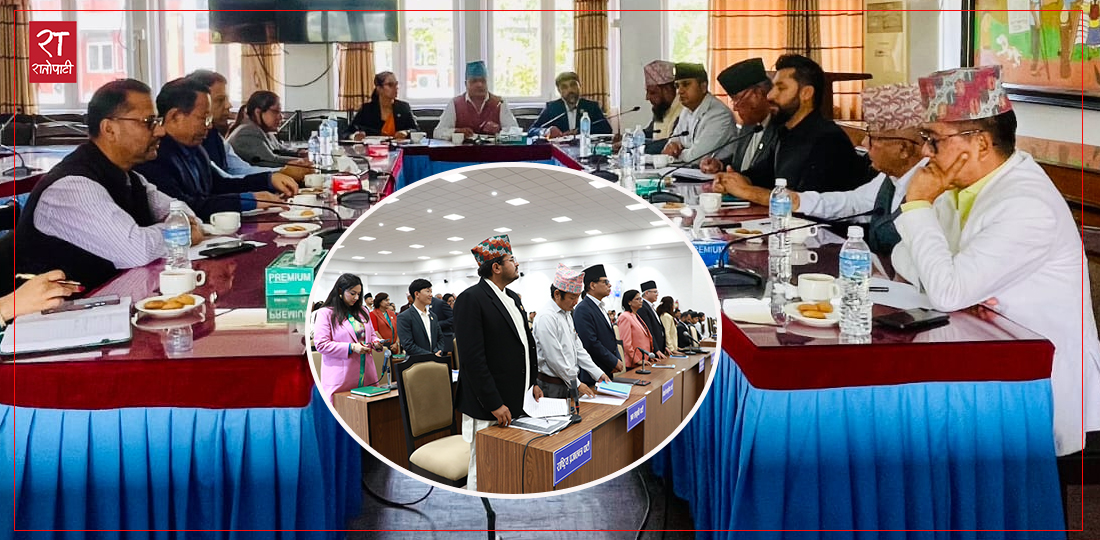
Addressing the parliament for the first time on Tuesday after the House of Representatives elections, Prachanda, sharing his past experiences, suggested that the RSP should not let its mandate become a fertilizer for arrogance.
‘My highly tumultuous political journey tells me – just as it is difficult to tolerate defeat, it is even more difficult to digest victory. The RSP has a huge majority, almost two-thirds, in this parliament,’ Prachanda said, suggesting to the RSP, ‘This huge majority must be handled as a huge responsibility to the people, it should not be allowed to become a fertilizer for arrogance. As the CPN (Unified Marxist–Leninist), we were in this parliament with almost your size a few years ago. That trust of the people became a victim of our own weaknesses. Numbers are never permanent, nor is the support of the people unconditional. Learn from us, learn from history.’
He made some critical comments about the decisions and working style of the government led by RSP senior leader Balendra (Shah) over the past month and a half.
Here are Prachanda’s 7-point suggestions to the government-
1. If the government intends to start discussions for constitutional amendment, the constitution itself mentions a review of the constitution after ten years. But it must be clear, amendment for whom? Amendment in whose interest? We are ready for discussion, but with transparency. Let us amend the constitution, but let that amendment strengthen national unity and national independence, the self-respect and self-determination of the Nepali people. Let us amend the constitution, which further expands the representation of marginalized classes and regions. Constitutional amendment is a very sensitive issue. It demands great wisdom, restraint, and discussion. Please do not take it lightly.
2. The neglect of Dalits, women, Janajatis, Madhesis, Tharus, and neglected oppressed classes and communities in the policy and programs is not seen as unusual given the government's recent activities. While we are proud of the achievements of the revolution, the very class that is the main basis of the revolution has become the target of a government that has received a massive mandate. In the past, the autocratic monarchy would demolish the huts of the poor landless with elephants. They would set fire to settlements. Today, in a democracy, people’s homes and settlements are being demolished. Children are suffering. Videos of children crying and mothers collapsing unconscious while being drenched in the rain, and suicides, are flooding social media, reminding us of the similar repression that the Panchayat autocracy inflicted on the people.
I want to urge the government, the poor are not obstacles to prosperity. Landless people are not impediments to development. The face of the country will not change by forcibly evicting settlements without any plan or preparation. The Nepali people fought a long struggle and succeeded in writing rights in the constitution precisely because the state should be the support for those who have no one. The problem of landless people can only be resolved by guaranteeing ownership of land, livelihood, and settlement through a systematic and scientific approach, not by forced displacement. My plea is that it is now your responsibility to provide justice to the poor, laborers, farmers, and the downtrodden who contributed the most to bringing about the republic. Democracy cannot be serviced by displacing people and leaving them in distress. The government should seriously reconsider this.
3. The government's roadmap should be to strengthen democracy and respect the struggles and figures of history. It should protect the achievements of the struggles. Democracy cannot be strengthened by preventing students, civil servants, or any citizen from raising their voice. From ‘Jayatu Sanskritam’ to the recent Janjati movement, students have been at the forefront of political change. If we say today, ‘You are no longer needed, your existence will end,’ it is not only unjust but also an insult and devaluation of history. Let us bring meritocracy to universities and overall transformation to the education sector. We initiated this in my last term. But the notion that student organizations are an obstacle to this is wrong. To stop the irregularities in the education sector and to develop democracy in a more progressive direction, students are not obstacles, but companions. Let us reform what needs to be reformed, but steps that silence voices cannot be accepted.
4. Nepal's constitution, as well as various agreements made by Nepal as a member of the United Nations, protect the right to organize. No government in the world has obstructed the system that allows workers to advocate for their interests. Trade unions are the very soul of modern democracy. Their role is crucial for protecting democratic values and building a Nepal moving towards socialism as envisioned by the constitution. The histories of revolutions and changes worldwide are filled with the sagas of labor movements. I urge young parliamentarians to study and reflect on this seriously. Let us debate the methods and systems for developing trade unions as purely professional organizations. But let us not move towards snatching away rights achieved through long struggles. We should not destroy democratic institutions; we should build them. We should reform and strengthen them. This is the beauty of democracy.
5. It is ironic that the government formed after the movement for freedom of expression is now working to curtail the press and freedom of expression guaranteed by the constitution. We protested against the situation where we had to be imprisoned for speaking out, but today we are regulating and weakening media organizations. Democracy develops not by fleeing from questions but by answering them.
6. My plea is, do not break the law out of arrogance of numbers. The people have trusted you. Use that trust to strengthen the law. How can it be acceptable for the democratic process and system when you postpone the parliament you yourself convened, deceive the representatives, rule through ordinances one after another, initiate arrests with a scent of revenge, and imprison those who criticize the government? Yesterday, the narrative was built that all old parties are the same, all are corrupt. But today, you are engaging in the same arbitrariness, revenge, attacking democratic values, and evading parliament. When questions arose from the public about asset details, the people expected a transparent answer, but you tried to cover it up. You arrested journalists and YouTubers simply for criticizing.
7. Even bringing goods from Indian territory for household use to make a living in the border areas has become revenue evasion for the government. However, the government's roadmap to stop the large-scale smuggling happening across the border is not visible. Is revenue not being generated simply because people bring goods from across the border for their daily needs? Does revenue increase only by harassing the poor and downtrodden?
We welcomed the roadmap published by the government. We also congratulated the government for its intention to continue past good practices and make new efforts for good governance, social justice, and prosperity. However, within a month of the government's formation, the government's biggest blow has been against the poor and downtrodden. Whether it is the landless in the cities or the poor people in the border areas of Terai-Madhesh. This is a matter of serious concern.
This specific news has been automatically translated by AI. As a result, there may be some inaccuracies or language errors.