Prachanda Warns Rashtriya Swatantra Party Against Arrogance, Cites Historical Lessons


Kathmandu. The coordinator of the Nepali Communist Party and former Prime Minister Pushpa Kamal Dahal 'Prachanda' has warned that history will repeat itself if the ruling Rastriya Swatantra Party does not shed its arrogance and respect the mandate it received from the people.< /p>
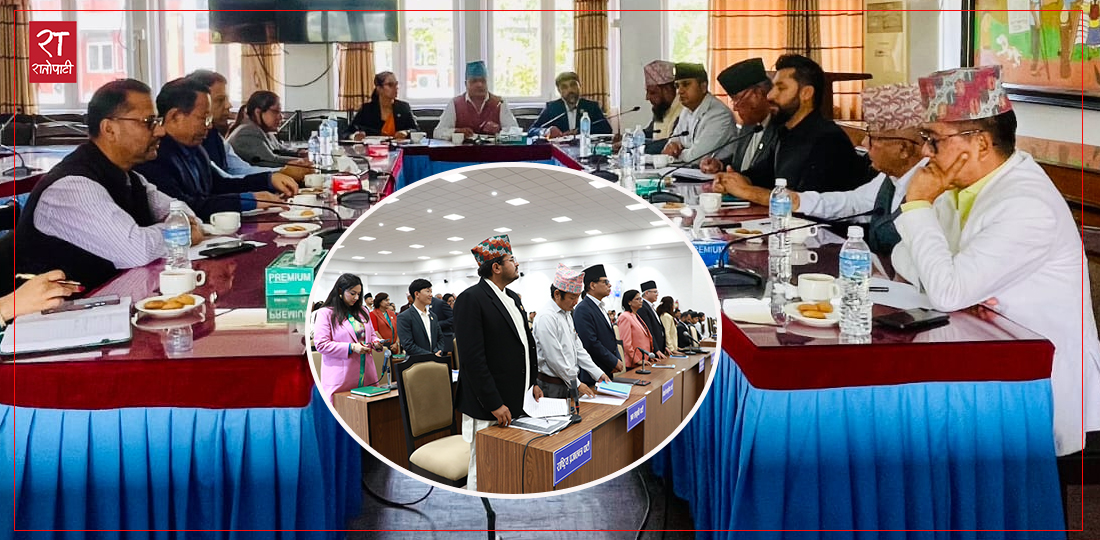
Addressing the House of Representatives meeting on Tuesday, he suggested that the vast majority, nearly two-thirds, should not be allowed to become the 'fertilizer of arrogance'.< /p>
During his address, Prachanda said, 'It is as difficult to tolerate defeat as it is to digest victory. Numbers are never permanent, nor is the support of the people unconditional. Yesterday, as the CPN (Maoist Centre), we were also of this size, but due to our own weaknesses, it did not last. Learn from our experience and history, do not let this majority become the fertilizer of arrogance.'< /p>
Prachanda criticized the current government's style of functioning, stating that the poor, landless, and helpless people are being attacked. He argued that demolishing landless settlements and harassing the poor in border areas without any alternative is not a democratic practice. He added, 'Democracy cannot be serviced by displacing people and leaving them in distress.'< /p>
He reminded that the current inclusive and proportional parliament was built on the foundation of their blood and sacrifice, urging not to disrespect it. He termed the attempts to silence the voices of student organizations and trade unions as 'regressive steps'.< /p>
Full text of Prachanda's address< /p>
Honorable Speaker,<
Standing on the rostrum of this House of Representatives today, elected alone among former Prime Ministers in the new and extraordinary circumstances following the Janji movement, I feel a sense of challenge, mixed with some discomfort and pride. In this regard, I express my heartfelt gratitude and thanks to the people of Rukum East who elected me and to all the Nepali people who brought us victory.<
Congratulations and best wishes to all the honorable members elected by the people. The Rastriya Swatantra Party, which has cooperated in both government and opposition roles, has achieved a near two-thirds success in this election. For that, I extend my special congratulations to Chairman Honorable Ravi Lamichhane and Honorable Prime Minister Balen Shah.<
Standing in this new building of the House of Representatives and addressing, I am reminded of the revolutionary days of history. From the outside, this building is made of cement, bricks, and iron, but its core contains the sacrifice of thousands of martyrs. For this rainbow parliament, representing every class, caste, ethnicity, gender, and community, we took up arms and protested yesterday. Thousands sacrificed their lives. That sacrifice is the foundation of this building. Every wall is colored with sacrifice. I express my heartfelt gratitude to all the martyrs, disappeared, injured fighters, and campaigners of those days, from armed and peaceful movements to the recent Janji movement. I express my respect and reverence to their families. I believe that the day this great sacrifice is forgotten, this building will collapse on its own.<
Although our party's role in creating the atmosphere for this election was significant, as all the newly elected honorable members are aware. Regardless of whether the results are small or large, the rainbow representation of women, Dalits, indigenous peoples, Madhesis, Muslims, Tharus, and oppressed communities and classes in this House of Representatives under the federal democratic republic is more important to me than the party's victory, and will remain so.<
Many of you members are new. Such inclusive and proportional representation did not exist before. In the parliament after the general election of 2048 BS, when democracy was said to have arrived, there was only one Dalit representative. How many are there now? 17. In 2051 and 2056 BS, there were no Dalit representatives in parliament at all. In the 2048 BS parliament, there were only 6 women, 7 in 2051 BS, and 12 in 2056 BS. How many women are there now? Nearly 100, 96. The statistics for indigenous peoples, backward regions, Muslims, Tharus, Madhesis, and oppressed classes are similar.<
This representation is written in blood. It is written in revolution. It is written in the sacrifice of women who carried infants on their backs and guns on their shoulders. It is written by those with bounties on their heads. We spent the brightest time of our lives fighting against darkness. Revolution, struggle, and sacrifice were not just words for us; they were our daily routine. We lit the torch of revolution with our own blood. I don't say this for nothing; I feel as if I have entered this respected parliament, whoever enters it. If the gun we raised against feudalism had not opened the door, how would representatives of oppressed communities have entered here and become ministers? Regardless of the party, I believe Prachanda has the right to be proud of inclusive and proportional representatives.<
Shortly after the peace process, we launched a campaign in the streets of Kathmandu to establish pride in being Madhesi. Kathmandu had never before made such a fearless claim for its identity and self-respect in Kathmandu itself. Balendra Shah, as the mayor of Kathmandu, has now become the Prime Minister of the country. The party may be different, but for me, this is a victory of the resolve of the revolution.<
I have raised this point because some figures in this society, which is proud of the achievements of the revolution, are still engaged in criminalizing the revolution today. They are striving to prevent the peace process from reaching a logical conclusion. I called you the flowers of the republic. The completion of the peace process is now your responsibility more than mine.<
Speaker,<
There is a false narrative built around the names of 'old leaders' and 'old parties', suggesting they are all the same. And Prachanda is also dragged into it. Is that the truth? No. This is certainly not true for the Rastriya Swatantra Party. In the previous parliament, I cooperated strongly with the RSP, both as Prime Minister and as leader of the main opposition party. Strong cooperation. In government, we initiated good governance and effective servicing of democracy. We emphasized simplification of service delivery and meritocracy. From the detailed investigation of Lalita Niwas and the process of land return to the impartial investigation of the Bhutanese refugee scam, we established the rule of law. We fearlessly fought against the biggest mafias in the country who were ruling above the law. Later, they united the first and second largest parties in the country. As the opposition, our numbers were small. However, that small number fought against every malpractice and anomaly of the two-thirds ruling majority. We resisted the misgovernance and arrogance of the two-thirds majority. In this context, the narrative that everyone is the same is completely false, and I reject it entirely.<
The narrative created by distinguishing between old and new is also philosophically, politically, and sociologically incorrect. The issue is not about old and new, but about right and wrong. The old and new narratives only create divisions in families, society, and politics. The debate of right and wrong creates a basis for new unity with progress and transformation.<
Speaker,<
Now I would like to make some critical comments on the government's decisions and style of functioning over the past month.<
1. If the government intends to start discussions for constitutional amendment, the review of the constitution is mentioned in the constitution itself after ten years. But it should be clear, for whom is the amendment? In whose interest is the amendment? We are ready for discussion, but with transparency. Let's amend the constitution, but let that amendment strengthen national unity and national independence, the self-respect and self-determination of the Nepali people. Let's amend the constitution to further strengthen democracy. Let's amend the constitution to expand the representation of the marginalized classes and regions. Constitutional amendment is a very sensitive issue. It requires great wisdom, restraint, and discussion. Please do not take it lightly.<
2. The neglect of Dalits, women, indigenous peoples, Madhesis, Tharus, oppressed classes, communities, and regions in the policy and program is not unusual given the government's recent activities. While we are proud of the achievements of the revolution, the very class that is the main basis of the revolution is now targeted by the government that received a massive mandate. Yesterday, the autocratic state used elephants to demolish the huts of the poor and landless and set fire to settlements. Today, in a democracy, people's homes and settlements are being demolished. Children are left in distress. Videos of children crying and mothers collapsing in the rain, and children screaming at their unconscious mothers, are rampant on social media, reminding us of the similar oppression of the people by the Panchayat autocracy.<
I urge the government, the poor are not obstacles to prosperity. The landless are not impediments to development. The country's face will not change by forcibly vacating settlements without any plan or prior preparation. The state must be the support for those who have no one, which is why the Nepali people fought a long struggle and succeeded in writing it in the constitution. The problem of the landless can only be resolved by guaranteeing land ownership, livelihood, and settlement through systematic and scientific means, not by forced displacement. My plea is that it is now your responsibility to provide justice to the poor, laborers, farmers, and the helpless class who contributed the most to bringing about the republic. Democracy cannot be serviced by displacing people and leaving them in distress. The government should reconsider this seriously.<
3. The government's roadmap should be to strengthen democracy and honor the struggles and figures of history. It should protect the achievements of the struggles. Democracy is not strengthened by preventing students, civil servants, or any citizen from raising their voice. From Jayatu Sanskritam to the recent Janji movement, students have been at the forefront of political change. If we say, 'You are no longer needed, your existence is threatened,' it is not only unjust but also an insult and devaluation of history. Let's bring meritocracy to universities and overall transformation to the education sector. We initiated this in my last term. However, the idea that student organizations are an obstacle is wrong. Students are not obstacles but co-travelers in preventing the malaise in the education sector and developing democracy further. Let's reform what needs to be reformed, but steps to silence voices are unacceptable.<
4. The Constitution of Nepal and various agreements made by Nepal as a member of the United Nations protect the right to organize. No government in the world has obstructed the provision for workers to advocate for their interests. Trade unions are the main soul of modern democracy. Their role is important for protecting democratic values and building a socialist-oriented Nepal envisioned by the constitution. The histories of revolutions and changes worldwide are filled with the sagas of the labor movement. I urge young parliamentarians to study and reflect on this seriously. Let's discuss the methods and systems for developing trade unions as purely professional organizations. But let's not move towards snatching away the rights achieved through long struggles. We should not destroy democratic institutions; we should build them. We should reform and strengthen them. This is the beauty of democracy.<
5. It is ironic that the government formed after the movement for freedom of expression is now working to curtail the full press and freedom of expression guaranteed by the constitution. Yesterday, we protested against the situation where we had to be imprisoned for speaking, but today we are regulating and weakening media organizations. Democracy develops not by fleeing from questions but by answering them.<
6. My plea is, do not violate the law out of arrogance of numbers. The people have trusted you. Use that trust to strengthen the law. How can the way you have been trying to govern through ordinances, by postponing the parliament you yourself convened, by evading the representatives, and by initiating arrests with a scent of revenge, by imprisoning those who criticize the government, be acceptable to democratic practices and systems? Yesterday, a narrative was created that all old parties are the same, all are ruined. But today, you are engaging in the same arbitrariness, revenge, undermining democratic values, and evading parliament. When questions arose from the public about asset details, the people expected a transparent answer, but you tried to cover it up. You arrested journalists and YouTubers for criticizing.<
7. Even bringing goods from Indian territory for household use while earning a daily living in the border areas has become revenue evasion for the government. However, the government's roadmap to stop the large-scale smuggling happening across the border is not visible. Is revenue not being generated just because the poor and helpless people bring goods from across the border for their daily sustenance? Will revenue increase only by harassing the poor and helpless people?<
We welcomed the roadmap published by the government. We also congratulated the government for trying to continue past good practices and make new efforts in favor of good governance, social justice, and prosperity. However, within one month of the government's formation, the biggest blow has been dealt to the poor and helpless people. Whether it is the landless in the cities or the poor people in the border areas of the Terai-Madhesh. This is a matter of serious concern.<
Speaker,<
The government's annual policy and program has been presented to this respected parliament by the Honorable President. However, the haste with which the policy and program is being presented and the practice being followed has always made the discussion on the policy and program a mere formality.<
Honorable members will recall that during my term, I tried to initiate a method and practice of inclusive and adequate discussion on the policy and program. I started the practice of changing the policy and program and budget schedule to have extensive discussions with all stakeholders on the policy and program, to amend it based on the suggestions of the honorable members of parliament, and to support the policy and program through the budget accordingly. If that had happened, the policy and program would not have become a mere formality. However, the subsequent government did not continue it. Unfortunately, the current government has further curtailed even limited discussions. Our current need is a break from the old ways. With ad-hoc practices, no matter how many slogans we give, we cannot develop new methods. I draw the government's attention to this.<
After the formation of the government, the ruling party published its roadmap. We welcomed some aspects of that roadmap, which also included some good practices from the past. However, unfortunately, the policy and program of the government do not seem to capture the spirit of the ruling party's manifesto, the government's roadmap, and the national संकल्पपत्र (commitment letter) or pledge letter. It lacks the seriousness and clarity required to correctly identify, analyze, and address the problems before us.<
Repeating the same things heard every year will not solve the economic and social problems before us. Without addressing the structural aspects and identifying new priorities and possibilities for rapid economic development, the current policies and programs will neither achieve economic growth nor create an investment environment. The issue of a new phase of economic reform is mentioned in the policy and program. However, the strategic basis and programs to support it are not visible in the policy and program. To achieve the target of seven percent economic growth, the government's policy and clear programs in areas like production, productivity, and employment were needed. However, the policy and program only include subjects that are continuously presented in sectoral and regional terms.<
The first condition for achieving political rights, ensuring good governance, and establishing social justice is a radical change in our economic system. The current economic system cannot solve our structural problems. The government should have done sufficient homework in this direction, but it has missed this opportunity.<
After the formation of the government, the chairman of the ruling party and honorable Ravi Lamichhane apologized to the entire Dalit community on behalf of the state from this rostrum. However, that apology has not been reflected anywhere in the government's policies and programs. Regarding the issues of the Dalit community, the government has become even more regressive than past status quoist governments. The policy and program have not addressed the need for an empowered Dalit Development Authority to implement affirmative action policies for the Dalit community, nor have they included programs to promote the traditional skills of the Dalit community through entrepreneurship and other specific issues.<
It is unfortunate. The policy and program are silent about the Madhesi people, on whose dreams this government was formed, and who voted to make a person from their own community the Prime Minister. Apart from the phrase 'irrigation in the Terai-Madhesh region will be improved,' there are no points in the policy and program that address the social, cultural, and economic prosperity and identity of the Madhesi people. Madhesh seeks overall economic transformation. It seeks social change. It seeks cultural identity. But the entire Madhesh is lost in the government's document. The problems of the Madhesi people are lost. This is sad.<
The government's 46-page policy and program prioritized regulating and controlling civil servants, but it failed to address the issues of Dalits, meter- ब्याज victims, oppressed, exploited, poor, indigenous peoples, marginalized classes, and communities. Similarly, the silence on Karnali and Sudurpaschim provinces, which are the most backward in human development index, sends a message that the government is not with the poor and backward people.<
Speaker,<
I thank the government for strongly addressing many aspects related to digitalization in the policy and program. The implementation of the e-governance blueprint, which was prepared during my term with the strategic priority of information and technology and the declaration of the IT decade, and the flow of every public service through digital systems are welcome. However, without clarity on important issues of economic transformation and social justice, and if these issues do not capture the spirit claimed by the government, a unilaterally developed digital system will only increase the digital divide. Digitalization can yield correct results only if it is developed in parallel with production and productivity growth, and digitalization and social justice.<
I am not mentioning these points with the intention of criticizing the government. However, my concern is that instead of policies and programs that meet the aspirations of the people, it has been presented as a compilation of regular programs of the ministries. I urge all honorable members to study this matter seriously, conduct a comparative study in light of past policies and programs, and revise it to address the aspirations of the people in the current context.<
Speaker,<
My experience of the highly turbulent political journey tells me that it is as difficult to tolerate defeat as it is to digest victory. This parliament has a vast majority of nearly two-thirds with the RSP. This vast majority must be handled as a great responsibility from the people; it must not be allowed to become the fertilizer of arrogance. As the CPN (Maoist Centre), we were in this parliament with a size similar to yours a few years ago. That trust of the people became a victim of our own weaknesses. Numbers are never permanent, nor is the support of the people unconditional. Learn from us, learn from history.<
This respected parliament is not only the pillar of democracy but also the greatest arena for the exercise of popular sovereignty. Here, consensus, cooperation, and mutual trust should be prioritized over prohibition, insult, and revenge. Our geopolitical location demands great wisdom and restraint.<
The question of protecting and strengthening national independence has emerged as the most sensitive and important issue for us Nepalis today. Due to our geopolitical location, pressure and interference from various power centers are increasing. Similarly, power centers may seek to control our natural resources, including valuable minerals like uranium. In such a sensitive situation, all patriotic Nepalis must unite to protect our national interests, self-respect, and resources.<
As the opposition party, we are not waiting for your weaknesses. Fulfill the responsibility entrusted to you by the people, and you will have our support. Nation-building is possible only through collectivism. I wish all members of the government and parliament a successful term. Thank you.<
This specific news has been automatically translated by AI. As a result, there may be some inaccuracies or language errors.