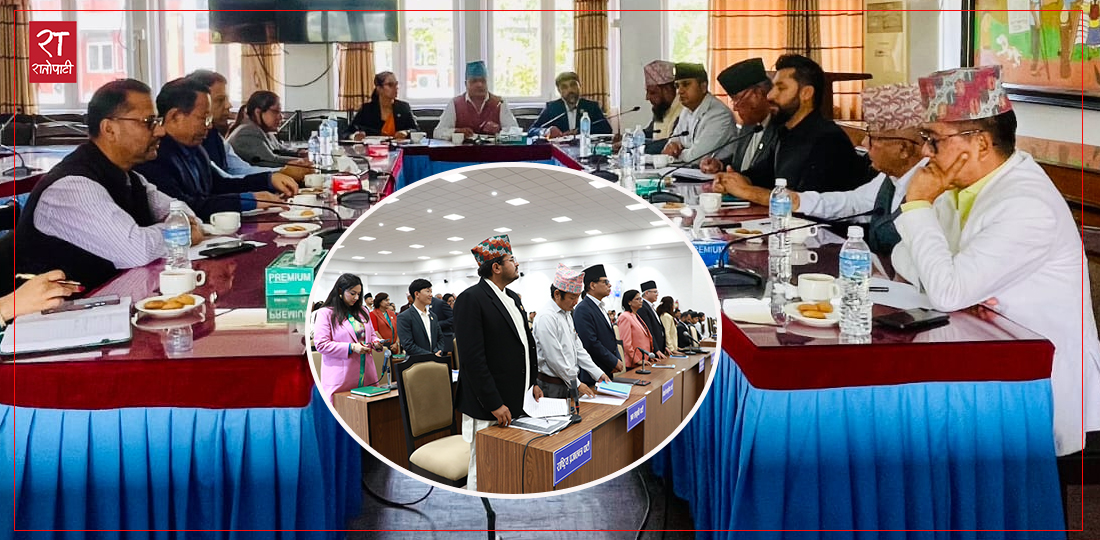
Nepal Faces Severe Chemical Fertilizer Shortage Amidst Peak Demand

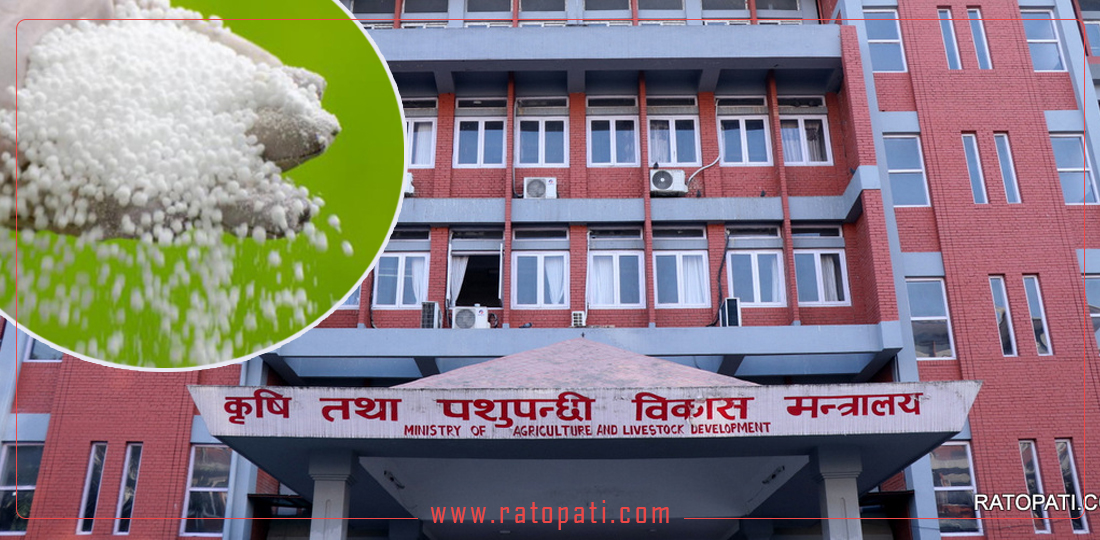
Kathmandu. The last week of Baisakh is the time of high consumption of chemical fertilizers in Nepal. At this time, there is a rush to fertilize maize and Chaité paddy, and farmers are under pressure to procure fertilizers for the upcoming rainy season paddy cultivation. As every year, this year too, the fate of farmers facing a shortage of chemical fertilizers during the season has not changed. According to Panakaji Shrestha, Chairman of the National Farmers' Group Federation, farmers across the country are facing problems as they do every year. 'The problem of farmers, especially the fertilizer shortage, is not new. There is a calendar for it. The government has not been able to solve it yet,' he said.
Farmers' Cry from Madhesh to the Hills
There is an extreme shortage of fertilizer in the Madhesh Province, considered the granary of food. Farmer Ram Prasad Saha of Dhanusha says, 'On one hand, the government talks about increasing agricultural production, on the other hand, it cannot even provide fertilizer on time.'
Farmer Ashok Jha of Sarlaahi Nawalpur has the same complaint. He said that due to the shortage of fertilizer in the market, black marketing has increased, and he has not been able to plant sugarcane due to not getting fertilizer on time.
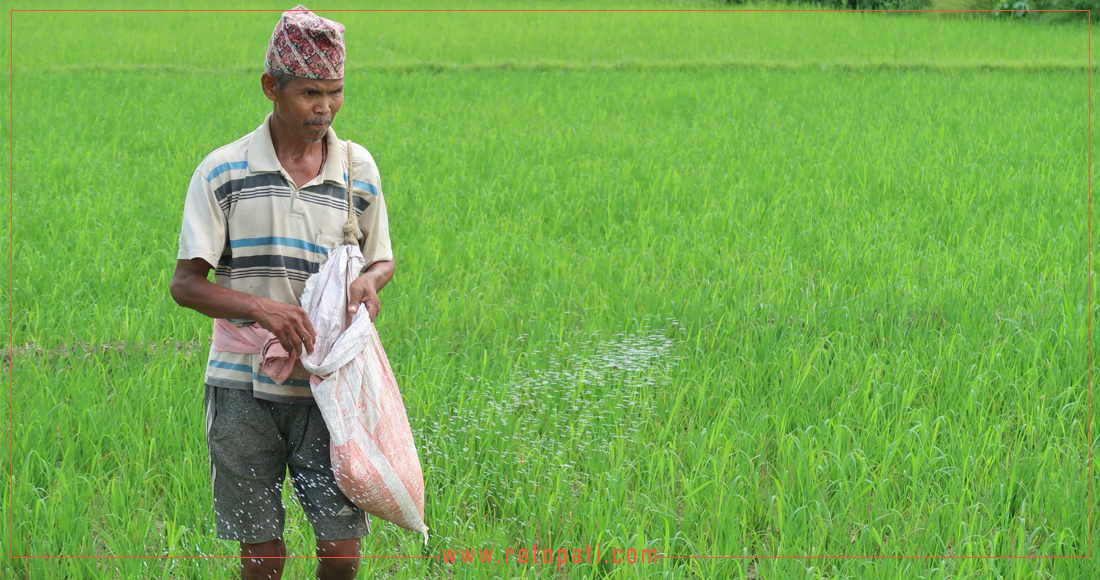
According to Jyotish Chandra Jha of Nagarain, Dhanusha, although fertilizers were brought from across the border in the past, the strictness at the border has created further problems.
Not only Madhesh, but vegetable farmers in Chitwan and Kavre of Bagmati Province, and maize farmers in Gulmi and Dang of Lumbini Province are currently struggling with fertilizer shortages. In Udayapur of Koshi Province, farmers are disappointed due to not getting fertilizer as the time for preparing paddy nurseries approaches.
A Huge Gap Between Demand and Supply
According to Rabin Basnet, Crop Development Officer of Madhesh Province, the shortage is due to the supply being much less than the demand. According to Dinesh Sharma, Information Officer at the Agricultural Inputs Company Limited, Birgunj, the country requires about 1.7 to 1.8 million metric tons of fertilizer annually, but the government has managed to import only 3 to 400,000 metric tons. Due to the increase in petroleum prices and fluctuations in the international market, the procured goods have not arrived on time.
According to Dr. Ramkrishna Shrestha, Joint Secretary at the Ministry of Agriculture and Livestock Development, the government currently has about 163,000 metric tons of fertilizer in stock. This is estimated to meet the demand until Asar.
Although the source for 300,000 metric tons has been secured until Poush, the tension in West Asia has added challenges to the supply.
Considering the potential obstacles in international tenders, the government has moved forward with the process of purchasing fertilizer through a 'G2G' agreement with India. The ministry has stated that a 'purchase order' has been sent to purchase 30,000 tons of urea and 20,000 tons of DAP for immediate needs.
Effort for Solution: 'Fertilizer Distribution Procedure 2082'
To make the fertilizer distribution system transparent and scientific, the government has implemented the 'Subsidized Fertilizer Distribution Management Procedure, 2082'.
The responsibility of identifying genuine farmers and monitoring distribution has been given to the local levels. Fertilizer will be distributed only based on farmer registration or national identity card.
Now, when allocating fertilizer to provinces and local levels, the basis will be arable land (20%), crop intensity (10%), irrigation facilities (20%), consumption in the last 5 years (20%), demand (20%), and special crops (10%).
To avoid shortages during the main season, 10% of the total import will be mandatorily kept as 'stock'.
The responsibility of identifying genuine farmers and monitoring distribution has been given to the local levels. Fertilizer will be distributed only based on farmer registration or national identity card.
To bring transparency to fertilizer trading, a mandatory software system will be implemented. The details of which farmer took how much fertilizer must be kept in digital form. Cooperatives will be given priority in fertilizer sales. If any seller engages in black marketing, charges excessive prices, or uses fertilizer for other purposes, their license will be immediately revoked, and legal action will be taken.
A quota has been set to directly supply fertilizer to NARC, agricultural universities, and government farms for seed production and agricultural research.
A center led by the Secretary of Agriculture, a provincial secretary at the provincial level, and a coordination committee at the district level will resolve bottlenecks in fertilizer supply and distribution.
India's Assurance, 'We Will Fulfill Nepal's Needs'
Amidst the annual chemical fertilizer crisis in Nepal, India has pledged to supply the necessary fertilizer to Nepal. Randhir Jaiswal, spokesperson for the Indian Ministry of External Affairs, said at a press conference on Thursday, emphasizing the multi-faceted relationship between the two countries, that Nepal's fertilizer needs will be met.
Responding to a question about media reports of a G-to-G agreement for fertilizer supply between the governments of Nepal and India, Jaiswal informed that discussions and cooperation are continuously ongoing between the two countries on such matters.
Spokesperson Jaiswal discussed the close relationship between Nepal and India and stated that India will always support Nepal's development and needs. He cited the ongoing cooperation in the energy and oil sectors as an example, indicating that similar cooperation will proceed in the fertilizer sector as well.
This specific news has been automatically translated by AI. As a result, there may be some inaccuracies or language errors.