Over 1,500 Officials Automatically Removed Following Ordinance


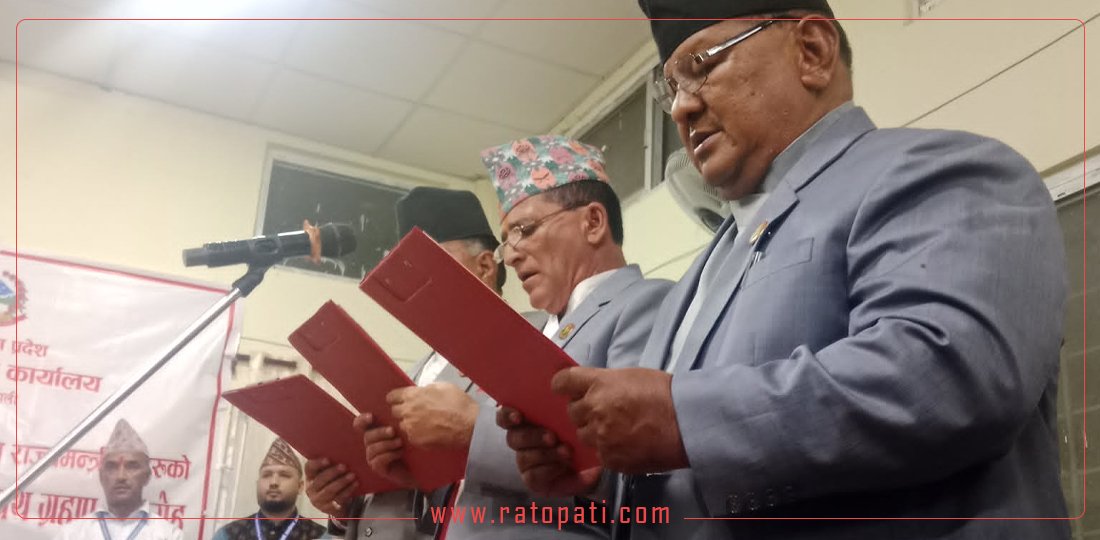
Kathmandu. Following the issuance of the 'Special Arrangement Ordinance on Removal of Public Office Bearers-2083' by President Ram Chandra Paudel on the recommendation of the Council of Ministers, one thousand five hundred and thirty-four officials who received political appointments under various acts and structures have been automatically removed from their posts.
The government led by Prime Minister Balen Shah brought the ordinance to collectively remove officials appointed during the tenure of previous governments with the objective of administrative strengthening and giving new momentum to state bodies.
Among those removed are 75 officials in the communication, air service, and printing sectors, 544 in the education and university sector, 337 in the health, medical, and science sector, 70 in the energy, infrastructure, financial, and regulatory bodies, 388 in agriculture, environment, and academies, and 119 in the social sector, administrative, and social sectors. Previous governments had appointed officials based on various acts.
With the fiscal year 2082/83 nearing its end, and the government in the process of formulating policies, programs, and the budget, there is widespread interest in how and when the process of filling new appointments will proceed following the removal of such a large number of officials simultaneously.

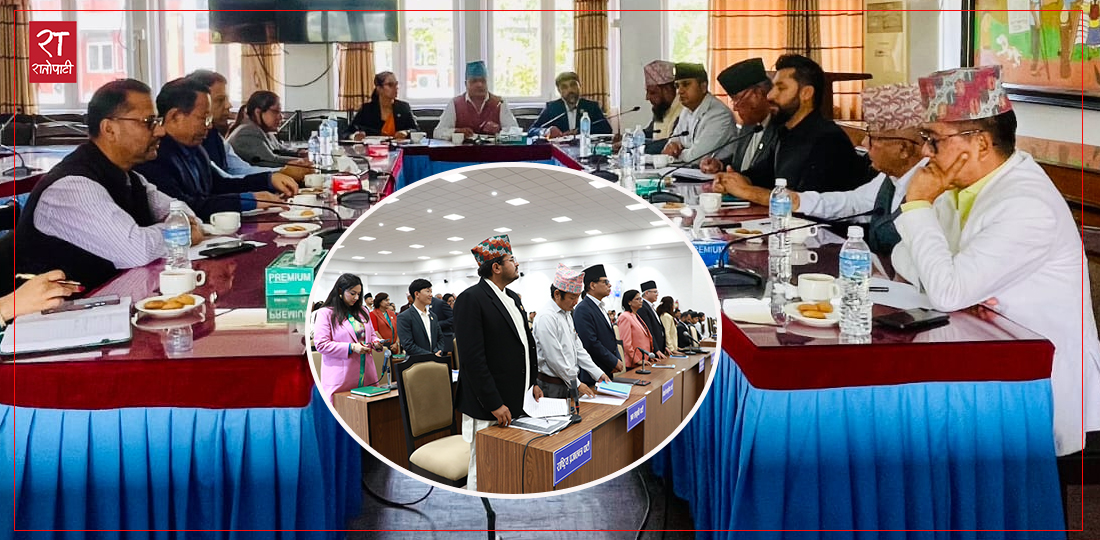
However, Minister of General Administration Pratibha Rawal states that the process of filling official positions has already begun, as the ordinance issued by the President's Office will have the force of law. She mentioned that committees have been formed for the appointment of officials according to different criteria.
'The process of appointing officials has already begun. Since not all officials are of the same nature, some appointments will be made through open competition. In some places, appointments may be made by expert groups through internal evaluation. However, in my ministry, a committee comprising the Public Service Commission and expert groups has already been formed,' Minister Rawal told Ratopati. 'To ensure the continuity of service delivery in the vacant positions, secretaries or joint secretaries have been assigned responsibilities according to the act and rules. The Prime Minister's Office will handle some of the appointments. For instance, a separate arrangement will need to be made for officials appointed under the Ministry of Forests. Officials will be appointed soon, considering the nature of the respective sector.'
Kashiraj Dahal, an administrator and former chairman of the Administrative Reform Commission, believes that since all the removed officials were politically appointed, laws and regulations should be enacted to ensure that their positions are automatically vacated whenever the government changes in the future.
'There should be a clear provision in the laws and regulations that these positions are vacated as soon as the government changes. For example, the Attorney General vacates office as soon as the Prime Minister changes, the Planning Commission is reconstituted, and there are some such arrangements. Similarly, the individuals in these positions change with the change of government,' he said. 'If we can clearly establish provisions in the future, such as allowing the next government to retain or not retain individuals in these positions based on their evaluation of their qualifications and competence, it will set a tradition and precedent.'
This action plan clearly outlines the abolition of unnecessary committees, offices, boards, and academies. The government understands that the political affiliation of employee unions operating within public administration has led to undue interference and informal pressure in the administration. This has compromised the impartiality and neutrality that should exist in the bureaucracy, leading to the abolition of such organizations. It is important to clarify here that this is not a revocation of trade union rights under the Labor Act and Article 34 of the Constitution, but rather the abolition of unions formed on a party basis within the civil administration. This arrangement has been brought about through an ordinance to free the administration from political influence and make it neutral.
Now, how will the positions be filled?
Regarding how the vacant positions will be filled, the government appears to be prioritizing merit, competence, and open competition. Applications have already been invited for some positions. The qualifications, experience, competence of the candidates, and their proposed action plans will be objectively evaluated.
For this, a committee comprising experts in the respective fields will be formed, and the government seems to be adopting a system of appointing based on their recommendations. Looking at the public statements of the ministers, the intention is to select individuals through experts according to the nature and responsibilities of the position. Therefore, it can be believed that qualified and competent individuals will be brought in through a defined standard and transparent process for the vacant positions created by this ordinance where appointments are necessary.
Is open competition possible in political appointments?
This should be understood as follows: Previous appointments were made on the basis of political affiliation and association. Therefore, the current government may have initially sought resignations from them on moral grounds. However, since some may have resigned and others may not have, it is likely that all have been removed through the ordinance to apply equally to everyone.
Now, a clear precedent and tradition need to be established. A culture should develop where individuals appointed to political positions automatically leave office upon a change of government. This does not apply to permanent employees who have come through the Public Service Commission process and have career development; their system is different. However, for appointments made with the objective of assisting the Council of Ministers, there should be a clear legal provision for officials to be removed upon a change of government. For example, just as the Attorney General resigns or the Planning Commission is reconstituted when the Prime Minister changes, other political positions should also be classified. It should be clear in the law which positions are political and which are based on merit and professionalism. If we can establish such a system, it will end the recurring litigations and administrative instability.
What should be the criteria and process for selection?
Experts from the relevant field should participate in the selection process according to the type of individual and qualifications required for the respective body, depending on the nature of the subject matter. Objective evaluation should be done by allocating specific marks for the candidate's educational qualifications, experience, and action plan presentation. Depending on the level of the position, such appointments may be made by the Prime Minister and Council of Ministers' Office or by the concerned ministry.
In some cases, such selections can also be made with the involvement or representation of the Public Service Commission. The government needs to move forward with this by establishing a clear standard. The government's understanding is that good governance has weakened and impartiality has been questioned due to political appointments, even of university officials, in the past. Therefore, political positions should now be distinguished as those that go with the government and professional positions that come through competition.
Even if individuals appointed on merit have to be removed, there must be a concrete basis. If they commit irregularities, corruption, or fail to demonstrate competence, they can only be removed based on the report of an investigation committee. Just as constitutional body officials are impeached, having clear legal grounds for removing officials in other positions would facilitate the smooth functioning of the administrative system, it is believed.
Will the government's work be affected by the large-scale removal of officials?
We need to understand it this way. The government has not made any significant changes in the National Bank and banking sector under the Ministry of Finance related to the budget. This might be due to their involvement and association with the budget.
For other positions, it is observed that they do not have much immediate impact on the budget. Budgets are prepared at the ministry level, and permanent employees remain in place. It can be assumed that this decision has been made after studying that the absence of those officials will not cause any economic disruption.
This specific news has been automatically translated by AI. As a result, there may be some inaccuracies or language errors.